
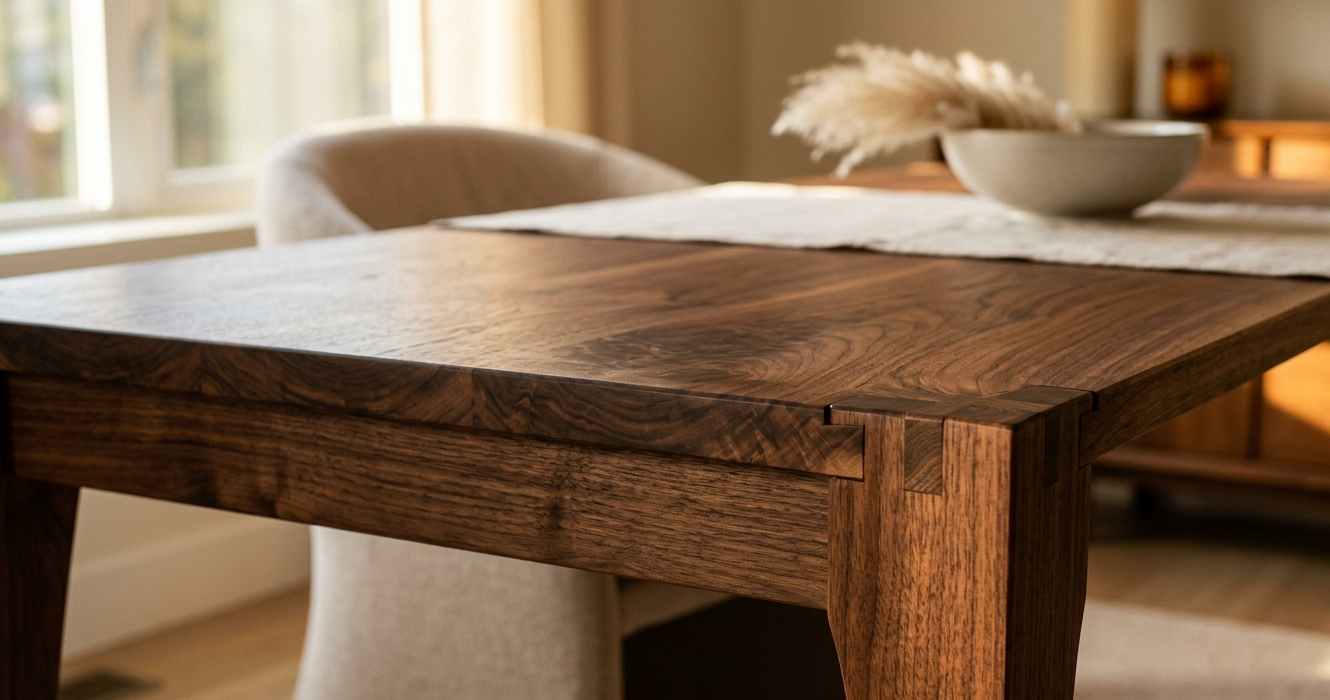
Choosing the right furniture is one of the most intimate decisions you make for your home. It isn’t just about filling a void in a room; it’s about selecting the silent companions that will witness your morning coffees, your late-night conversations, and your quietest moments of rest.
My experience redefined my approach to solid wood vs MDF furniture: how to choose for longevity. Today, I want to guide you through the tactile, visual, and lifestyle-driven nuances of these materials, ensuring your home remains a sanctuary of enduring beauty.
The Heritage of Grain: A Brief History of Wood in the Home
For centuries, wood was the only choice. From the heavy, ornate oak tables of the Victorian era to the sleek, tapered lines of Mid-Century Modern teak, solid wood was the backbone of the domestic interior. It was valued for its textural contrast and its ability to be sanded, refinished, and passed down through generations.
In the mid-20th century, Medium-Density Fiberboard (MDF) emerged as a revolutionary “engineered” solution. It allowed for the mass production of perfectly smooth, paintable surfaces that didn’t warp with the unpredictability of natural grain. Suddenly, high-end aesthetics became accessible. But as we move toward a more sustainable and “slow design” lifestyle in 2026, the pendulum is swinging back toward the authenticity of solid timber.
Defining the Contenders: Feel, Weight, and Presence
Solid Wood: The Living Material
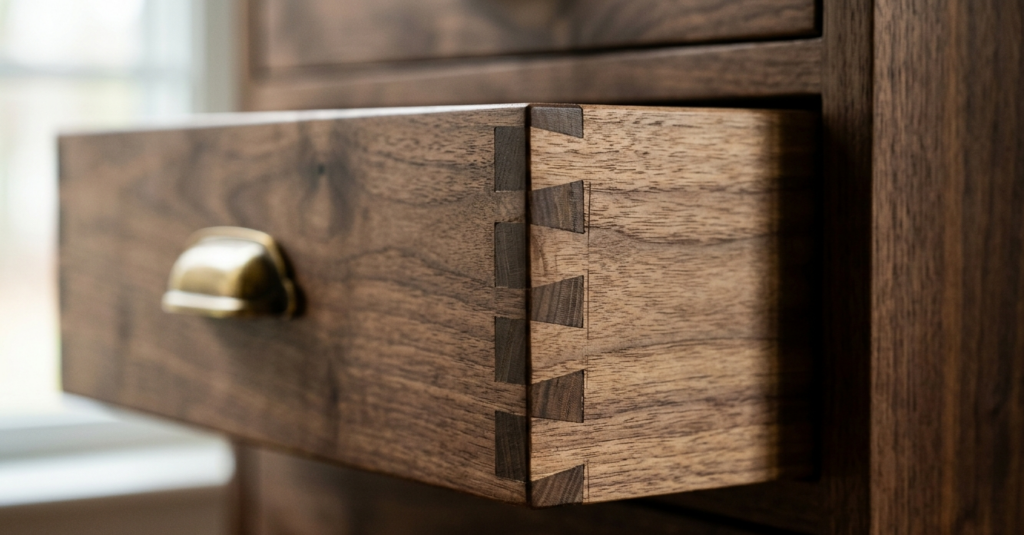
Solid wood is exactly what it sounds like: planks of timber cut directly from a tree. Whether it’s hard woods like Oak, Walnut, and Maple, or soft woods like Pine and Cedar, each piece carries a unique “thumbprint”—the knots, the rings, and the subtle color shifts that tell the story of the tree’s life.
MDF: The Versatile Chameleon
MDF is an engineered wood product made by breaking down hardwood or softwood residuals into wood fibers, combining it with wax and a resin binder, and forming it into panels by applying high temperature and pressure. It is incredibly stable and provides a flawless canvas for lacquer and bold paint colors.
The Deep Dive: Textures, Tones, and Textiles
When we talk about furniture, we are really talking about the sensory experience of a room. How does the light hit the surface? How does it feel when you run your hand across it?
The Soul of the Palette (HEX Code Inspirations)
To create a cohesive interior, you must understand how wood tones interact with your wall colors.
- The Golden Hour (Warm Woods): Honey Oak and Teak pair beautifully with soft, earthy neutrals.
- Accent Color: #D2B48C (Tan) or #556B2F (Dark Olive Green).
- The Noir Narrative (Dark Woods): Walnut and Ebony provide a sophisticated focal point in minimalist spaces.
- Accent Color: #E0E0E0 (Soft Grey) or #2F4F4F (Dark Slate Gray).
- The Scandi Drift (Light Woods): Ash and Birch create an airy, breathable spatial flow.
- Accent Color: #F5F5DC (Beige) or #B0C4DE (Light Steel Blue).
Textural Contrast
In my experience, the most successful rooms utilize textural contrast. If you have a smooth, painted MDF coffee table, pair it with a chunky wool rug or a linen sofa. If you have a rustic solid oak dining table, balance that ruggedness with velvet-upholstered chairs. This interplay prevents a room from feeling “flat” or showroom-stiff.
The Curator’s Choice: 5 Essential Investment Pieces
Choosing where to invest your “solid wood budget” is an art form. Here are my top five picks for pieces that should always favor the tree over the factory:
- The Heirloom Dining Table: This is the heart of the home. Solid wood can withstand the heat of a serving dish and the accidental scrape of a fork. If it gets damaged, it can be sanded and resealed.
- The Master Bed Frame: MDF can creak over time as the fasteners loosen in the compressed fibers. A solid wood frame offers a grounded, silent sturdiness that improves sleep hygiene.
- The Floating Shelves: For a true “built-in” look, solid wood grain running through a shelf adds a layer of luxury that painted MDF simply cannot replicate.
- The Statement Armchair: Often featuring exposed wooden arms or legs, the “touch points” of an armchair should feel substantial and warm to the touch.
- The Entryway Console: This is the first thing guests see. A solid wood piece sets a tone of quality and intentionality the moment you cross the threshold.
Room-by-Room Application: Strategy for Success
The Living Room: Balancing Function and Flair
In the living room, I often recommend a “Hybrid Approach.” Use solid wood for the heavy-use items like the coffee table or a side table. However, for a massive media console or a wall-to-wall library unit, MDF is often the superior choice. Why? Because MDF doesn’t expand and contract, meaning those long, sleek cabinet doors will stay perfectly aligned for years.
The Bedroom: A Sanctuary of Natural Materials
The bedroom should be a place of “Biophilic Design”—incorporating natural elements to reduce stress. I always advocate for solid wood nightstands and bed frames here. The subtle scent of natural wood and the visual warmth of the grain contribute to a calming atmosphere that synthetic materials struggle to match.
The Kitchen and Dining: Durability is Queen
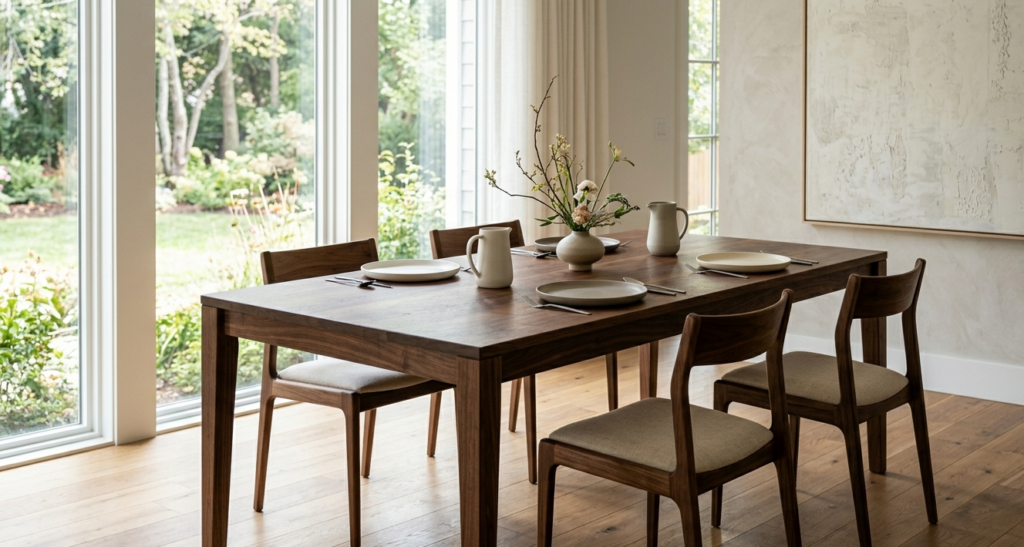
While MDF is excellent for painted kitchen cabinet doors (it won’t crack at the joints like wood), the dining area is solid wood territory. I have found that a solid wood dining set actually gains character as it ages—a “patina” of life that makes the piece feel more personal over time.
Pros and Cons: A Visual and Functional Breakdown
| Feature | Solid Wood | MDF (Medium-Density Fiberboard) |
| Aesthetic | Natural, unique, and “living” feel. | Perfectly smooth, modern, and uniform. |
| Durability | High; can be repaired and refinished. | Moderate; difficult to repair once chipped. |
| Customization | Best for stains and natural oils. | Best for high-gloss or matte paint. |
| Longevity | Generations (50+ years). | 10–15 years with good care. |
| Weight | Substantial and grounded. | Heavy, but can sag over long spans. |
Why Solid Wood Outlasts MDF (The Longevity Factor)
The primary reason solid wood wins the longevity battle isn’t just about strength—it’s about repairability.
MDF is essentially a “one-life” product. If the veneer peels or the core gets wet, the damage is usually permanent. Solid wood, however, is an “evolutionary” product. If you decide in five years that you no longer like the dark stain on your oak table, you can sand it down to its raw state and apply a clear matte finish for a contemporary “Japandi” look.
In my 15 years of styling, I’ve seen solid wood pieces survive floods, moves across continents, and the chaotic energy of growing families. They aren’t just furniture; they are part of the family history.
You might also enjoy:
When to Choose MDF: The Designer’s Secret
I don’t want to dismiss MDF entirely—it has a vital place in the “Smart Renovation” toolkit. You should choose MDF when:
- You want a pop of color: If you want a bright teal dresser or a minimalist white desk, MDF provides the smoothest finish.
- You are on a budget for “secondary” rooms: Guest rooms or home offices are great places to utilize high-quality MDF.
- Intricate Trim Work: For decorative wall paneling (wainscoting), MDF is often preferred because it’s easier to cut and won’t shrink, leaving gaps in your beautiful molding.
Conclusion: The Soul of Your Home
At the end of the day, the debate of solid wood vs MDF furniture: how to choose for longevity comes down to how you want to feel in your space. Do you want a home that feels curated and timeless, or a home that feels trendy and replaceable?
My advice is always to invest in the touchpoints. Buy the solid wood table you’ll eat at every day. Buy the solid wood bed you’ll rest in every night. Let the MDF handle the backdrop—the built-ins and the decorative accents.
Expert Tip: To tell if a piece is truly solid wood or just a clever veneer, look at the underside or the edges. If the grain pattern “wraps” around the corner and continues logically, it’s solid. If the pattern stops or looks like a sticker, it’s a veneer.