
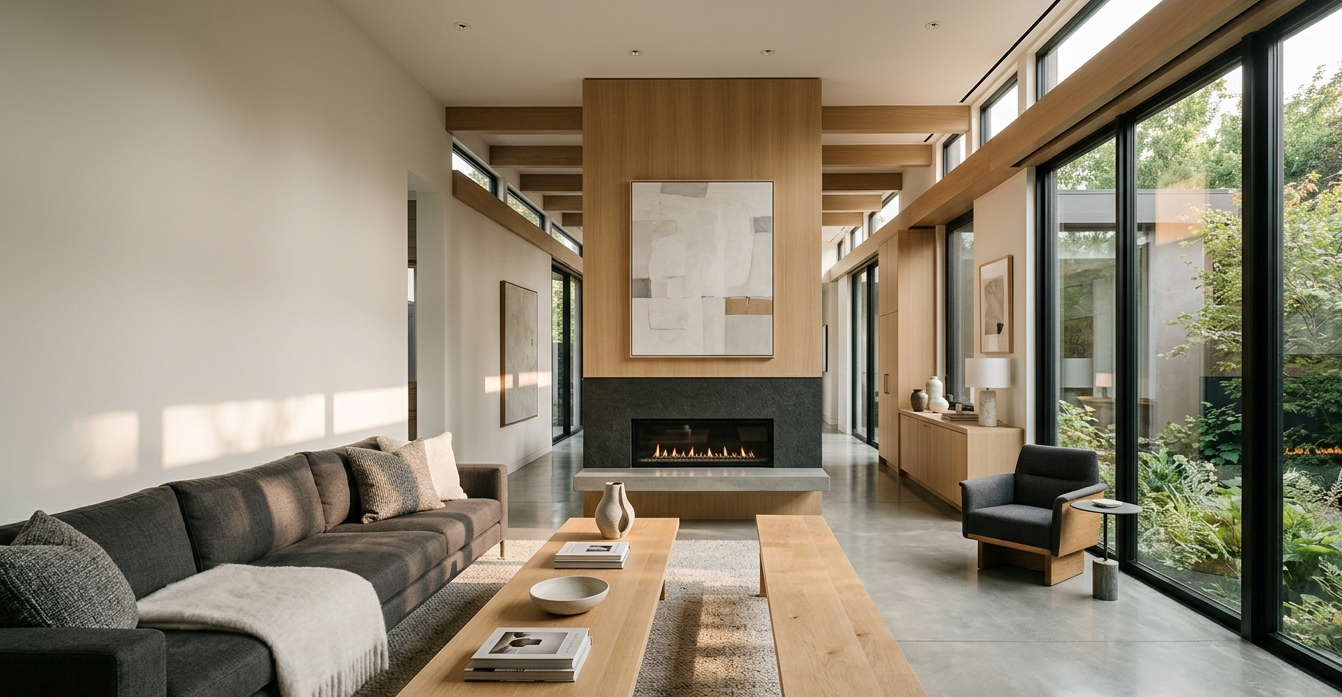
If you are struggling with how to layout a long and narrow living room with a fireplace, you aren’t alone. It is a classic architectural quirk that demands a blend of mathematical precision and artistic intuition.
Today, I’m pulling back the curtain on the professional strategies I use to turn awkward, “tunnel-like” spaces into harmonious, high-end retreats. We’re going to discuss spatial flow, the psychology of color, and the specific textures that turn a narrow footprint into a design masterpiece.
The History of the Narrow Living Room: From Victorian Parlors to Modern Lofts
Historically, narrow living spaces weren’t a “mistake”—they were a necessity. In 19th-century urban design, homes were built thin and deep to maximize street frontage and property tax efficiency. The fireplace wasn’t just a decorative centerpiece; it was the literal heartbeat of the home, providing the only source of heat.
In these traditional layouts, the fireplace was almost always placed on the long wall. This created a formal “parlor” feel. Fast forward to the open-concept movement of the late 20th century, and these narrow footprints became a challenge for modern living, where we juggle oversized sofas, giant televisions, and the need for “traffic flow.”
Understanding that your narrow room has historical roots can help you embrace its character. We aren’t trying to make the room square; we are trying to celebrate its length while creating “zones” that feel intimate.
The Golden Rules of Spatial Flow
When you’re figuring out how to layout a long and narrow living room with a fireplace, the biggest mistake is pushing all the furniture against the walls. This creates the “waiting room” effect. Instead, we want to focus on spatial flow and textural contrast.
1. Create Distinct Zones
In a long room, “divide and conquer” is your mantra. Think of the room as two or three smaller squares rather than one long rectangle.
- The Conversation Zone: Centered around the fireplace.
- The Reading Nook or Workspace: At one end of the room.
- The Entryway/Transition Zone: A clear path for walking.
2. Pull Furniture Away from the Walls
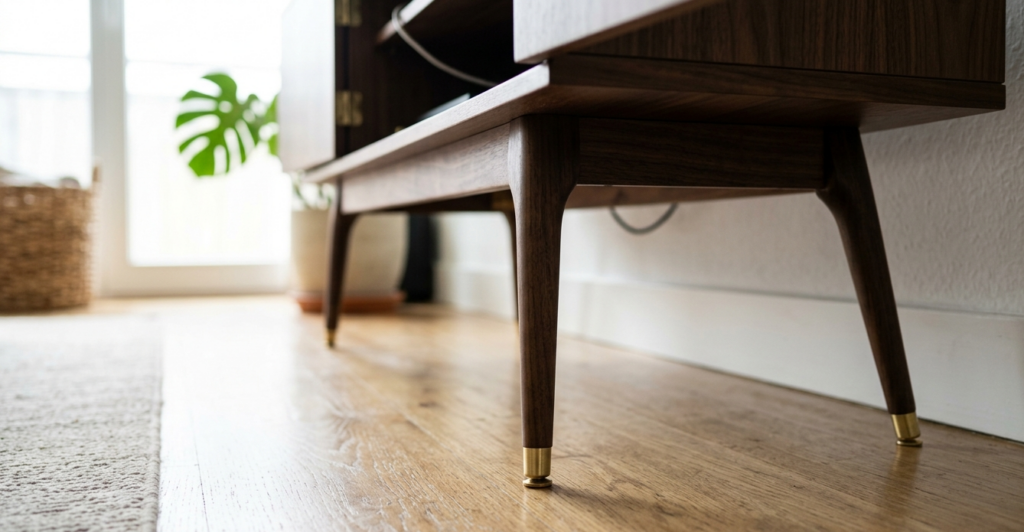
Floating your furniture—even just six inches—creates an illusion of airiness. It signals that the room is wide enough to accommodate “breathing room” behind the sofa.
3. Use Circular Elements
To combat the “boxiness” of a long room, introduce curves. A round coffee table, an arched floor lamp, or a circular rug can break up the harsh parallel lines of the walls.
Deep Dive: Color Palettes, Fabrics, and the Power of Texture
The secret to a professional-grade room isn’t just where you put the chair; it’s what that chair is made of. In narrow spaces, we use “visual weight” to balance the room.
The Psychology of Color
In a narrow room, color can either “squeeze” the space or “expand” it. I always recommend a tonal approach. Using varying shades of the same color prevents the eye from getting “stuck” on a sharp contrast, which can make the walls feel like they are closing in.
My Signature “Warm Minimalist” Palette:
- Wall Color: Alabaster White (Hex: #F2F0E8) – A soft, glowing white that prevents shadows in deep corners.
- The Fireplace Accent: Greige Stone (Hex: #B0A99F) – Using a slightly darker shade on the fireplace breast makes it advance visually, breaking the long wall.
- Furniture Base: Muted Clay (Hex: #D4A373) – Earthy tones ground the space.
- Accents: Deep Forest (Hex: #2D3A3A) – Use this for velvet pillows to add depth.
Textural Contrast: The Designer’s Secret Weapon
In a long room, the eye needs “resting places.” If every surface is smooth (think leather sofa, glass table, hardwood floors), the room feels cold and clinical. I have found that layering at least three distinct textures is the “magic number.”
- The Foundation (The Rug): Opt for a high-pile wool or a chunky jute. In a narrow room, a rug that is too small will make the room look like a bridge. Ensure the rug is wide enough that the front legs of all furniture pieces sit comfortably on it.
- The Upholstery: If your room is long and narrow, I love using Bouclé or Chenille. These fabrics catch the light at different angles, creating a sense of volume and softness that compensates for the room’s rigid shape.
- The Hard Surfaces: Incorporate natural elements. A reclaimed wood mantel or a travertine side table introduces “organic irregularity.” This distracts from the perfectly straight (and long) lines of the architecture.
How to Implement: The Fireplace Layouts
The fireplace is your “focal point.” In interior design, the focal point is the first thing you see when you enter. In a narrow room, it acts as the anchor. Here are three professional ways to layout the furniture around it:
The “Symmetrical Face-Off”
Place two identical loveseats perpendicular to the fireplace, facing each other. This creates a cozy “U” shape that ignores the length of the room and focuses on the fire. This is my go-to for formal sitting rooms.
The “L-Shaped Sectional” Strategy
If the room is your primary TV-watching space, place a sectional with the “short” end against the long wall and the “long” end extending out into the room. This acts as a physical divider, separating the living area from whatever is behind it (like a dining area).
The “Asymmetrical Balance”
Place a sofa opposite the fireplace, but offset it with two swivel chairs on one side. Swivel chairs are a designer’s best friend for narrow rooms—they can face the fire, the sofa, or turn around to engage with the rest of the room.
The Curator’s Choice: 5 Essential Pieces for Narrow Spaces
When I’m styling a long living room, I look for pieces that offer functionality without “choking” the floor plan. Here is my curated list of must-haves:
- The Acrylic “Ghost” Coffee Table: Because it’s transparent, it provides a surface for your drinks without taking up “visual real estate.” It makes the rug underneath visible, which maintains the flow of the floor.
- The Low-Profile Bench: If you need extra seating but don’t want to block the fireplace view, a backless leather bench is perfection. Place it between the fireplace and the main seating area.
- The “C” Table: These are slim tables that slide over the arm of your sofa. In narrow rooms where a traditional end table might block a walkway, the C-table is a lifesaver.
- Over-Mantel Oversized Mirror: A mirror is the oldest trick in the book, but it works. A mirror that is at least 70% of the width of your mantel will “push” the opposite wall back, doubling the perceived width of the room.
- Multi-Directional Track Lighting (Minimalist): Avoid one single “boob light” in the center. Instead, use slim, matte-black tracks that allow you to aim light into the dark “ends” of the long room.
Room-by-Room Application: The “Narrow” Philosophy
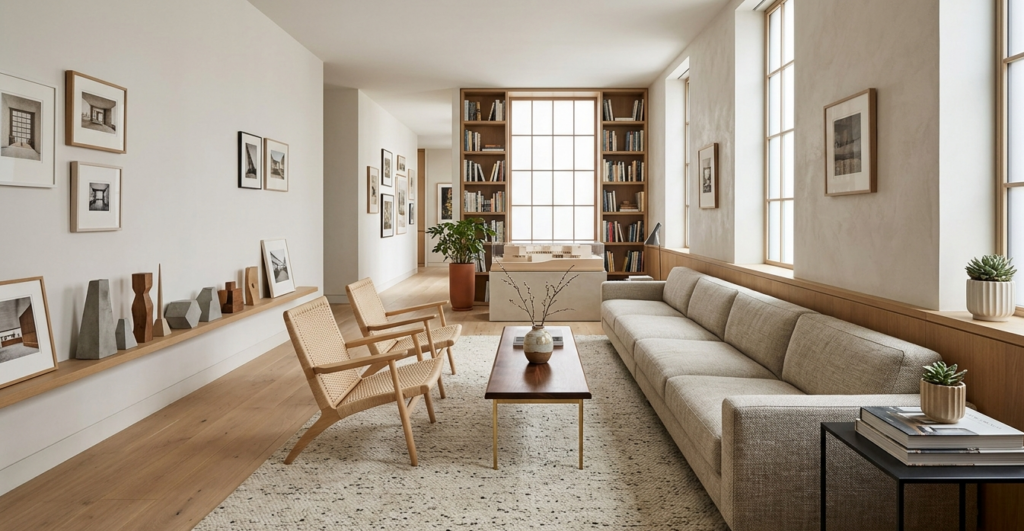
The principles we use in the living room actually apply to the rest of a narrow home. The goal is always to break the line of sight.
- The Bedroom: If you have a long, narrow bedroom, don’t just put the bed at the end. Try centering it on the long wall. Use “vertical interest” like tall headboards or hanging pendants to draw the eye up rather than across.
- The Kitchen: In a “galley” (narrow) kitchen, the “fireplace” equivalent is often the stove or a window. Use open shelving at the top to keep the “eye level” clear, making the narrow passage feel less claustrophobic.
Pros and Cons of a Narrow Living Room
Every architectural “challenge” has a silver lining. Here’s a look at the trade-offs:
| Feature | The Pro (Visual Harmony) | The Con (Functional Hurdle) |
| Length | Allows for multiple functional zones (Office + Living). | Can feel like a “hallway” if furniture is poorly placed. |
| Fireplace | Provides an automatic, beautiful focal point. | Dictates where the “center” must be, limiting flexibility. |
| High Ceilings | Often found in narrow older homes; adds majesty. | Can make the room feel like a “canyon” if not styled correctly. |
| Cosiness | Naturally intimate; easy to create a “cocoon” feel. | Hard to accommodate large groups or bulky furniture. |
You might also enjoy:
Expert Styling Tip: The “Horizontal” Hack
In my experience, the biggest “win” in a narrow room comes from floor treatments. Never use a rug with vertical stripes running the length of the room. This creates a “runway” effect that makes the room feel miles long and inches wide.
Instead, use rugs with horizontal patterns or organic, non-linear shapes. This forces the eye to move side-to-side, which subconsciously tells the brain, “This room is wide.”
Final Thoughts
Designing a long and narrow living room with a fireplace isn’t about fighting the architecture—it’s about dancing with it. By creating zones, embracing “floating” furniture, and using a tonal color palette, you turn a “challenge” into a sophisticated, curated environment. Remember, a home shouldn’t just look like a magazine spread; it should flow with the way you actually live.