
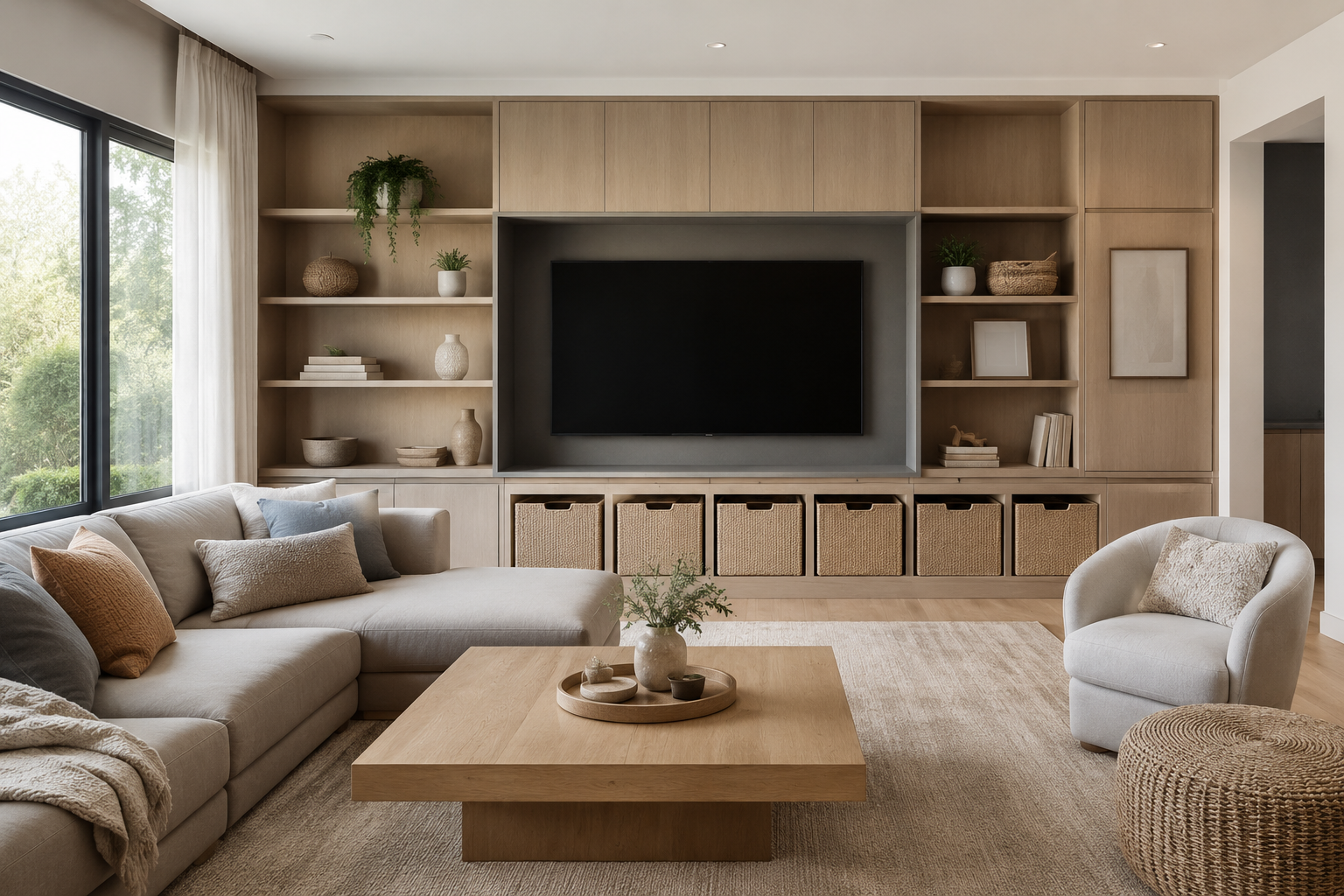
The Evolution of the Playful Home: From Plastic Bins to Curated Collections
Historically, “toy storage” meant one thing: a giant, bottomless wooden chest or a stack of translucent plastic tubs. While functional, these options often created a visual “dead zone” in a room. They were eyesores that shouted for attention rather than whispering in harmony with the rest of the architecture.
In recent years, the design world has shifted toward integrated living. We no longer want to wall off the children in a basement “playroom” that feels disconnected from the family. Instead, we are seeing a rise in multipurpose spatial flow. This means furniture must work harder. A coffee table isn’t just a surface for art books; it’s a potential vessel for wooden trains. An ottoman isn’t just a footrest; it’s a disguised bunker for doll accessories.
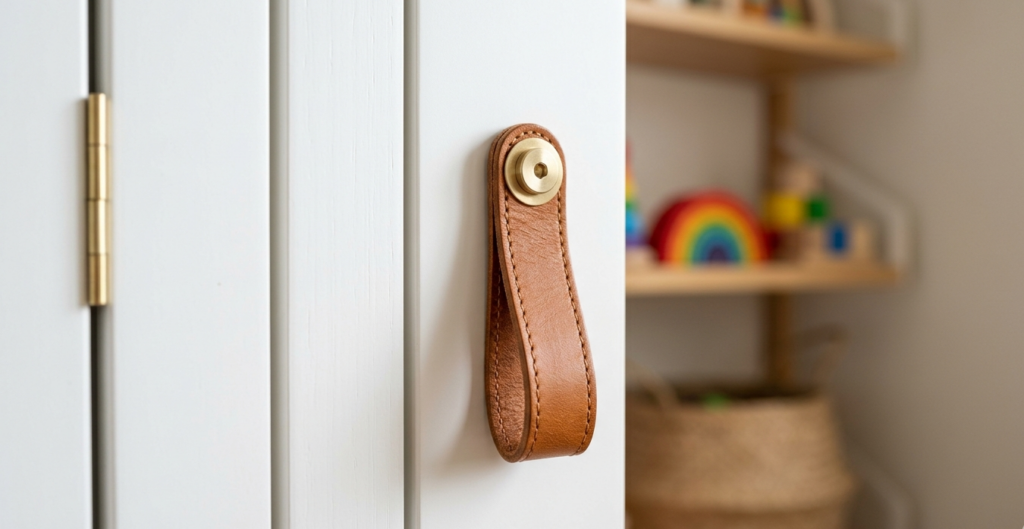
The Foundation of Style: Key Elements of “Invisible” Storage
To achieve a look that feels intentional, we have to look at the key elements of design: line, form, and texture. When selecting stylish toy storage solutions that blend into living room decor, I always advise clients to look for “chameleon furniture.”
1. Spatial Flow and Scaling
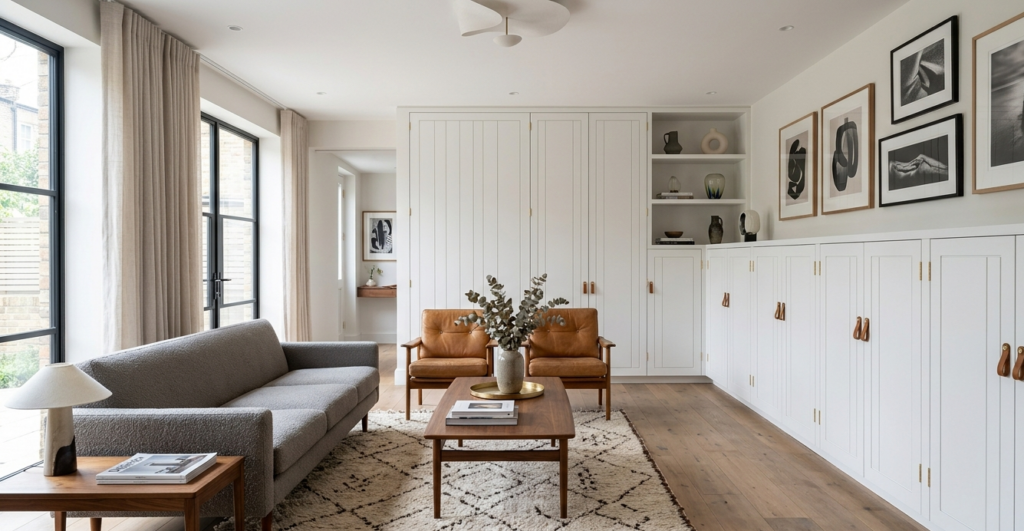
The biggest mistake people make is buying small, mismatched bins. This creates “visual clutter”—even if the toys are inside the bins, the bins themselves look messy. Instead, look for large-scale pieces that match the height of your existing furniture. A floor-to-ceiling built-in or a long, low sideboard maintains the spatial flow of the room, drawing the eye across the space rather than stopping it at a pile of boxes.
2. Textural Contrast
If your living room is dominated by a leather sofa and metal accents, introducing a soft, woven seagrass basket adds textural contrast. This makes the storage feel like a deliberate design choice rather than a compromise.
The Designer’s Palette: Color Psychology and Textures in Toy Management
In my experience, the secret to a high-end look lies in the color palette. We often associate toys with bright primaries, but your storage should reflect the sophisticated tones of your home.
Mastering the Palette
When I’m styling a home, I use specific color psychology to calm the energy of a room. For toy storage, I recommend staying within a 3-tone range that complements your walls. Here are three professional palettes I’ve curated for this year:
The “Serene Scandi” Palette
- Warm Sand (#E6D5B8): Use this for large cabinetry or primary shelving.
- Muted Sage (#92967D): Perfect for linen-wrapped storage boxes.
- Charcoal Slate (#3D405B): Use for hardware or small accent trays to ground the look.
The “Urban Sophisticate” Palette
- Deep Espresso (#3E2723): For mahogany or dark oak finishes.
- Burnished Gold (#C5A059): For metal legs or handles on storage units.
- Creamy Alabaster (#F2EBE3): For soft-close doors to prevent the room from feeling too heavy.
Fabric and Material Selection
The “feel” of your storage is just as important as the look. I have found that performance fabrics and natural fibers are the “gold standard” for stylish toy storage.
- Linen-Wrapped Bins: These offer a tailored, high-end look that mimics expensive upholstery. They slide beautifully into cubby systems without the “cheap” look of plastic.
- Vegan Leather Poufs: A hollow ottoman in cognac vegan leather is my favorite “secret” storage. It’s wipeable, durable, and looks incredibly chic next to a fireplace.
- Powder-Coated Metal: For a more industrial or modern farmhouse vibe, matte black or white metal lockers provide a nostalgic yet clean aesthetic.
How to Implement: A Step-by-Step Guide to the “Grown-Up” Transition
Creating a stylish system isn’t just about buying new furniture; it’s about a lifestyle shift.
- The Purge and Categorize: Before you can store stylishly, you must edit. Group toys by “Vibe.” Keep the beautiful wooden blocks or aesthetically pleasing books for open shelving. Hide the loud, plastic electronics in closed cabinetry.
- Define Your Focal Point: Every room needs a focal point. If your focal point is a beautiful fireplace, don’t flank it with toy bins. Instead, use a low-profile credenza along a side wall that mimics the lines of your sofa.
- The “Two-Tier” System: Use open storage (shelves) for things you want people to see—like a collection of vintage-style board games or a stack of oversized picture books. Use closed storage (drawers/doors) for the “chaos” items.
You might also enjoy:
- The Art of the Shelfie: How to Style Open Shelves
- Entryway Efficiency: Best Organization Stations
- Deep Dive: Under-Sink Organization for Vanities
The Curator’s Choice: 5 Essential Pieces for the Stylish Home
I’ve personally vetted hundreds of furniture pieces over the years. Here are five categories of accessories that I believe are the absolute best stylish toy storage solutions that blend into living room decor.
1. The Cane-Front Sideboard
Cane and rattan are incredibly “in” right now because they add a natural, organic feel to a room. A sideboard with cane doors allows for airflow (great if you’re storing electronic toys) and provides a beautiful textural element that masks the colorful clutter behind it.
2. The Custom-Upholstered Storage Bench
I often suggest placing a long, upholstered bench under a window. By choosing a fabric like a high-durability velvet or a performance herringbone, you create a sophisticated reading nook. The seat lifts to reveal a massive cavity for larger items like play mats or oversized trucks.
3. The Modular Wall System (Japandi Style)
The “Japandi” (Japanese-Scandinavian) aesthetic is perfect for families. It uses light woods and clean lines. A modular wall system allows you to mix open display shelves for your decor and closed cupboards at the bottom for the children’s “gear.”
4. Oversized Sculptural Baskets
Instead of a “toy box,” look for oversized, hand-woven baskets with lids. Look for materials like wool, seagrass, or recycled felt. A trio of varying heights in a corner creates a sculptural focal point while holding everything from stuffed animals to sports balls.
5. Acrylic Wall Ledges
For the bedroom or a kitchen corner, acrylic “ghost” shelves are a designer’s secret. They allow the colorful covers of children’s books to act as “art” without the visual weight of a bulky wooden bookshelf.
Room-by-Room Application: Integrating Play into Every Corner
The Living Room: The Art of Disguise
In the living room, storage must be “invisible.” My favorite trick is using a coffee table with a deep bottom drawer. From the top, it looks like a standard marble or wood piece. From the side, it holds the entire Lego collection. This maintains the room’s formal integrity while staying functional for daily life.
The Bedroom: Soft Textures and High Contrast
In a primary bedroom (where kids often gravitate in the morning), use under-bed rolling trundles made of wood or high-quality fabric. It keeps the floor clear, which is essential for maintaining a restful, “zen” environment. Stick to a high-contrast palette—white oak against dark rugs—to keep the look modern.
The Kitchen: The “Activity Hub”
Kitchens are the heart of the home, and often where kids do puzzles or art while you cook. I love a built-in banquette with pull-out drawers. It’s the perfect place to store art supplies and playdough. Using a “shaker-style” cabinet front ensures that the storage perfectly matches your kitchen cabinetry, making it look like a custom architectural feature.
Pros and Cons: Style vs. Maintenance
| Feature | Pros (The Style Win) | Cons (The Functional Reality) |
| Open Shelving | Creates a gallery feel; easy access for kids. | Requires constant “styling” to not look messy. |
| Closed Cabinetry | Hides everything; maintains a clean visual line. | Kids might forget what they have; doors can be heavy. |
| Woven Baskets | Adds warmth and organic texture to the room. | Can be difficult to clean if something spills inside. |
| Multipurpose Furniture | Saves space; maximizes every square inch. | Often more of an investment piece upfront. |
Expert Styling Tips for Final Touches
To truly elevate your storage, remember these three “Designer Secrets”:
- The Rule of Three: When styling the top of a toy storage unit, use the “Rule of Three.” Place a tall object (a lamp), a wide object (a tray), and a sculptural object (a candle or vase). This draws the eye upward and away from the storage below.
- Uniformity is Key: If you use bins inside a cubby, ensure they are all the same color and material. This creates a “monolithic” look that is much more soothing to the eye than a rainbow of containers.
- Lighting Matters: Add a wireless LED “puck light” or a small accent lamp to your storage area. Good lighting makes a piece of furniture look like a deliberate part of your home’s lighting plan rather than a dark corner where toys are shoved.
Conclusion: Reclaiming Your Sanctuary
Redesigning your home to accommodate children doesn’t mean sacrificing your personal style. By choosing stylish toy storage solutions that blend into living room decor, you are creating a space that respects both the energy of childhood and the serenity of adulthood.
The most beautiful houses aren’t the ones that look like a museum—they are the ones that flow effortlessly with the lives lived inside them. When you invest in pieces that offer both textural contrast and functional beauty, you aren’t just cleaning up; you’re curating a life.
Expert Tip: Always opt for “soft-close” hinges on any toy storage. It’s not just about safety; it’s about the luxury of silence. There is nothing less “designer” than the loud bang of a cabinet door!