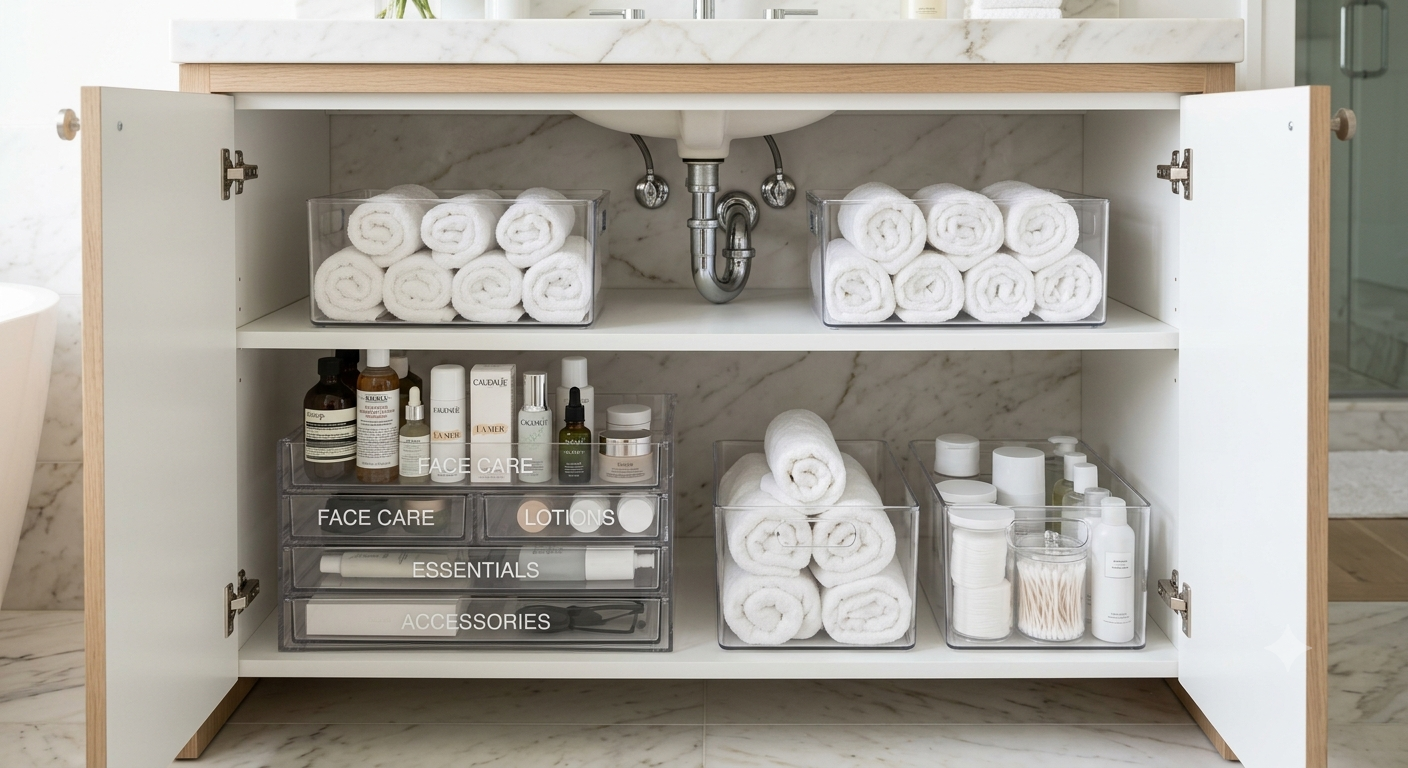
The bathroom is often the smallest room in the house, yet it carries the heaviest functional burden. In my fifteen years as an interior designer, I’ve found that the cabinet under the sink is the most neglected “prime real estate” in a home. We often treat it as a dark abyss where half-empty shampoo bottles and cleaning supplies go to be forgotten.
I remember a specific project for a client in a historic townhouse. The master bathroom was stunning but lacked any traditional storage. The vanity was narrow, and the “plumbing jungle” beneath the sink seemed to defy all logic. By applying a few under-sink organization hacks for bathrooms with limited space, we transformed that chaotic cabinet into a serene, spa-like extension of her home. It wasn’t just about tidying up; it was about creating a spatial flow that made her morning routine feel effortless.
The Philosophy of the Hidden Oasis
Historically, bathroom vanities were purely utilitarian. In early 20th-century design, the “washstand” was open, celebrating the craftsmanship of the porcelain and pipes. However, as our lives became more cluttered with specialized skincare, hair tools, and wellness products, the need for concealed, curated storage became paramount.
Designing the interior of a cabinet is just as important as choosing the tiles for your shower. It’s about functional styling. When you open those cabinet doors, you shouldn’t feel a pang of stress. Instead, you should see a reflection of your personal aesthetic—organized, intentional, and visually harmonious.
Key Elements of Small-Space Organization
- Verticality: In tiny bathrooms, you cannot grow out; you must grow up.
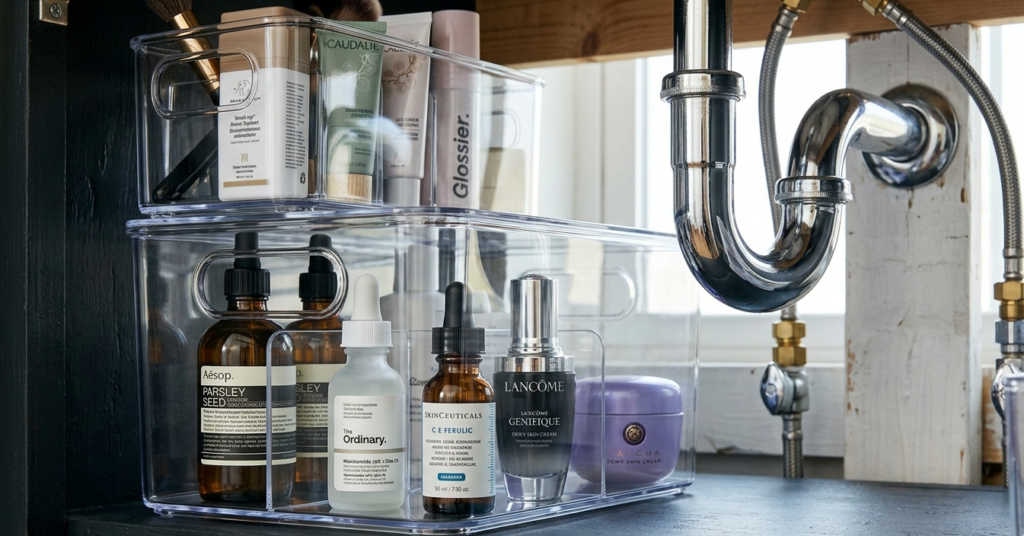
- Transparency: Using clear materials allows the eye to travel through objects, reducing “visual noise.”
- Accessibility: If you have to move five things to reach one, the system is broken.
- Textural Contrast: Mixing hard plastics with soft linens or natural woods creates a high-end feel even inside a cupboard.
Color Palettes and Textural Harmony
Organization is not just about bins; it’s about the visual story those bins tell. In my experience, a cohesive color palette inside your vanity can make the space feel twice as large.
The Curator’s Palette
When selecting bins and liners, I recommend sticking to a consistent theme. Here are three professional-grade palettes I often use:
- The Modern Zen (Japandi Influence):
- Soft Sand (#F5F5DC): Use for woven baskets or shelf liners.
- Slate Grey (#708090): Perfect for matte metal tiered drawers.
- Warm Oak (#D2B48C): For bamboo dividers.
- The Ethereal Spa:
- Crisp White (#FFFFFF): High-gloss acrylic bins.
- Seafoam Mist (#AFEEEE): Accent labels or small ceramic jars.
- Polished Silver: Chrome hardware and over-door hooks.
- The Moody Minimalist:
- Charcoal (#36454F): Opaque black bins for a seamless, “hidden” look.
- Antique Gold (#B8860B): For label holders or handles.
Fabric and Texture Selection
Don’t overlook the tactile experience. I love using linen-textured contact paper to line the bottom of the vanity. It provides a non-slip surface and adds a layer of textural contrast against smooth plastic bottles. For guest bathrooms, placing small wicker baskets filled with rolled microfiber towels introduces an organic element that softens the cold surfaces of the plumbing.
The Curator’s Choice: 5 Essential Organizers
After testing hundreds of products, these are the five “must-haves” for any serious bathroom renovation.
| Accessory Type | Best Use Case | Design Impact |
| Expandable Under-Sink Rack | Fitting around complex U-pipes. | Provides a “built-in” custom look. |
| Acrylic Tiered Drawers | Skincare and small cosmetics. | Maximizes visual clarity and light. |
| Adhesive Cabinet Door Bins | Frequently used items (brushes/hair ties). | Clears the focal point of the main shelf. |
| Bamboo Lazy Susan | Large bottles of shampoo and cleaning spray. | Creates effortless spatial flow and reach. |
| Tension Rod (Internal) | Hanging spray bottles or light towels. | Utilizes the “dead space” at the very top. |
Implementing the Hacks: A Step-by-Step Guide
To achieve a professional result, you must approach the under-sink area as a miniature room.
Step 1: The Great Purge and Measure
Empty everything. I mean everything. Measure the height, width, and depth, but most importantly, measure the plumbing clearance. The “trap” (the U-shaped pipe) is your biggest obstacle.
Step 2: Establish the Focal Point
What do you use every single day? That should be at eye level or in the most accessible drawer. In my home, I keep my daily serums in a beautiful crystal-clear acrylic tray right at the front. It looks like a boutique display.
Step 3: Layering and Lighting
Lighting is the “secret sauce.” Adding a simple battery-operated LED motion sensor inside the cabinet changes the experience from “digging in a cave” to “browsing a gallery.” It highlights the textural contrast of your organizers and makes it easy to maintain the system.
Room-by-Room Application: Beyond the Bathroom
While we are focusing on under-sink organization hacks for bathrooms with limited space, the design principles of “hidden efficiency” apply throughout the home.
The Living Room: The Media Console
Just as we hide plumbing, we must hide cables. Apply the “clear bin” rule here for remote controls and chargers. Use felt-lined trays to protect the finish of your furniture while maintaining a clean spatial flow.
The Bedroom: The Nightstand Interior
Nightstands are the “mini-vanities” of the bedroom. Use small velvet-lined dividers (in a soft Champagne Pink #F1DDCF) to organize jewelry or reading glasses. This ensures the top of the nightstand remains a serene focal point for a lamp and a book.
The Kitchen: The Pantry Transition
The kitchen sink faces the same pipe challenges as the bathroom. I often suggest using the same heavy-duty expandable racks used in bathrooms for kitchen detergents, ensuring a consistent design language across the entire house.
You might also enjoy:
- The Art of the Shelfie: How to Style Open Shelves
- Tame the Tech: Living Room Cable Management Guide
- Woven Wonders: Styling Decorative Storage Baskets
Pros and Cons: Style vs. Maintenance
Visual Pros
- Reduced Stress: A tidy space leads to a tidy mind.
- Elevated Aesthetic: Turning a utility area into a designed space adds a sense of luxury.
- Personalization: Using your favorite colors (like a soft Dusty Rose #DCAE96) makes the chore of cleaning more pleasant.
Functional Cons
- Maintenance: Acrylic requires regular wiping to stay “invisible.”
- Initial Cost: Quality materials like bamboo or heavy-gauge metal are an investment.
- Space Limitations: You are still confined by the physical dimensions of the cabinetry.
Conclusion
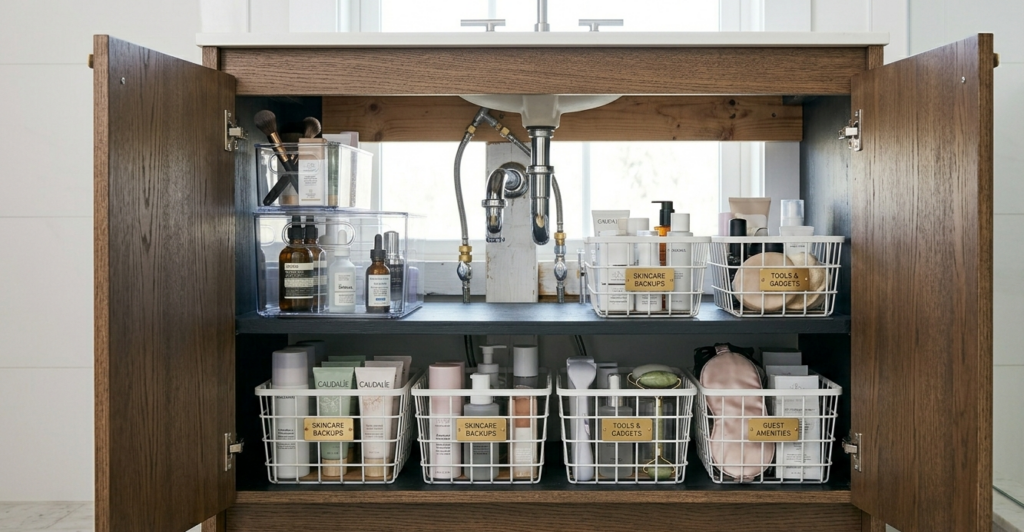
The secret to a home that feels like a sanctuary isn’t found in the grand gestures—the expensive sofas or the marble floors—it’s found in the quiet corners. When you master under-sink organization hacks for bathrooms with limited space, you reclaim a piece of your daily peace.
Expert Tip: Always leave 10% of your storage space empty. A “breathing” cabinet allows for future purchases without disrupting the visual harmony you’ve worked so hard to create.
Ready to transform your home? Subscribe to the Smart Renovation Guide newsletter for weekly design inspiration and exclusive styling tips delivered straight to your inbox!