
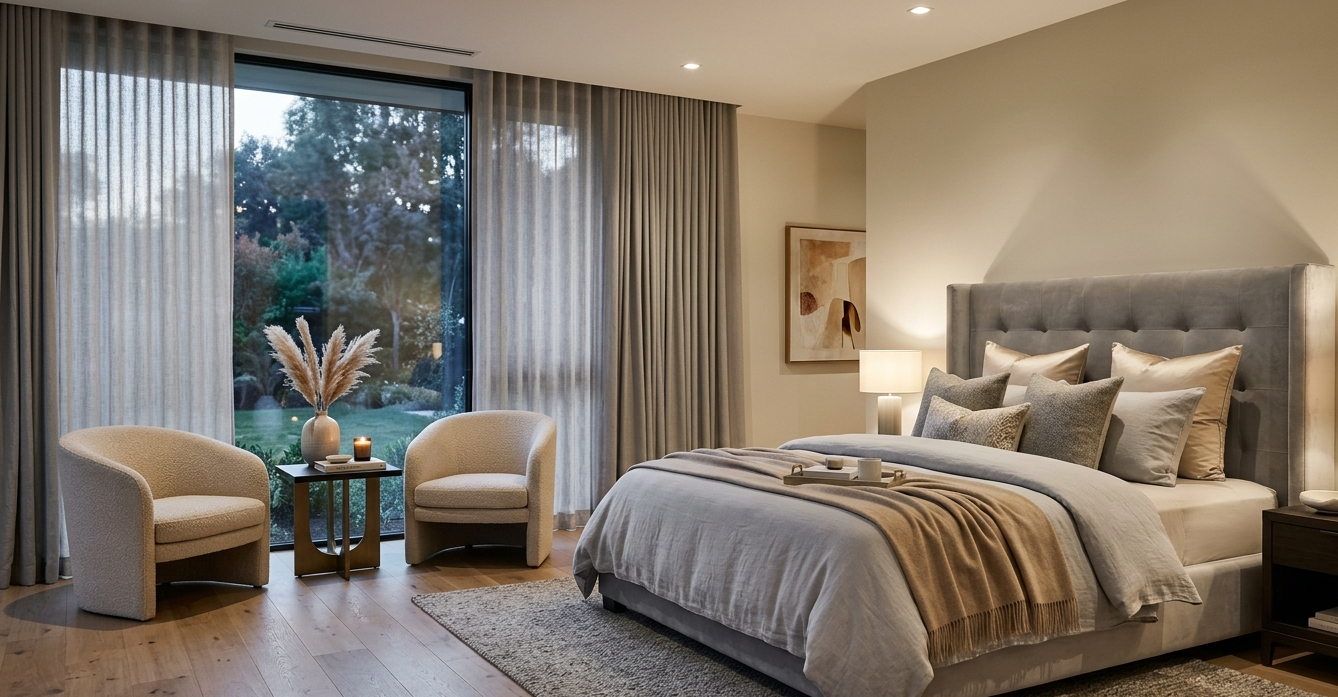
A bedroom shouldn’t just be a place to sleep; it should be a curated experience of comfort. If you are looking for master bedroom sanctuary ideas for a better night’s sleep, you’ve come to the right place. Let’s dive into how you can elevate your space from a mere room to a soulful retreat.
The Evolution of the “Sanctuary” Style: Why We Need It Now
Historically, the bedroom was a purely functional space. In the early 20th century, the focus was on hygiene and utility. However, as our lives have become increasingly digital and fast-paced, the “Sanctuary Movement” in interior design has taken hold.
Today’s master suite is a blend of Biophilic design (bringing the outdoors in), Minimalism (removing visual clutter), and Hygge (the Danish concept of coziness). We are moving away from the “Show Home” look—which can feel cold and untouchable—toward spaces that prioritize sensory experience and spatial flow.
Mastering Color Psychology and the “Quiet” Palette
Color is the foundation of any sanctuary. In my experience, the most common mistake is choosing a color because it’s “on-trend” rather than how it makes you feel at 11:00 PM.
The Science of “Quiet” Colors
To achieve a better night’s sleep, we look for colors with low saturation. These are tones that don’t demand your attention. I always suggest a palette that mimics the “Blue Hour” or a “Misty Morning.”
Suggested Color Palettes (With Hex Codes):
- The Ethereal Neutral: A mix of warm whites and sandy beiges.
- Alabaster Dream: #F2F0E7
- Pampas Grass: #D8D0C1
- The Botanical Retreat: Muted greens that ground the soul.
- Dusty Sage: #9BA38E
- Silver Eucalyptus: #B2BEB5
- The Twilight Suite: Deep, receding tones for those who love a “cocoon” feel.
- Midnight Slate: #2F353B
- Cloudy Lavender: #938A9B
Implementation Tip
When applying these colors, don’t just think about the walls. Consider the ceiling. Painting your ceiling a half-strength version of your wall color can eliminate the harsh “box” feel of a room, creating a seamless, sky-like transition that encourages the eyes to rest.
Textural Contrast and Fabric Selection
If color is the soul of the room, texture is the heartbeat. This is where many DIY designs fall flat. A room with only smooth surfaces feels clinical. To create a sanctuary, you need textural contrast.
The Fabric Deep Dive (400+ Words)
In my styling practice, I follow a “Rule of Three” for textures: The Soft, The Raw, and The Refined.
1. The Soft: The Foundation of Sleep
Your bedding is the most intimate contact you have with your home. For a true sanctuary, I moved away from high-sheen synthetic polyesters years ago. Instead, I advocate for long-staple cotton or European flax linen.
- Linen: It is the ultimate “Sanctuary” fabric. It has a natural weight and a slightly rumpled texture that signals to the brain that it’s okay to relax. It’s breathable, wicks moisture, and actually gets softer with every wash.
- Silk/Satin: Use these sparingly. A silk pillowcase isn’t just a luxury; it provides a smooth, cool surface that feels incredible against the skin.
2. The Raw: Grounding the Space
To prevent a bedroom from feeling too “floaty,” you need grounding elements. This is where bouclé, wool, and jute come into play.
- Bouclé: This knotted yarn fabric has taken the design world by storm, and for good reason. A bouclé accent chair or an upholstered bench at the foot of the bed adds a tactile, pebbled dimension that invites touch.
- Natural Wool: A chunky knit throw draped over the corner of the bed provides what I call “visual weight.” It makes the bed look anchored and warm.
3. The Refined: The Finishing Touch
Finally, add a touch of the refined to create a sense of luxury. This might be a velvet bolster pillow or sheer silk drapes.
- Velvet: I prefer matte velvet for bedrooms. It absorbs light rather than reflecting it, which contributes to a darker, more sleep-conducive environment.
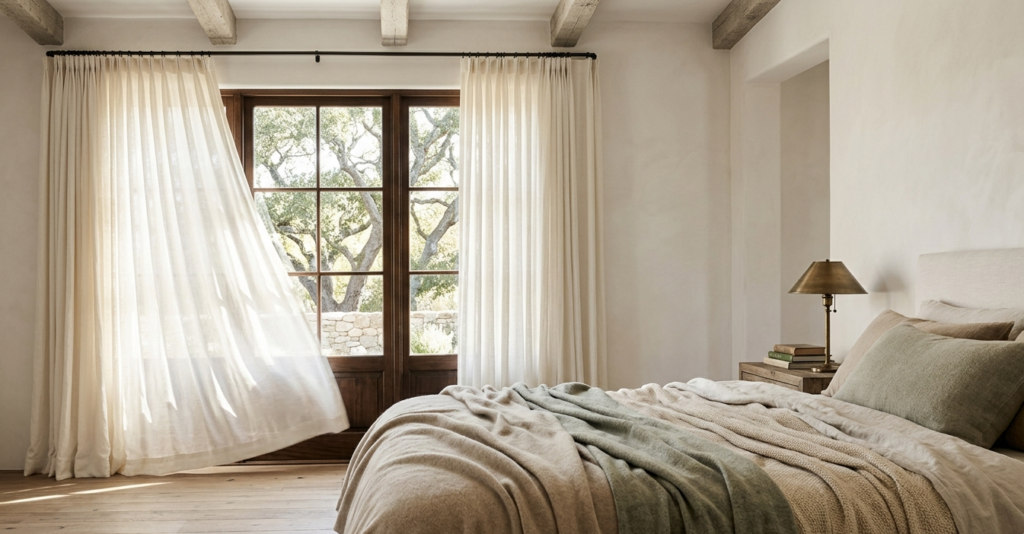
- Window Treatments: This is a crucial element for a better night’s sleep. I always recommend a “Layered Window.” Start with a functional blackout blind (the utility), then layer it with heavy floor-to-ceiling linen drapes (the aesthetic). This creates an acoustic buffer, muffling outside noise while looking incredibly lush.
The Pro Secret: Don’t match your textures perfectly. If your headboard is smooth leather, use a rough-spun linen duvet. If your flooring is sleek hardwood, use a high-pile plush rug. This tension between “rough and smooth” creates a sophisticated, designer-grade look.
You might also enjoy:
- How to Arrange a Narrow Living Room Layout Flawlessly
- Small Kitchen, Big Style: 10 Genius Decor Hacks
- Timeless Gender-Neutral Nursery Ideas & Decor
Curating Your Furniture and Spatial Flow
The way you move through your bedroom—the spatial flow—dictates your stress levels. If you are stubbing your toe on a bulky dresser every night, your “sanctuary” is failing.
Choosing the Focal Point
The bed is, naturally, the focal point. Ensure it is positioned to face the door but not directly in line with it (the “command position”). This provides a psychological sense of security.
Material Choices for Furniture
- Natural Woods: Opt for light oak, walnut, or reclaimed wood. The visible grain connects us to nature.
- Soft Edges: In a sanctuary, we avoid sharp corners. Look for nightstands with rounded edges or “pill-shaped” silhouettes. This softens the visual landscape of the room.
The Layered Lighting Scheme
Lighting is the quickest way to ruin a mood. If you have a single overhead “boob light” in the center of your room, change it immediately.
- Ambient Light: A dimmable chandelier or pendant that casts a soft glow.
- Task Light: Sleek, directional reading lamps on the nightstands.
- Accent Light: LED strips behind a headboard or a small lamp on a dresser to illuminate dark corners.
The Golden Rule: Always use “Warm White” bulbs (2700K). Anything higher feels like an office building.
The Curator’s Choice – 5 Essential Sanctuary Accessories
To truly elevate the space, you need these five elements. These aren’t just “stuff”; they are curated choices that serve a purpose.
- The Weighted Linen Quilt: Unlike a standard duvet, a weighted linen quilt provides a gentle pressure that mimics a hug, perfect for those seeking a better night’s sleep.
- The Sculptural Bedside Carafe: Hydration is key, but a plastic water bottle on the nightstand kills the vibe. A hand-blown glass carafe adds a touch of “boutique hotel” luxury.
- The Low-Profile Bench: Placing a bench at the foot of the bed does two things: it provides a spot to sit while putting on shoes and visually “finishes” the bed ensemble.
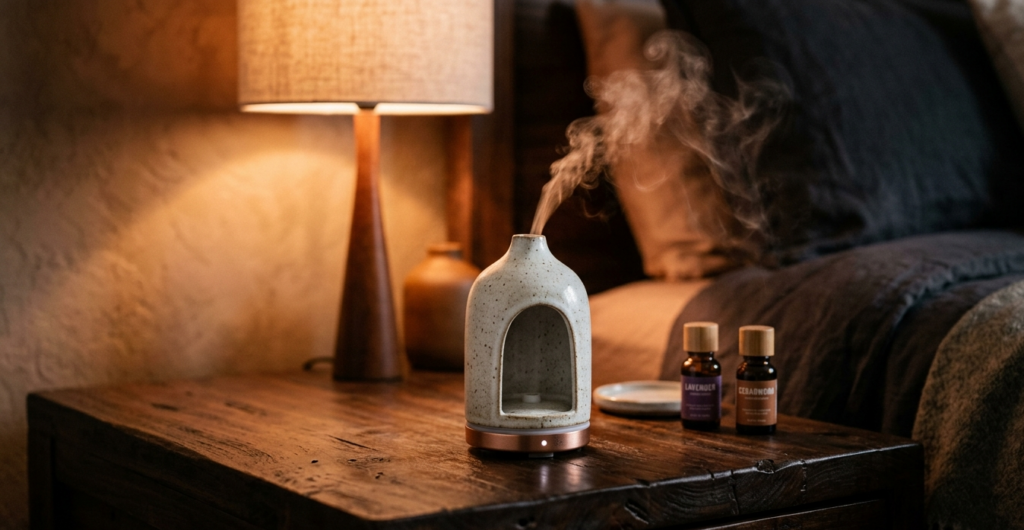
- The Essential Oil Stone Diffuser: Smell is the most overlooked sense in design. A matte ceramic diffuser using scents like cedarwood or bergamot completes the sensory experience.
- Dimmable Wall Sconces: By clearing the nightstand of lamps, you create more “white space,” which reduces visual clutter and promotes a calm mind.
Room-by-Room Application: Taking the Sanctuary Vibes Further
While we are focusing on the master suite, the principles of “Sanctuary Design” can be applied throughout the home:
- The Living Room: Focus on zonal lighting. Use floor lamps and candles to create “pockets” of warmth rather than lighting the whole room uniformly. Swap out sleek, cold pillows for high-texture knits.
- The Kitchen: Even a functional space can be a sanctuary. Keep the counters clear (Minimalism) and introduce organic elements like a marble pastry board or wooden fruit bowls.
- The Master Bedroom: As discussed, this is the core of the home’s peace. Use symmetrical balance (matching nightstands and lamps) to create a sense of order and calm.
Pros and Cons of Sanctuary Styling
| Feature | Pros (Aesthetic & Lifestyle) | Cons (Maintenance & Reality) |
|---|---|---|
| All-White Bedding | Looks like a 5-star hotel; feels fresh and airy. | Shows every speck of dust or pet hair; requires frequent washing. |
| Minimalist Surfaces | Reduces “visual noise” and mental clutter. | Requires discipline to keep “to-do” piles from forming. |
| Natural Linen | Incredible texture; stays cool in summer and warm in winter. | It will wrinkle; you have to embrace the “perfectly imperfect” look. |
| Deep, Dark Wall Colors | Creates a cozy, dramatic “cocoon” effect. | Can make a small room feel even smaller if lighting isn’t perfect. |
| High-Pile Rugs | Provides a soft landing for feet in the morning. | Difficult to vacuum and can trap allergens more easily. |
Conclusion: Finding Your Personal Peace
Creating a master bedroom sanctuary isn’t about following a rigid set of rules; it’s about editing your environment to support your well-being. By focusing on a “quiet” color palette, layering rich textures, and perfecting your spatial flow, you are telling your brain that this space is safe, sacred, and meant for rest.
In my experience, the most beautiful rooms aren’t the ones that cost the most—they are the ones that reflect the person sleeping in them.
Expert Tip: Before you start buying new furniture, do a “Visual Audit.” Stand in your doorway and take a photo of your room. Looking at a photo helps you see the clutter and “dead zones” you’ve become blind to. Start by removing three things that don’t bring you peace.