
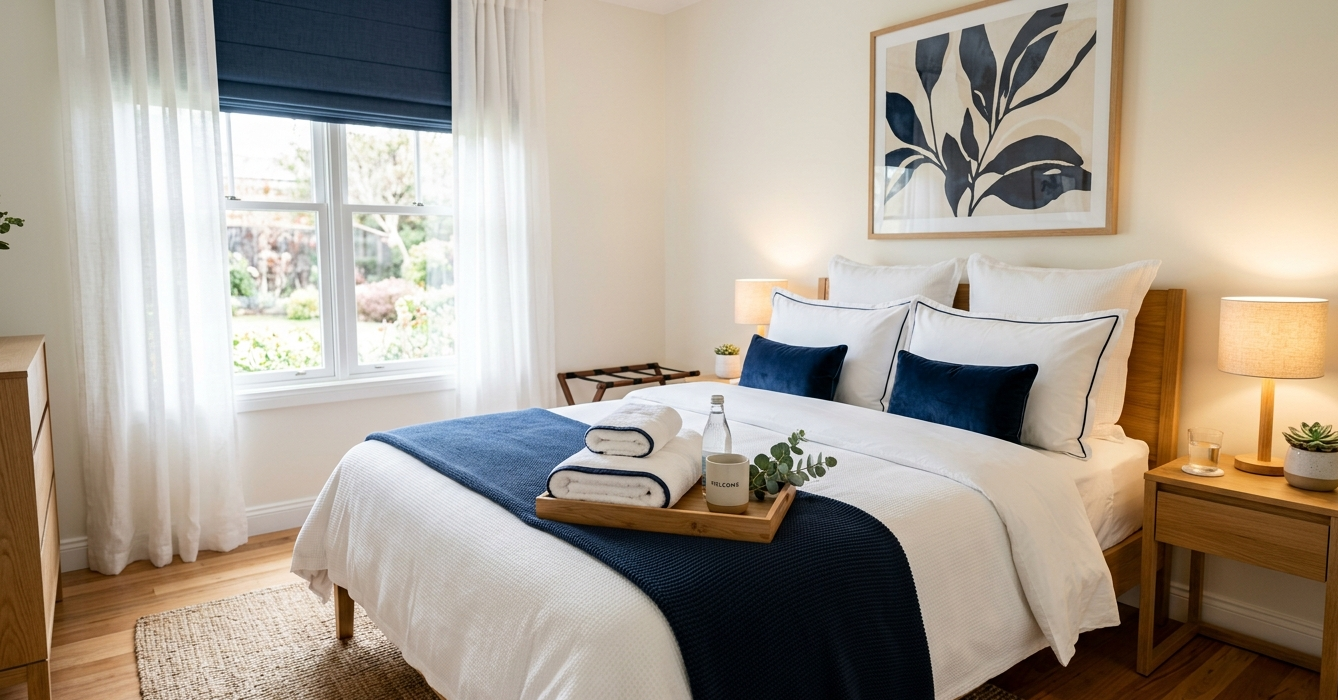
Today, I’m sharing those trade secrets with you. Let’s turn that cluttered spare room into a sanctuary your friends will never want to leave (though, for your sake, I hope they eventually do!).
The Philosophy of the Guest Sanctuary
Historically, the “spare room” was often a graveyard for retired furniture—the lumpy mattress from the 90s, the dresser with the sticking drawer, and the treadmill-turned-clotheshorse. However, the modern approach to residential aesthetics has shifted. We now view the guest room as a “brand experience” of your home. It’s an extension of your hospitality.
To master how to decorate a guest bedroom on a tight budget, we must focus on functional styling. This means every piece serves a purpose, and every decorative choice enhances the room’s visual harmony.
Defining the Key Elements of a Budget Sanctuary
- The Anchor: A comfortable bed (even if it’s a DIY-refurbished frame).
- The Palette: A cohesive color story that evokes calm.
- The Layering: Using textiles to create depth and warmth.
- The Lighting: Moving beyond the “big light” to create a mood.
Deep Dive: The Alchemy of Color and Texture
In design, color and texture are your most cost-effective tools. You don’t need a $5,000 rug when you understand how to manipulate textural contrast.
The Psychology of the Palette
When decorating on a budget, paint is your best friend. It’s the cheapest way to fundamentally change a room’s energy. I always recommend a “Sophisticated Neutral” base. This allows you to swap out seasonal accessories without repainting.
The “Serene Host” Palette:
- Base: Soft Greige (Hex: #D6D2C4) – Provides a warm, stone-like backdrop.
- Accent 1: Dusty Sage (Hex: #8A9A5B) – Brings in an organic, calming element.
- Accent 2: Charcoal Navy (Hex: #2C3E50) – Adds a “grounding” weight to the room, perfect for a focal wall.
Fabric Choices: Linen, Cotton, and the Magic of Velvet
In my experience, the tactile sensation of a room determines its perceived value. To host in style, focus on natural-looking fibers.
- Linen-Look Synthetics: Pure linen is expensive. However, high-quality linen-polyester blends offer that breezy, organic look with better wrinkle resistance and a lower price point.
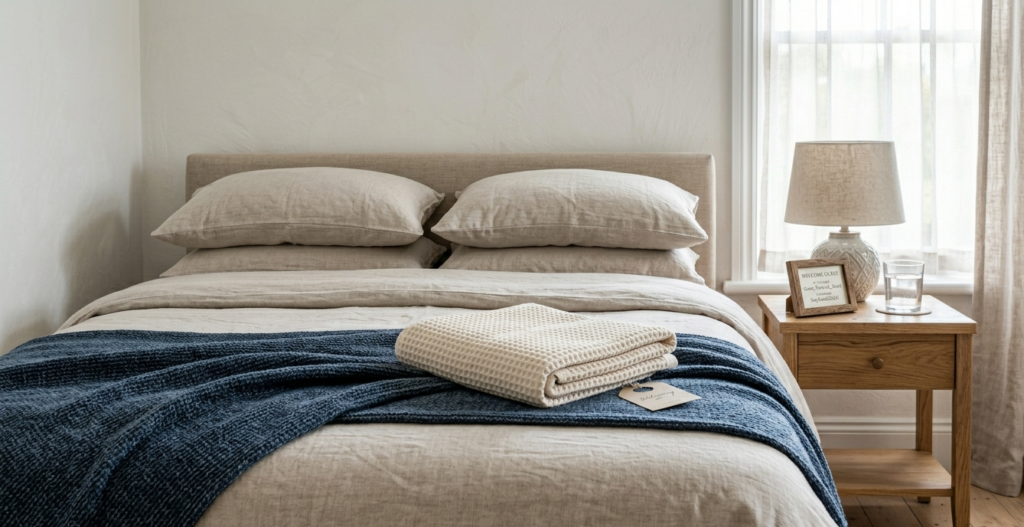
- Textural Contrast: Pair a crisp cotton duvet with a chunky knit throw. This interplay of “smooth” and “rough” creates a high-end spatial flow that feels curated, not “matched.”
- The Velvet Touch: A single velvet lumbar pillow can elevate a $20 thrifted chair into a statement piece. Velvet catches the light and adds a layer of sophistication that flat fabrics simply can’t match.
How to Implement: A Step-by-Step Budget Transformation
1. Establish a Focal Point
Every room needs a “hero.” In a guest bedroom, this is almost always the bed. If you can’t afford a new headboard, try a trompe l’oeil effect. Paint a large arch or rectangle on the wall behind the bed in a contrasting color. It mimics the presence of a headboard for the cost of a quart of paint.
2. Lighting Layers
I cannot stress this enough: turn off the overhead light! To achieve that boutique hotel vibe, you need at least three light sources.
- Task Lighting: Symmetrical lamps on nightstands.
- Ambient Lighting: A warm floor lamp in the corner.
- Accent Lighting: A small LED picture light over a piece of art.
3. Curated Minimalism
One of the biggest mistakes in budget decorating is “over-accessorizing” with cheap knick-knacks. Instead, embrace the “edit.” A few large, meaningful pieces are better than ten small ones that create visual clutter.
The Curator’s Choice: 5 Must-Have Budget Accessories
As a designer, I keep a “cheat sheet” of items that look expensive but are surprisingly affordable. Here are my top five picks for the ultimate guest room:
- The Oversized Round Mirror: Placing a large mirror opposite a window bounces light and makes a small guest room feel twice the size. Look for thin black or brass frames for a modern edge.
- Bamboo Roman Shades: These add an incredible organic texture. They look custom-made but can be found at big-box stores for under $40. They provide that “Japandi” or “Coastal” warmth effortlessly.
- The “Universal” Nightstand: Instead of matching sets, try using a small wooden stool or a vintage suitcase stack. It adds character and a story to the room.
- Dimmable Amber Bulbs: Swap out harsh white bulbs for Edison-style amber bulbs. They instantly soften the room’s complexion and hide imperfections in older walls.
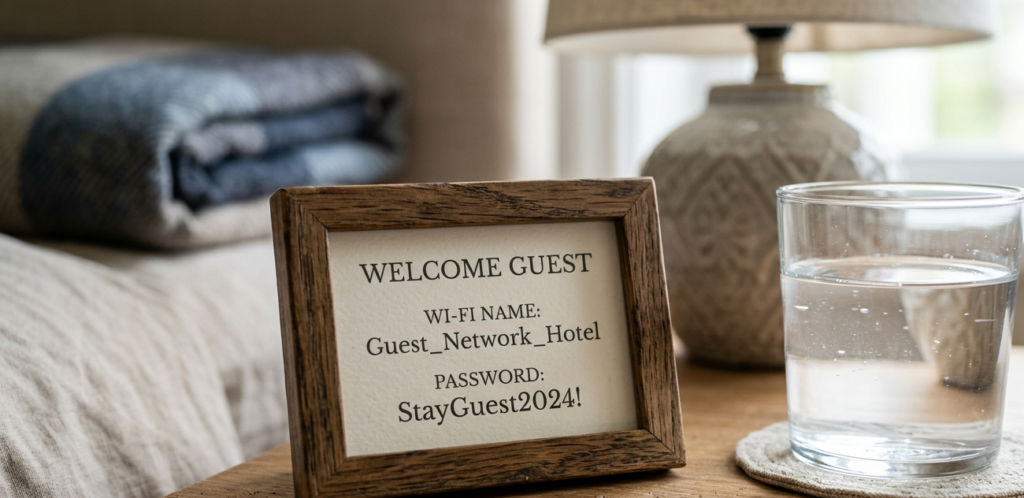
- The Glass Water Carafe: It’s a $10 investment that makes a guest feel like they are in a five-star resort. Place it on the nightstand with a clean glass.
You might also enjoy:
- How to Arrange a Narrow Living Room Layout Flawlessly
- Powder Room Glam: Best Bold Wallpaper Secrets
- First Impressions: 7 Welcoming Entryway Ideas
Beyond the Bedroom: Room-by-Room Application
The principles of “hosting in style on a budget” aren’t limited to the sleeping quarters. You can carry this aesthetic flow throughout your home to ensure your guests feel welcome in every corner.
The Living Room: The “Social Flow”
When guests are over, the living room needs to transition from your private lounge to a social hub.
- Application: Use “zonal” lighting. Ensure there is a surface (even a small “C-table”) within arm’s reach of every seat for a guest to place their coffee.
- Budget Tip: Rotate your existing pillows. Bring the plushest ones from your master bedroom into the living room during their stay.
The Kitchen: The “Self-Serve” Station
Guests often feel awkward asking for a glass of water or a snack.
- Application: Create a designated “coffee and tea station.” Use a tray to corral mugs, spoons, and a bowl of fruit.
- Budget Tip: Clear a single shelf in your pantry or a small corner of the counter. It costs nothing but provides immense “lifestyle” value.
Pros and Cons: Budget Styling vs. High-End Investment
| Feature | Budget Styling (The “Smart” Way) | High-End Investment |
| Visual Impact | High; relies on color and creative layering. | High; relies on material quality and brand. |
| Maintenance | Generally easier; many budget fabrics are machine washable. | Can be delicate; silk or high-end wool requires professional care. |
| Longevity | Medium; trends change, and budget items may wear faster. | High; heirloom pieces last decades. |
| Flexibility | Excellent; easy to swap items as your style evolves. | Low; you are “committed” to the piece due to cost. |
| Unique Factor | High; often involves DIY or thrifted finds. | Medium; designer pieces can be recognizable. |
Detailed Design Strategies for Spatial Flow
When we talk about spatial flow, we are talking about how a body moves through the room. A guest bedroom on a budget often suffers from being “cramped.”
In my experience, the secret is “floating” your furniture. If you push everything against the walls, the room feels like a box. Pulling the bed just six inches away from a corner, or placing a chair at a slight angle, creates “negative space.” This negative space is what gives luxury hotels that airy, expensive feel.
Material Choices That Punch Above Their Weight
- Jute and Sisal: For flooring, jute rugs are incredibly affordable and add a massive amount of textural contrast. They act as a neutral “ground” for the room.
- Brass Accents: Use a can of metallic spray paint to update old drawer pulls or lamp bases. A consistent metal finish (like brushed brass) ties a room together instantly.
- Greenery: Never underestimate a $15 Pothos plant. It adds “life” and movement. If you lack a green thumb, high-quality dried florals like Eucalyptus or Pampas grass offer the same organic aesthetic with zero maintenance.
The Guest Room Checklist: The “Small Joys”
Before your guest arrives, walk through the room and look for these small, budget-friendly details:
- The Power Strip: Don’t make them crawl under the bed to charge their phone.
- The Empty Drawer: Leave at least one drawer or a few hangers free.
- The “Local” Touch: A small stack of books by a local author or a map of your favorite nearby walking trails.
Conclusion: The Soul of the Room
At the end of the day, how to decorate a guest bedroom on a tight budget isn’t about finding the cheapest items; it’s about finding the most meaningful ones. I have found that guests remember the scent of a fresh candle and the warmth of a soft blanket far longer than they remember the brand of the nightstand.
Designing your home is a journey of self-expression. By focusing on visual harmony, textural contrast, and intentional hosting, you create a space that doesn’t just look good on a blog—it feels good to live in.
Expert Tip: “The Scent Signature.” Buy a specific room spray or candle just for the guest room. When your guests return for their next visit, that specific scent will instantly trigger feelings of relaxation and ‘home.’ It’s a luxury sensory experience that costs less than $20.