
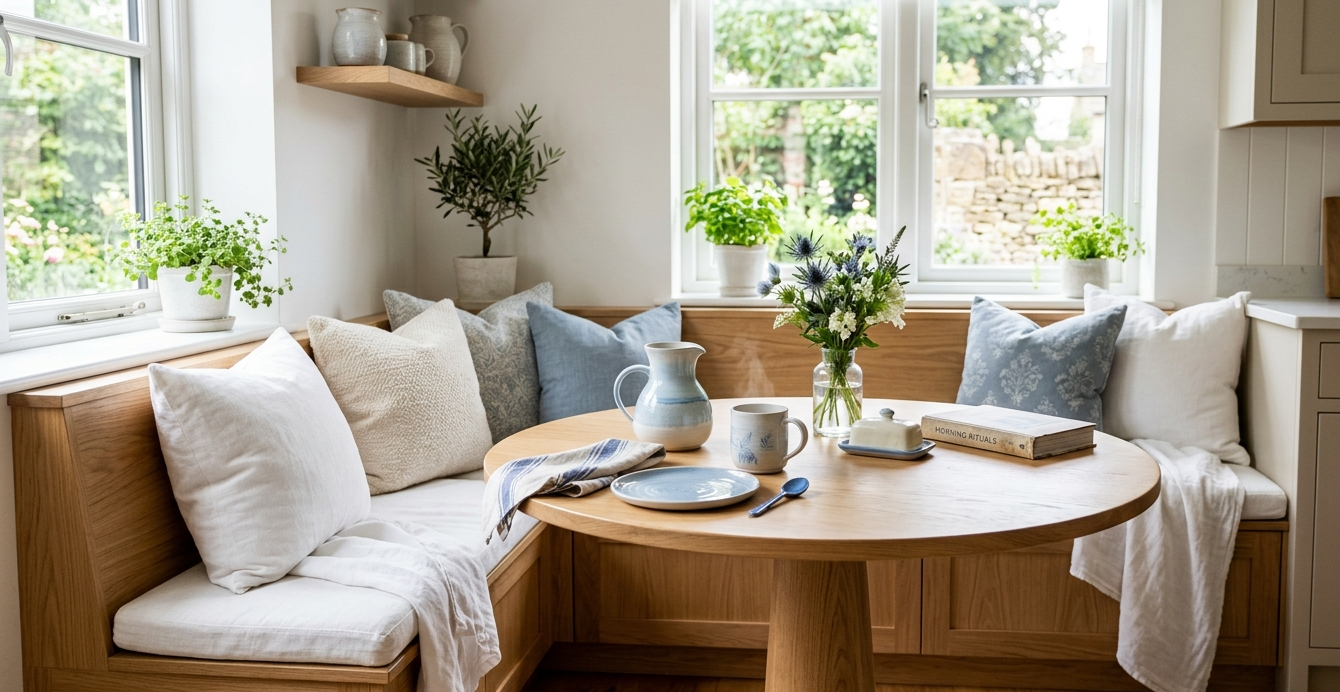
Choosing between a formal dining room vs. casual breakfast nook is about balancing the theater of hosting with the intimacy of daily ritual. Let’s dive deep into how you can choose the right setup for your home.
The Evolution of the Eating Space: A History of Style
To understand where we are going, we have to look at where we started. Historically, the formal dining room was a symbol of status—a dedicated “stage” for the evening meal, often separated from the “mess” of the kitchen by a butler’s pantry. It was a place of fine linens, silverware, and ritual.
The breakfast nook, conversely, emerged as a response to the modernization of the kitchen in the early 20th century. As kitchens became cleaner and more “scientific,” the idea of a “breakfast corner” or “Pullman nook” (inspired by train cars) became the height of efficiency.
Today, these lines are blurring. We are seeing a “Casualization of the Home,” where the formal dining room is being reimagined as a multi-functional library or lounge, while the breakfast nook is being elevated with high-end textures and sophisticated lighting.
Defining the Formal Dining Room: The Art of the Focal Point
A formal dining room is defined by its focal point: usually a substantial table centered under a statement chandelier. This is a space designed for “slow time.”
Key Elements of a Formal Dining Room:
- Scale and Symmetry: Formal rooms thrive on balance. Matching chairs, a centered rug, and a sideboard or buffet for symmetry.
- Acoustics: Because these rooms are often enclosed, we use textiles to soften the sound. Think heavy drapes and plush area rugs.
- The “Grand” Material Palette: This is the place for hardwoods (walnut, mahogany), marble tops, and velvet upholstery.
Defining the Breakfast Nook: The Soul of the Kitchen
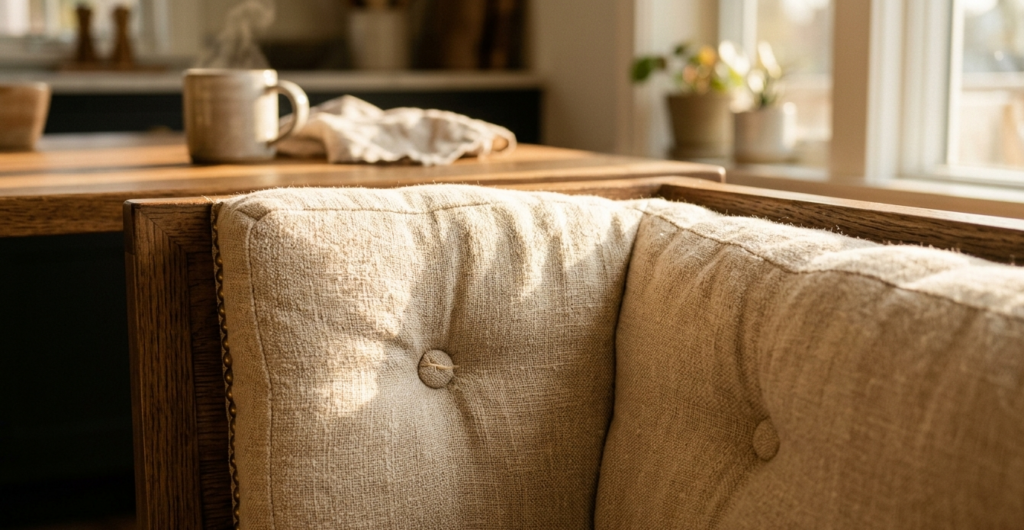
The breakfast nook is the “hug” of the home. It’s usually tucked into a corner, often featuring built-in seating (banquettes) and bathed in natural light. In my experience, this is where the most important conversations happen—over messy pancakes or a late-night glass of wine.
Key Elements of a Casual Breakfast Nook:
- Spatial Efficiency: Nooks utilize “dead space” like corners or window bays.
- Informality: Use of pedestal tables (to make sliding into booths easier) and mix-and-match seating.
- Durability: Materials focus on “wipe-ability”—leather, performance fabrics, and laminate or treated wood.
Deep Dive: Textures, Color Palettes, and Fabrics
When I consult on a renovation, I tell my clients that the “mood” is dictated by what you touch and the colors that surround you. Here is how to curate your palette for each space.
The Formal Dining Room: Moody Sophistication
For a formal space, I love a palette that feels like a jewelry box. We want colors that look incredible under candlelight.
- Color Palette:
- Deep Navy (Hex: #1B263B): Grounding and timeless.
- Champagne Gold (Hex: #D4AF37): Use this for hardware and trim.
- Soft Greige (Hex: #C2B2A3): To balance the ceiling and walls.
- Fabric Choices:
- Mohair and Velvet: These provide a textural contrast against a hard wood table. They absorb light beautifully, giving the room a “glow.”
- Silk-Blend Drapery: Adds a verticality that makes the room feel taller.
The Breakfast Nook: Organic Warmth
The nook should feel like a sunny morning, even on a cloudy day. We focus on organic textures.
- Color Palette:
- Sage Green (Hex: #8A9A5B): Connects the indoor space to the garden outside.
- Terracotta (Hex: #E2725B): Adds a pulse of energy.
- Cream (Hex: #FFFDD0): Keeps the corner feeling expansive.
- Fabric Choices:
- Linen: For window treatments. It filters light rather than blocking it.
- Performance Leathers/Vinyls: In a nook, spills are inevitable. I always suggest a high-end faux leather for banquette cushions—it looks chic but cleans with a damp cloth.
- Woven Cane: Incorporating Rattan or Cane in the chairs adds a “breathable” visual texture that keeps a small corner from feeling heavy.
The Curator’s Choice: 5 Essential Pieces for Your Eating Space
As an interior designer, I have a “shortlist” of items that I believe can make or break these rooms. Here is my curated selection for your renovation:
- The Statement Pedestal Table (Best for Nooks):The Tulip Table style is a classic for a reason. Its central base allows for maximum legroom in a tight corner. I recommend a marble or high-grade quartz top to add a touch of luxury to a casual setting.
- Performance Velvet Armchairs (Best for Dining Rooms):If you want your guests to stay through dessert, the chairs must be comfortable. A “host chair” with arms, upholstered in a stain-resistant performance velvet, provides the comfort of a living room sofa at the dining table.
- The Oversized Overscaled Pendant:In a dining room, go bigger than you think. A large-scale paper lantern or a tiered glass chandelier creates an “anchor” that defines the zone, especially in open-concept homes.
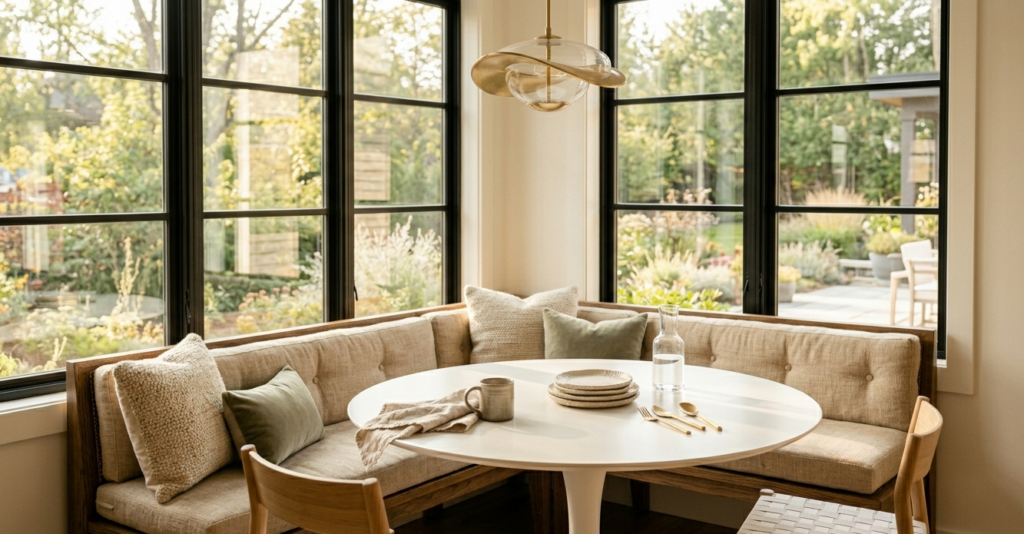
- Custom Banquette Upholstery:For nooks, skip the individual chairs on one side. A custom-fitted bench maximizes seating and makes the space feel like a high-end boutique hotel.
- Layered Window Treatments:I always pair a functional solar shade (to block morning glare in the nook) with decorative side panels (to add softness and height).
Room-by-Room Application: Integrating the Theme
How do you make sure your choice of dining area doesn’t clash with the rest of your home’s spatial flow?
The Kitchen Connection
The breakfast nook should be a visual extension of your kitchen cabinetry. If your kitchen has Shaker-style cabinets, your nook bench should mirror those lines. This creates a “built-in” look that feels intentional rather than added on.
The Living Room Transition
In many modern renovations, the formal dining room sits between the kitchen and the living room. To maintain harmony, use a consistent flooring material. I often use a large-scale area rug in the dining area to “zone” it, while leaving the wood floors exposed in the living room to keep the flow open.
The Bedroom Influence
Wait, the bedroom? Yes! The textures you choose for your dining area can be mirrored in the bedroom to create a “whole-home” aesthetic. If you’ve chosen linen for your breakfast nook, use a similar linen weight for your bed duvet. This subtle repetition is the secret to a professional-looking home.
You might also enjoy:
- How to Arrange a Narrow Living Room Layout Flawlessly
- Studio Living: Best Room Divider Ideas for Layouts
- Unlocking Potential: Designing a Cozy Basement Lounge
Pros and Cons: A Visual and Functional Breakdown
Formal Dining Room
- Pros:
- Visual Grandeur: Provides a dedicated space for holiday decor and fine art.
- Focus: Keeps the “mess” of the kitchen out of sight during a dinner party.
- Resale Value: Many buyers still look for a “designated” dining space in traditional neighborhoods.
- Cons:
- Space Usage: Often becomes a “junk collector” or a place to fold laundry when not in use.
- Maintenance: Fine wood finishes and delicate fabrics require more care.
Casual Breakfast Nook
- Pros:
- Intimacy: Encourages closer conversation and a “cozy” vibe.
- Versatility: Doubles as a homework station, home office, or craft corner.
- Space Saving: Perfect for smaller homes or apartments.
- Cons:
- Crowding: Can feel cramped if more than four people are trying to eat.
- Visual Clutter: Because it’s usually in the kitchen, you’re often looking at dirty dishes while you eat.
The Verdict: Which One Do You Actually Need?
In my professional opinion, the answer lies in your lifestyle reality, not your “Pinterest fantasy.”
Ask yourself: How often do we sit down as a group? If the answer is “every night” and you have a family of five, the formal dining room (or a large casual dining table) is a necessity. If you are a couple who mostly eats on the go or at the kitchen island, a breakfast nook will be the most used “square footage” in your house.
In many of my recent projects, I’ve recommended the “Hybrid Model.” This involves creating a high-end, comfortable breakfast nook that is large enough to handle a casual dinner party, while repurposing the “formal dining room” into a library/music room with a smaller, round table that can expand when needed.
Conclusion: Expert Tip & Final Thoughts
The Expert Tip: If you can only choose one, focus on the lighting and the seat comfort. You can eat a five-course meal at a kitchen counter if the stool is comfortable and the lighting is dim and warm. Conversely, the most expensive dining table in the world will feel uninviting under harsh, flickering overhead lights. Always install dimmers!
Your home should be a reflection of your daily joys. Whether that’s the grand tradition of a Sunday roast in a formal room or the quiet solitude of a sun-drenched nook with a book, make sure it’s a space that invites you to linger.