
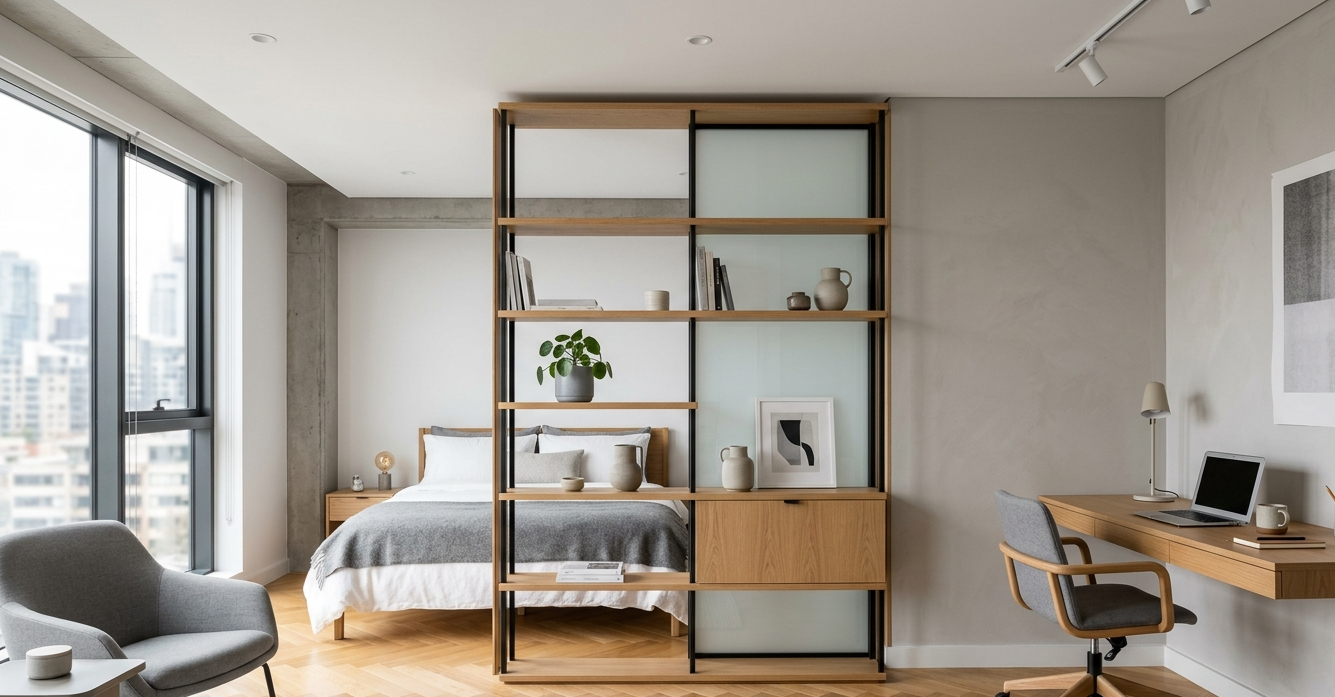
Creating a smart studio apartment layout to separate work and sleep is about more than just moving furniture; it is about reclaiming your mental well-being through intentional aesthetics. In this guide, I will share the strategies I use to cultivate a home that feels like a sanctuary, even when your “commute” is just a pivot of your swivel chair.
The Evolution of the Multipurpose Home
Historically, the “studio” was the artist’s refuge—a place where life and work were inextricably linked. Today, that concept has been refined into a high-end lifestyle choice. However, as we have transitioned into a more digital-centric existence, the need for a focal point in each zone has become paramount.
In my experience, the most successful small-space designs don’t try to hide the fact that they are one room; instead, they celebrate the fluidity of the space while using “soft boundaries” to define purpose.
Key Elements of Zonal Separation
- Visual Continuity: Keeping a consistent color story so the room doesn’t feel fractured.
- Translucent Barriers: Using materials that stop the eye but let the light through.
- Acoustic Softening: Utilizing textiles to dampen the “office noise” during evening hours.

The Art of the Visual Divide: Materials and Light
When we talk about separating a bedroom from a home office, we are really talking about managing sensory input.
The Power of Lighting Design
In a studio, you cannot rely on a single overhead light. I always recommend a layered lighting plan. For the bedroom area, think warm, diffused light (2700K) using linen shades. For the workspace, a dedicated task lamp with a cooler, focused beam (3500K) creates a “cone of productivity.” When the task lamp goes off, the office effectively “disappears” into the shadows.
Material Choices: Glass, Wood, and Textile
- Ribbed Glass: A personal favorite for dividers. It blurs the workstation’s monitors into abstract shapes while maintaining an airy feel.
- Natural Oak: Brings warmth and a sense of permanence to modular shelving used as a room divider.
- Velvet and Linen: These fabrics are essential for “softening” the edges of a workspace.
Deep Dive: Textures, Palettes, and the Psychology of Color
To truly master the smart studio apartment layout ideas to separate work and sleep, we must look at the “skin” of the room. In my career, I have found that a monochromatic base with varied textures prevents a small space from feeling cluttered.
The “Sophisticated Sanctuary” Palette
I suggest a palette that bridges the gap between “energizing morning” and “calm evening.”
- The Foundation: Swiss Coffee (Hex: #F1EFE6). A warm, creamy white that reflects light without feeling sterile.
- The Office Accent: Slate Blue (Hex: #708090). I often use this for the wall behind the desk or the desk chair itself. Blue promotes focus and professional calm.
- The Bedroom Accent: Terracotta Rose (Hex: #C27E73). Use this for pillows or a throw blanket. It adds a grounded, organic warmth that signals the body it’s time to rest.
Textural Contrast
I am a firm believer that textural contrast is the secret language of high-end design.
- In the Office: Use “hard” textures. A polished stone desk weight, a smooth metal lamp, or a leather desk mat. These materials feel intentional and disciplined.
- In the Bedroom: Transition to “soft” textures. A chunky knit wool rug (which also helps with sound insulation), raw silk pillowcases, and a bouclé accent chair.
The Curator’s Choice: 5 Essential Pieces for Studio Separation
Selecting the right furniture is where the “Smart” in Smart Renovation Guide truly comes to life. Here are five items I frequently specify for studio projects:
| Accessory/Furniture | Why it Works | Stylist Tip |
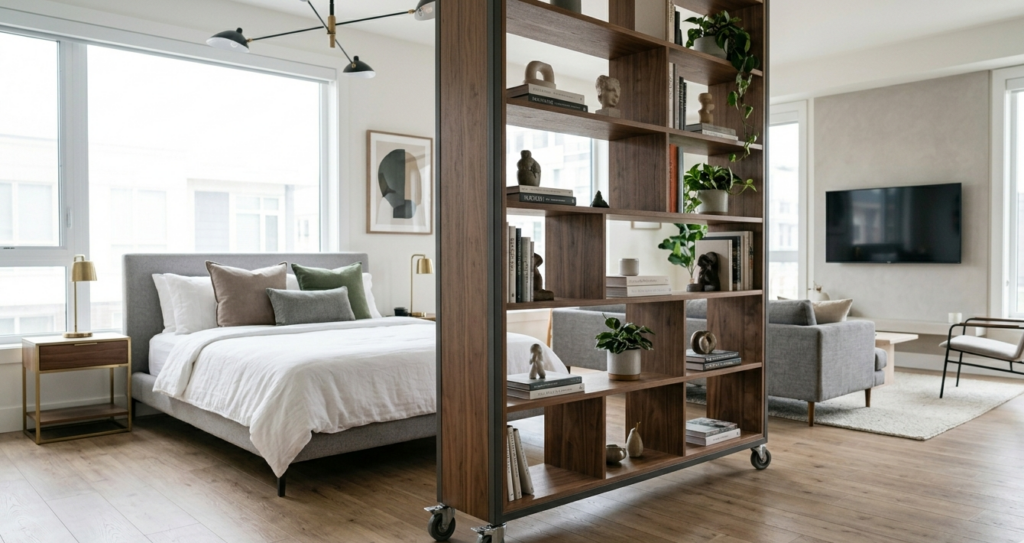
| Open-Back Bookshelves | Provides storage while maintaining “spatial flow.” | Style with “breathing room”—don’t pack every shelf with books; leave gaps for light. |
| Ceiling-Mounted Tracks | Allows for a floor-to-ceiling sheer curtain. | Choose a heavy-weight linen to add a luxury hotel feel to the sleeping nook. |
| The “Floating” Desk | A wall-mounted desk with no legs keeps the floor clear. | Position it facing away from the bed to create a mental “exit” from work. |
| Decorative Room Screens | Portable and provides an immediate “focal point.” | Look for rattan or cane webbing to keep the aesthetic light and organic. |
| Area Rugs (The “Zone” Creator) | Two different rugs define two different “rooms.” | Ensure the bedroom rug is significantly softer underfoot than the office rug. |
Room-by-Room Application: A Holistic Approach
While our primary goal is separating the office and bedroom, the entire studio must work in harmony.
The Living Area
The living zone should act as the “neutral ground.” I recommend placing the sofa with its back to the office area. This creates a physical wall that helps you ignore your emails while you’re watching a movie.
The Bedroom Nook
Treat your bed like an island. I love using a high-profile headboard. In many of my designs, a tall, upholstered headboard acts as its own room divider if the bed is placed in the center of the room rather than against a wall.
The Kitchen & Dining
In a studio, the dining table often tries to become the desk. Resist this. Even a tiny 24-inch round bistro table dedicated to eating will save your mental health. It reinforces that the desk is for work, the bed is for sleep, and the table is for nourishment.
Pros and Cons: Visual Boundaries vs. Functional Living
The Visual Wins
- Pro: A well-divided studio feels like a multi-room suite, increasing its “perceived value.”
- Pro: Better sleep hygiene by removing the “blue light” energy of the office from your line of sight.
- Con: Over-dividing can make a small space feel “choppy” if the color palette isn’t cohesive.
The Functional Reality
- Pro: Utilizing vertical space (shelving) adds immense storage.
- Pro: Improved focus by creating a dedicated “deep work” zone.
- Con: Floor-to-ceiling dividers can occasionally interfere with the reach of your HVAC or central heating.
You might also enjoy:
- How to Arrange a Narrow Living Room Layout Flawlessly
- Unlocking Potential: Designing a Cozy Basement Lounge
- Creating a Master Bedroom Oasis: A Styling Guide
Creating the “Invisible Wall” with Scent and Sound
One of my favorite “pro tips” that goes beyond the visual is using sensory triggers. In my own home, I use a specific essential oil—lemon and peppermint—only when I am at my desk. When I move to the bedroom zone, I switch to lavender or sandalwood. This creates an “invisible wall” that your brain recognizes instantly.
Conclusion: Designing for the Life You Want
Successfully implementing smart studio apartment layout ideas to separate work and sleep is an act of self-care. Your home should support your ambitions during the day and cradle your rest at night. By focusing on spatial flow, textural contrast, and intentional material choices, you can turn a single room into a multifaceted sanctuary.
My Final Expert Tip:
Never leave your desk “active” at night. I always suggest a “Closing Shift” ritual: clear your coffee mugs, close your laptop, and perhaps place a decorative cloth or a beautiful tray over your keyboard. Out of sight, out of mind.