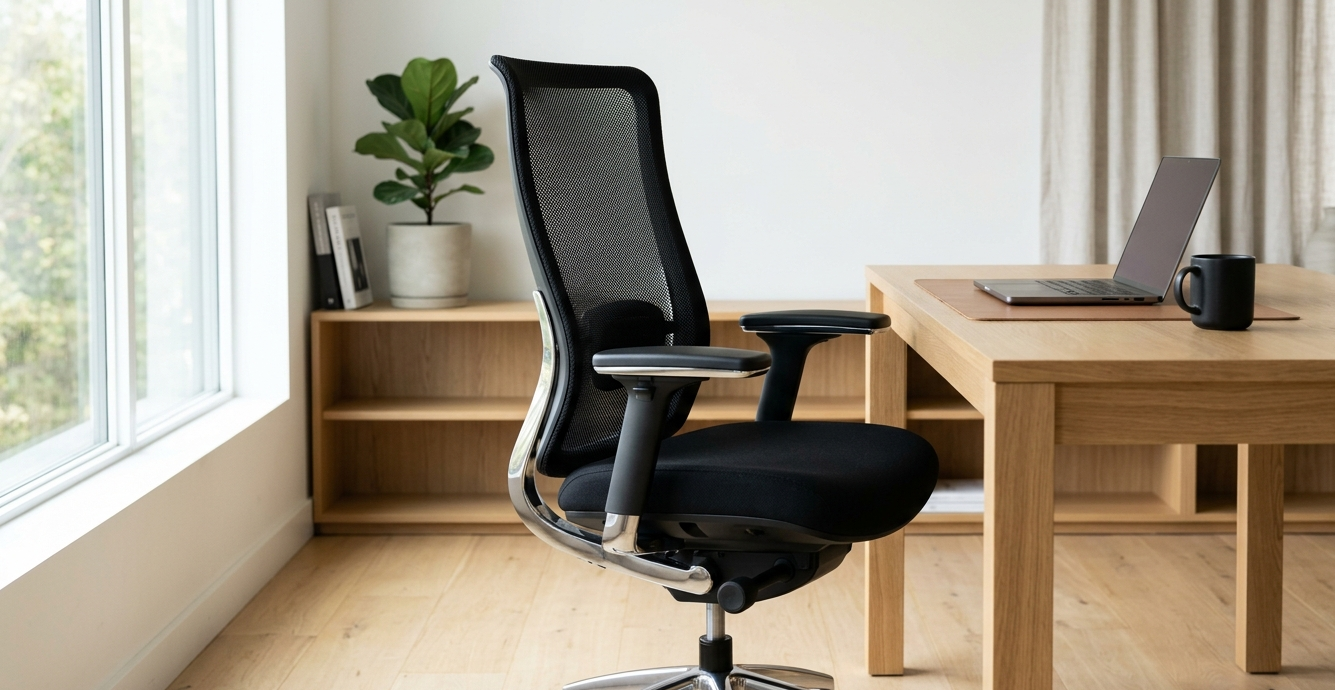
In my fifteen years of navigating the evolving landscape of residential aesthetics, I’ve encountered one recurring design “villain” that consistently disrupts the harmony of a well-curated home: the “corporate” office chair. You know the one—the mesh-backed, plastic-heavy, multi-levered contraption that looks like it was salvaged from a mid-90s cubicle farm.
For years, I’ve helped clients transform spare corners into inspiring workspaces, only to have the visual flow of the room stunted by a piece of furniture that screams “cubicle.” I remember working on a gorgeous transitional living room where we had perfected the textural contrast between a velvet sofa and a reclaimed wood desk. The moment the client rolled in their high-end, orthopedic task chair, the focal point shifted from “sophisticated sanctuary” to “unifinished business.”
That experience sparked a personal mission of mine: finding high quality ergonomic office chairs that look like designer furniture. It is entirely possible to honor your lumbar spine without betraying your home’s color palette. Today, we’re exploring how to blend the science of comfort with the art of lifestyle-driven design.
The Evolution of the “Invisible” Home Office
Historically, furniture was either beautiful or functional, but rarely both. The heavy mahogany chairs of the Victorian era were stunning but offered the lumbar support of a brick wall. Conversely, the ergonomic revolution of the late 20th century prioritized spinal alignment at the total expense of beauty.
Today, we are seeing a “Residential Revolution.” Designers are now utilizing spatial flow to integrate workspaces into our most intimate rooms. This shift has birthed a new category of “hybrid furniture”—pieces that utilize hidden internal tension systems and molded shells to provide support, while the exterior remains draped in boucle, top-grain leather, or bentwood.
Key Elements of High-End Office Aesthetics
When I select a chair for a project, I look for three non-negotiable aesthetic pillars:
- Material Integrity: Swapping plastic for metal, wood, or high-end textiles.
- Silhouette Subtlety: Low-profile backs and integrated armrests that mimic lounge chairs.
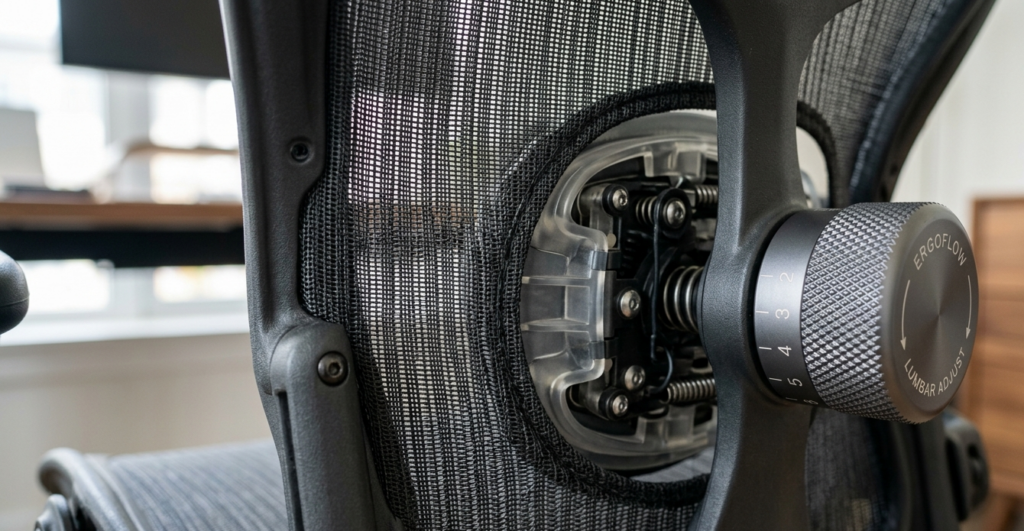
- Hidden Mechanics: Gas lifts and tilt mechanisms tucked away inside the upholstery or disguised within a minimalist frame.
Deep Dive: Textures, Palettes, and the Sensory Experience
In my experience, the difference between a chair that feels “office-y” and one that feels “designer” lies in the tactile layering. We aren’t just looking for a seat; we are looking for a sensory addition to the room.
The Power of Textural Contrast
When you place a sleek, metal-legged desk in a room, you need a chair that provides softness to balance the room’s energy. I often lean toward Bouclé or Chenille. These fabrics offer a heavy, pebbled texture that catches the light beautifully, making the chair look more like an accent piece. If you’re going for a more “Executive Chic” look, Aniline leather is the gold standard. It develops a patina over time, telling the story of your home’s history through its wear.
Suggested Color Palettes (The Designer’s Hex Codes)
Choosing the right shade ensures the chair recedes into the design rather than standing out as a utilitarian intruder. Here are three palettes I’m currently obsessing over:
- The Modern Organic Palette:
- Soft Sand:
#D2B48C - Earthy Terracotta:
#E2725B - Muted Sage:
#8A9A5B - Application: Best for light-filled rooms with oak flooring and linen curtains.
- Soft Sand:
- The Moody Executive Palette:
- Charcoal Slate:
#36454F - Deep Walnut:
#43302E - Burnished Gold (for hardware):
#A67C00 - Application: Perfect for libraries or dens with dark cabinetry and velvet accents.
- Charcoal Slate:
- The Scandinavian Minimalist Palette:
- Alabaster White:
#F2F0EA - Cool Pebble:
#B1B3B3 - Ice Blue:
#D6EAF8 - Application: Ideal for small “cloffices” (closet offices) where you need to maximize the feeling of space.
- Alabaster White:
The Curator’s Choice: 5 Chairs That Defy Convention
After testing dozens of pieces in my own studio and for my clients, these five types of “invisible” ergonomic chairs represent the pinnacle of high quality ergonomic office chairs that look like designer furniture.
1. The Sculptural Bentwood Task Chair
Taking inspiration from Mid-Century Modern icons, these chairs use molded plywood to follow the natural curve of the spine.
- Why it works: The wood grain adds warmth that plastic simply cannot replicate.
- Design Tip: Look for versions with an “active pivot” backrest hidden behind the wood shell.
2. The Tailored Velvet Armchair (with a Secret)
At first glance, this looks like a luxury dining chair. However, beneath the velvet lies high-density injection-molded foam and a reinforced steel frame.
- Why it works: It provides firm support for 8+ hours but looks perfectly at home in a sophisticated dining room or bedroom corner.
- Styling: Pair with a brass floor lamp to create a “reading nook” vibe.
3. The Low-Back Top-Grain Leather Swivel
The “low-back” is the secret weapon of interior designers. By keeping the chair height below the desk line, you maintain an unobstructed spatial flow through the room.
- Why it works: It feels substantial and expensive without the visual bulk of a high-back “boss” chair.
4. The Integrated Knit “Ghost” Chair
Not the clear plastic kind, but chairs that use 3D-knitted fabric stretched over a minimalist frame.
- Why it works: The fabric provides breathable, ergonomic tension (similar to high-end running shoes) but the silhouette is as thin as a pencil sketch.
5. The “Lounge-Work” Hybrid
These chairs feature an angled seat and a separate ottoman, but are engineered with a forward-tilt mechanism for when you need to reach your keyboard.
- Why it works: It’s the ultimate lifestyle piece for those who work in their living room and want their office furniture to disappear into their “relax” zone.
You might also enjoy:
- Solid Wood vs MDF Furniture: Is the Investment Worth It?
- Curating Your Reading Nook: Top Swivel Chairs
- The Ultimate Cloud Couch Dupe List (Budget-Friendly)
Room-by-Room Application: Integrating the Workspace
Integrating a chair into your home requires more than just plopping it down. You must consider the visual weight it adds to each specific environment.
The Living Room: Maintaining Common Ground
In the living room, your chair should act as a “supporting character” to your sofa. I recommend choosing a chair with legs that match your coffee table’s wood tone. Use a monochromatic color scheme to ensure the chair blends into the wall behind it, keeping the room’s focal point on the fireplace or the view.
The Bedroom: The Sanctuary Balance
The bedroom is for rest, so your chair must look “soft.” Avoid any visible metal or wheels if possible. A stationary-look chair with a hidden swivel base is perfect here. Focus on textural contrast—if your bedding is smooth cotton, choose a chair with a chunky weave fabric to add depth.
The Kitchen/Dining Area: The Multi-Tasker
If your “office” is the dining table, your ergonomic chair must double as a guest chair. Look for chairs with a “waterfall” seat edge—a design feature that relieves pressure on the back of the thighs while maintaining a slim, dining-appropriate profile.
Pros and Cons: Style vs. Maintenance
| Feature | Pro (The “Joy” Factor) | Con (The “Real Life” Factor) |
| High-End Textiles (Velvet/Bouclé) | Unbeatable aesthetic appeal and warmth. | Requires more frequent vacuuming; can show wear from friction. |
| Minimalist “No-Lever” Design | Maintains a clean, sophisticated look. | Adjustments are often manual or hidden, which can be less “instant.” |
| Wooden Frames | Timeless beauty; matches other home furniture. | Heavier to move and doesn’t offer the “bounce” of mesh. |
| Hidden Swivel Bases | Provides 360-degree movement without the “office” look. | Usually lacks the height adjustability of traditional gas-lifts. |
Lighting and the “Atmospheric Office”
No matter how beautiful your chair is, it will look like a “utility” item if your lighting is wrong. I always advise against harsh overhead LEDs. Instead, use a combination of layered lighting:
- Task Lighting: A slim, designer desk lamp in a matte finish.
- Ambient Lighting: Warm wall sconces that highlight the texture of your chair’s fabric.
- Natural Light: Position your chair at a 90-degree angle to the window to avoid glare while highlighting the textural contrast of your setup.
Conclusion: The Expert Tip
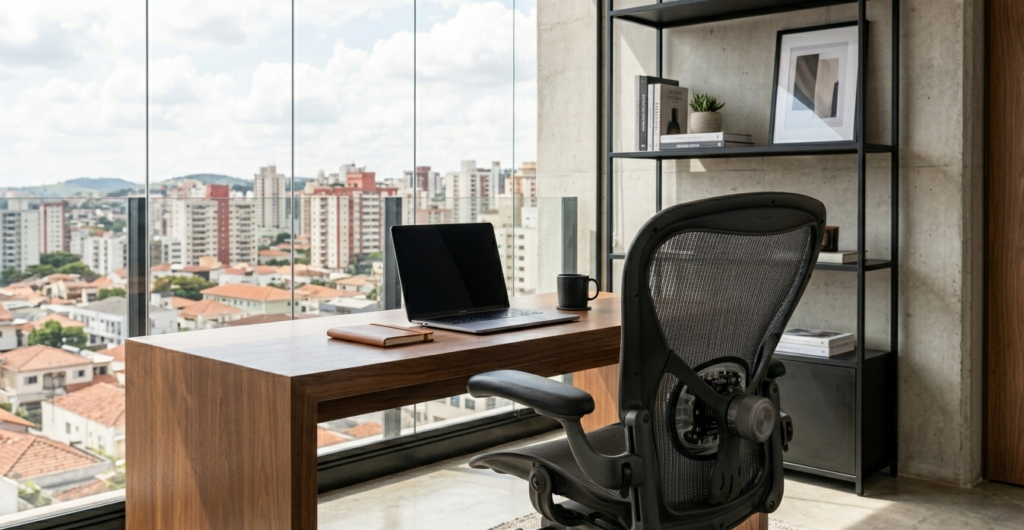
In my experience, the most successful home offices are the ones that don’t feel like offices at all. They feel like an extension of the person living there. My final Expert Tip is this: Prioritize the “Back View.” In a home environment, you rarely see your chair from the front; you see it from the back as you enter the room. Look for a chair with an interesting back detail—whether it’s a row of buttons, a beautiful wood grain, or a unique stitch pattern.
Are you ready to reclaim your home’s aesthetic? Stop settling for the “safe” corporate option. Invest in a piece that supports your body and inspires your mind. Browse our latest curated galleries for more inspiration on how to turn your renovation into a masterpiece of comfort and style.