
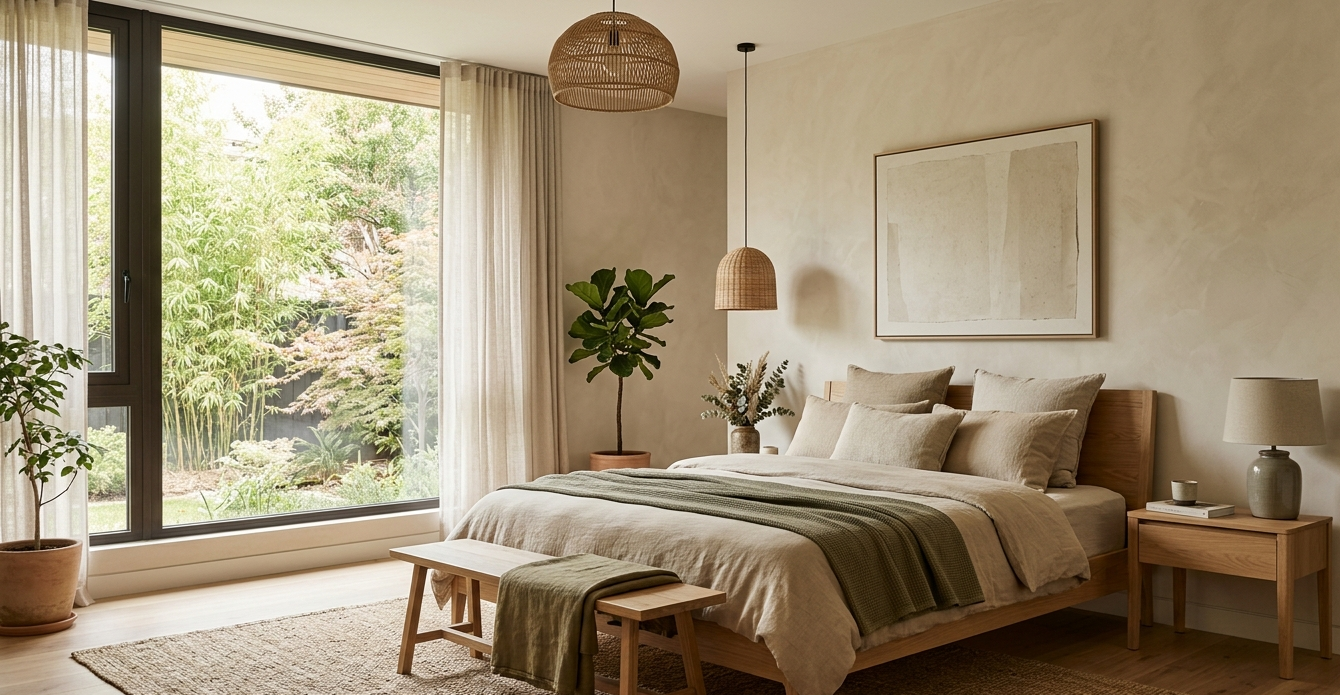
Japandi is the soulful marriage of Japanese minimalism and Scandinavian functionality. It’s where the “Wabi-sabi” (finding beauty in imperfection) of the East meets the “Hygge” (cozy contentment) of the North. If you’ve been searching for affordable Japandi bedroom decor ideas for a minimalist home, you’re in the right place. Let’s transform your sleeping quarters into a serene sanctuary without breaking the bank.
The Origin Story: Why East Meets West
While it might seem like a modern Instagram trend, the connection between Japanese and Danish design goes back over 150 years. When Japan’s borders opened in the 19th century, Danish designers were among the first to be captivated by Japanese craftsmanship.
Both cultures share a deep respect for artisans, natural materials, and the philosophy that “less is more.” In a bedroom, this translates to a spatial flow that feels intentional. There is no “filler” furniture here. Every piece serves a purpose or sparks a sense of peace.
The Foundation: A Deep Dive into the Japandi Palette
In my experience, the biggest mistake people make with Japandi is sticking purely to white. That leads to a clinical feel. To achieve that zen sanctuary vibe, you need a nuanced layered approach.
The Color Psychology of Japandi
We aim for “warm neutrals.” Think of the colors of a pebble beach or a forest in late autumn. Here are my go-to hex code suggestions for a professional finish:
- Oatmeal & Sand:
#EAE0D5– Your primary wall or large textile color. - Muted Sage:
#9A9B86– An earthy accent that brings the outdoors in. - Charcoal/Iron:
#363636– Used sparingly for textural contrast and grounding. - Warm Oak:
#BC9B71– The essential wood tone for warmth.
Texture and Fabrics: The Secret to Depth
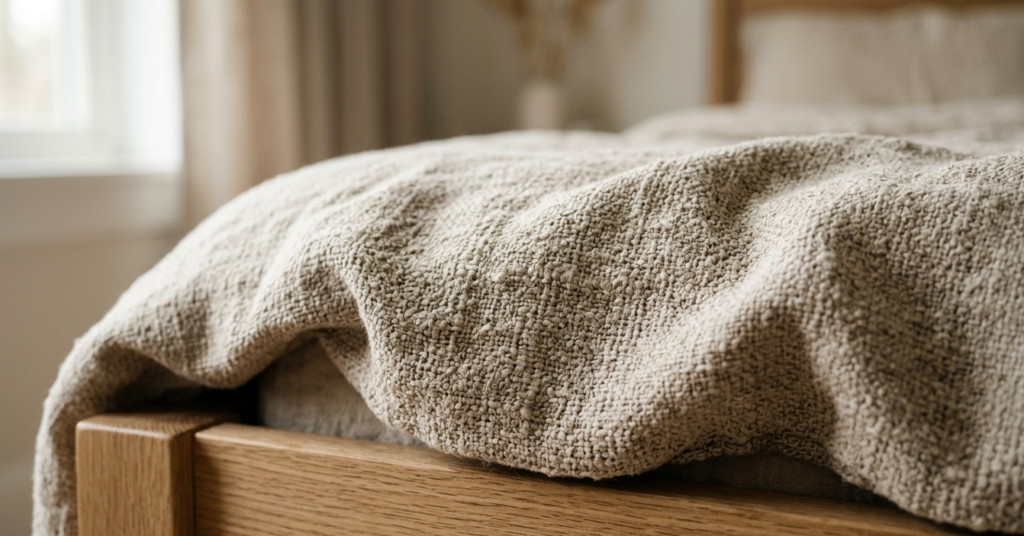
Because the color palette is restrained, texture is your best friend. I often tell my clients: “If you can’t change the color, change the feel.”
- Linen: This is the undisputed king of Japandi bedding. It’s breathable, sustainable, and looks better when it’s slightly wrinkled—perfectly embodying Wabi-sabi.
- Bouclé: Use this for a small accent chair or a bench. It adds a “hygge” softness that balances out sharp wooden lines.
- Jute and Sisal: These are incredibly affordable options for rugs. They provide an organic, raw base for the room.
- Paper: Think Noguchi-style lamps. The way light diffuses through washi paper creates a soft, ethereal glow that plastic or glass simply cannot replicate.
Implementing the Look: Step-by-Step Styling
Creating a minimalist home isn’t about emptying the room; it’s about curated selection.
1. The Low-Profile Bed
In Japanese design, living closer to the floor is common. A low-profile platform bed creates an illusion of higher ceilings and more spatial flow. To save money, look for simple wooden frames or even DIY pallet beds (if sanded and stained properly to look premium).
2. Negative Space as a Design Element
In the design world, we call this “Ma.” It is the emptiness between objects. I have found that leaving one wall almost entirely bare makes the furniture you do have stand out as a focal point.
3. Biophilic Accents
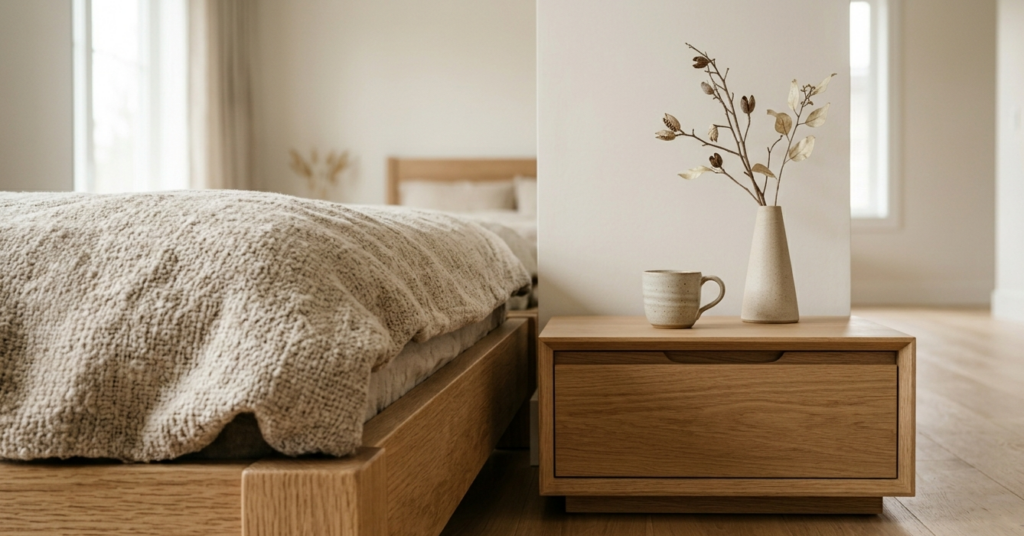
You don’t need a jungle. A single, structural branch in a ceramic vase or a tall dried pampas grass arrangement provides that organic connection to nature without the maintenance of a dozen houseplants.
The Curator’s Choice: 5 Essential Japandi Pieces
When working on a budget, you have to know where to save and where to “curate.” Here are my top five picks for achieving the look:
| Item | Why It Works | Budget Tip |
| Low Platform Bed | Grounding and minimalist. | Look for unfinished pine frames and stain them “Honey Oak.” |
| Paper Lantern Lighting | Creates a soft, ambient glow. | Round paper shades are incredibly cheap but look like high-end art. |
| The “Floating” Nightstand | Keeps floor space clear and airy. | Use a simple wooden shelf with hidden brackets. |
| Woven Jute Rug | Adds raw, natural texture. | Buy a larger jute rug as a base and layer a small soft rug on top. |
| Black Metal Accents | Provides the “Japanese” edge to Scandi softness. | Spray paint old hardware or frames in a matte black finish. |
You might also enjoy:
- Timeless Interior Design: 7 Principles That Never Age
- 10 Bold Mid-Century Modern Color Palettes
- Brighten Up: Clever Decor for Low Natural Light
Beyond the Bedroom: Room-by-Room Application
While we are focusing on the bedroom, the Japandi philosophy can—and should—flow through the rest of your home to maintain a cohesive aesthetic.
The Living Room
Focus on a “low-slung” sofa and a central wooden coffee table. Ensure your storage is hidden (Scandi influence) to maintain the visual calm (Japanese influence). Use a large-scale textured rug to define the seating area.
The Kitchen
Replace plastic containers with glass and wood. Clear the counters of everything except the essentials. A simple wooden fruit bowl or a stone mortar and pestle can serve as functional decor.
The Home Office
A clean wooden desk, a single task lamp with a matte finish, and an ergonomic chair in a neutral fabric. The goal here is to reduce visual “noise” to increase focus.
The Pros and Cons of Japandi Styling
The Pros
- Timelessness: Unlike “fast-furniture” trends, these natural materials age beautifully.
- Mental Clarity: The lack of clutter significantly reduces daily stress.
- Versatility: It’s easy to transition into other styles later by simply changing a few accessories.
The Cons
- Maintenance: Natural wood requires specific cleaning, and linen bedding needs proper care to avoid looking messy rather than “stylishly wrinkled.”
- The “Unfinished” Trap: If not styled correctly, a minimalist room can feel like you just moved in and haven’t finished decorating yet.
Creating the “Zen” Atmosphere with Lighting
Lighting is the most underrated tool in an interior designer’s kit. For a Japandi bedroom, you want to avoid harsh overhead lights.
- Task Lighting: A slim, matte black floor lamp for reading.
- Ambient Lighting: This is your “mood” setter. Use warm-toned bulbs (2700K) to mimic the golden hour.
- Natural Light: Use sheer, light-filtering curtains. I always recommend linen or hemp panels that allow sunlight to dapple the floor.
Expert Styling Tip: The “Rule of Three”
In my 15 years of styling, I’ve found that the “Rule of Three” is the easiest way to make a budget room look professionally designed. On your dresser or nightstand, group three items of varying heights:
- Something Tall: A single branch in a vase.
- Something Wide: A stack of two design books.
- Something Small: A stone or a handmade ceramic bowl for your jewelry.
This creates a visual triangle that is naturally pleasing to the eye and prevents a surface from looking cluttered.
Final Thoughts
Designing a Japandi bedroom isn’t about spending thousands on designer labels; it’s about a shift in mindset. It’s choosing the tactile over the shiny, the few over the many, and the calm over the chaotic. By focusing on warm neutrals, raw textures, and intentional furniture placement, you can create a space that feels like a deep exhale at the end of a long day.
FAQ: Affordable Japandi Decor
Q: Can I do Japandi in a small room?
Absolutely. In fact, Japandi is better for small rooms because the low-profile furniture and use of negative space make the area feel much larger than it is.
Q: Is Japandi expensive to maintain?
Not necessarily. While high-quality wood and linen have an upfront cost, they are durable. The “budget” aspect comes from buying less stuff overall.
Q: What if I like a little color?
That’s fine! While the base is neutral, you can incorporate “earthy” colors like terracotta, deep forest green, or midnight blue in small doses, like a single throw pillow or a piece of abstract art.