
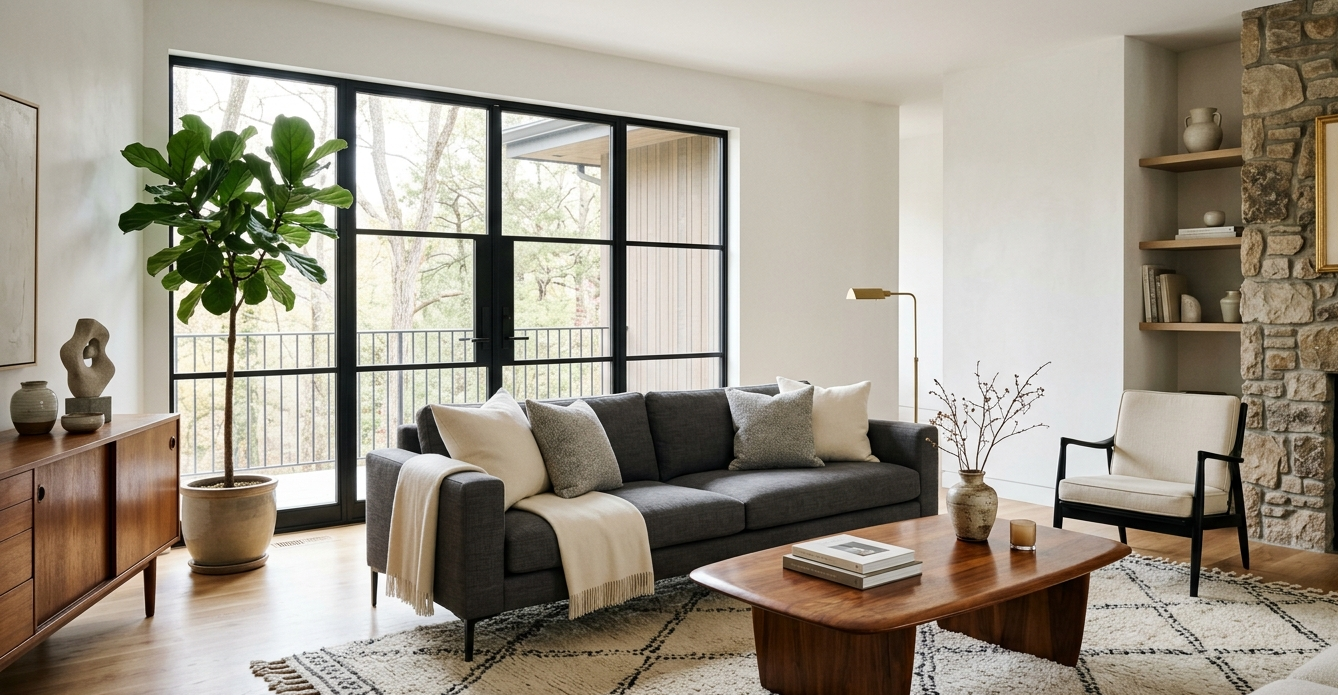
If you’ve ever wondered how to mix modern and vintage furniture in a small living room without making it look like a cluttered antique shop, you’re in the right place. Let’s dive into the curated world of “Transitional Eclecticism.”
Why the “Mixed” Look is the Gold Standard of Design
In my experience of styling homes, I’ve seen trends come and go—from the cold austerity of “Ultra-Modern” to the cluttered chaos of “Shabby Chic.” But the homes that stand the test of time are always those that embrace a blend.
The History of the Hybrid Home
Historically, homes weren’t “designed” in one weekend. They were collections. Our ancestors didn’t throw out their grandmother’s dining table just because they bought a new lamp. They integrated them. Mixing styles creates a narrative. It tells the story of where you’ve been and where you’re going. In a small living room, this approach is particularly effective because it prevents the “showroom” effect, making the space feel lived-in and intentional rather than cramped.
The Philosophy of Balance
The secret isn’t a 50/50 split. I always recommend the 80/20 Rule: 80% of one dominant style (usually modern for its clean lines and functionality) and 20% vintage accents (for character). This ratio ensures your small living room feels cohesive rather than confused.
Mastering the How-To: Implementation in Small Spaces
When dealing with limited square footage, every piece must earn its keep. You don’t have the luxury of “filler” furniture.
1. Establish Your Anchor Piece
In a living room, the anchor is almost always the sofa. For a small space, I suggest going modern here. Modern sofas are often designed with “legs up,” meaning you can see the floor underneath them. This creates a sense of spatial flow and makes the room feel larger.
2. The Power of “The Odd One Out”
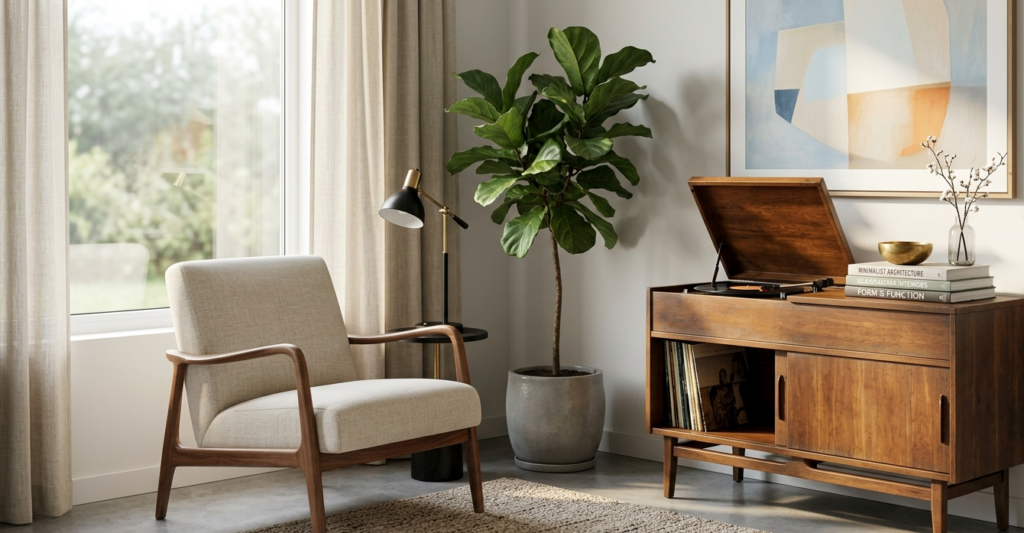
Once you have your modern base, introduce your vintage “hero.” This could be a 1970s chrome floor lamp or a hand-carved mahogany side table. Because the rest of the room is streamlined, this vintage piece becomes a focal point, drawing the eye and sparking conversation.
3. Scaling for Success
The biggest mistake I see? Putting a massive, overstuffed Victorian armchair in a tiny modern apartment. It swallows the room. Instead, look for vintage pieces with slim profiles—think Mid-Century Modern (MCM) or Art Deco styles, which were inherently designed for smaller urban dwellings.
You might also enjoy:
- Timeless Interior Design: 7 Principles That Never Age
- 7 Japandi Bedroom Essentials for a Serene Space
- 10 Bold Mid-Century Modern Color Palettes
The Deep Dive: Textures, Colors, and Fabrics
This is where a room moves from “nice” to “editorial.” To successfully bridge the gap between decades, you need a unifying thread.
The Color Palette: Finding the Common Ground
Colors act as the “glue” between a 2024 coffee table and a 1950s chair. I often steer clients toward a tonal palette with one or two “bridge” colors.
Recommended Color Story: The “Modern Heritage” Palette
- Base (Walls/Large Rug): Parchment White (#F5F5DC) – Provides a clean, modern canvas.
- The Bridge (Upholstery): Olive Moss (#556B2F) – A classic color found in both Victorian and 70s aesthetics.
- The Accent (Metal/Decor): Burnished Copper (#B87333) – Adds warmth to modern steel and complements aged wood.
- The Depth: Charcoal Slate (#36454F) – Grounds the room and prevents it from feeling too “floaty.”
Fabric Choices: A Sensory Experience
Mixing eras requires textural contrast. If your modern sofa is a flat-weave polyester or linen, pair it with a vintage velvet cushion.
- Bouclé: Very trendy right now, but it pairs beautifully with the smooth, polished wood of vintage Danish furniture.
- Cognac Leather: A vintage leather chair with a natural patina adds an instant sense of history. In my experience, nothing beats the “lived-in” look of leather that has aged for twenty years.
- Silk and Wool: For rugs, a faded, vintage Persian rug (wool) creates a stunning foundation for a glass and metal (modern) coffee table.
Material Alchemy
Don’t be afraid to mix your metals! The old rule of “all brass” or “all chrome” is dead. I love seeing a sleek, matte black modern floor lamp standing next to a vintage brass picture frame. The key is to repeat each finish at least twice so it looks intentional.
The Curator’s Choice: 5 Essential Crossover Pieces
If you’re just starting your journey of mixing styles, these five items are my “tried and true” recommendations that bridge the gap between modern and vintage perfectly.
| Item | Style Era | Why It Works |
| The Tulip Table | Mid-Century Modern | Its pedestal base is a space-saver for small rooms, and its futuristic shape looks incredible with vintage wooden chairs. |
| The Gilded Mirror | Baroque/Victorian | Placing a large, ornate vintage mirror in a minimalist room adds depth and reflects light, making the space feel twice as big. |
| The Persian Runner | Traditional/Antique | It introduces complex patterns and “soul” to a room filled with solid-colored modern furniture. |
| The Arco Lamp | 1960s Modern | Its dramatic curve provides overhead lighting without needing a ceiling hook—perfect for adding a “vintage-future” vibe. |
| The Reclaimed Wood Shelf | Industrial/Rustic | The raw texture balances the “coldness” of modern glass or plastic materials. |
Room-by-Room Application: Beyond the Living Room
While our focus is the living room, the “Mix & Match” philosophy should flow throughout your home for a cohesive aesthetic.
The Kitchen: Modern Function, Vintage Charm
I love a kitchen with sleek, handle-less modern cabinetry paired with a vintage “island”—perhaps an old baker’s table or a butcher block on casters. It breaks up the clinical feel of a modern kitchen and provides a warm spot for morning coffee.
The Bedroom: A Sanctuary of Eras
In the bedroom, I suggest keeping the bed frame modern and simple (low profile, perhaps upholstered). Use your “vintage” quota for the nightstands. Mismatched vintage nightstands add incredible personality. One could be a 1920s vanity stool, the other a sleek 1960s cube.
The Living Room: The Ultimate Laboratory
This is your playground. In a small living room, use vertical space. A tall, vintage secretary desk provides a workspace and storage while taking up minimal floor area, and it looks stunning next to a contemporary ghost chair.
Pros and Cons: Aesthetics vs. Reality
Every design choice comes with trade-offs. Here is my honest assessment:
Pros
- Uniqueness: No one else will have your exact room. It’s a reflection of your personal journey.
- Sustainability: Buying vintage is the ultimate “green” design choice. It keeps furniture out of landfills.
- Value: High-quality vintage pieces often hold their value (or appreciate) better than mass-produced modern items.
- Depth: The textural contrast between old and new creates a sensory richness that a single-style room lacks.
Cons
- Maintenance: Vintage fabrics may require specialized cleaning, and old wood can be sensitive to humidity.
- The Hunt: It takes time to find the “perfect” piece. This isn’t a “one-click” decorating style.
- Scale Issues: As mentioned, vintage pieces can sometimes be bulky or awkwardly sized for modern electrical outlets.
Expert Styling Secrets for the Small Living Room
After a decade and a half in the industry, I’ve distilled the “Mixed” look down to a few golden rules:
- The “Leg” Rule: If your sofa has hidden legs (goes all the way to the floor), make sure your vintage accent chairs have long, tapered legs. This prevents the room from feeling “bottom-heavy.”
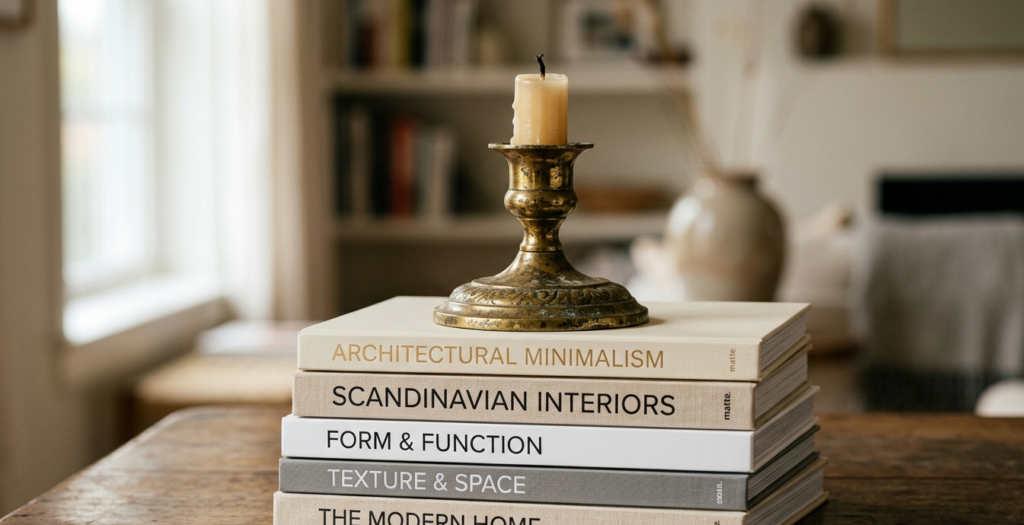
- Level the Heights: Vintage furniture is often lower to the ground than modern pieces. Use books or plinths to raise a vintage lamp or bust so it aligns with the sightline of your modern elements.
- Group by Silhouette: If you have a round modern coffee table, look for vintage pieces with curved lines to create a visual “rhyme.”
Conclusion: Trust Your Eye
The most beautiful homes aren’t the ones that follow every rule; they are the ones that feel authentic. Mixing modern and vintage is about more than just “decorating”—it’s about curating. It’s the thrill of the hunt at a Sunday flea market combined with the crisp satisfaction of a brand-new, high-tech sofa.
In my experience, the moment you stop worrying about whether things “match” and start wondering if they “belong” is the moment your home truly comes to life.
Expert Tip: When in doubt, use a unifying rug. A large, neutral jute or sisal rug can act as a “boundary” that contains both your modern and vintage pieces, instantly making them look like they belong to the same family.