
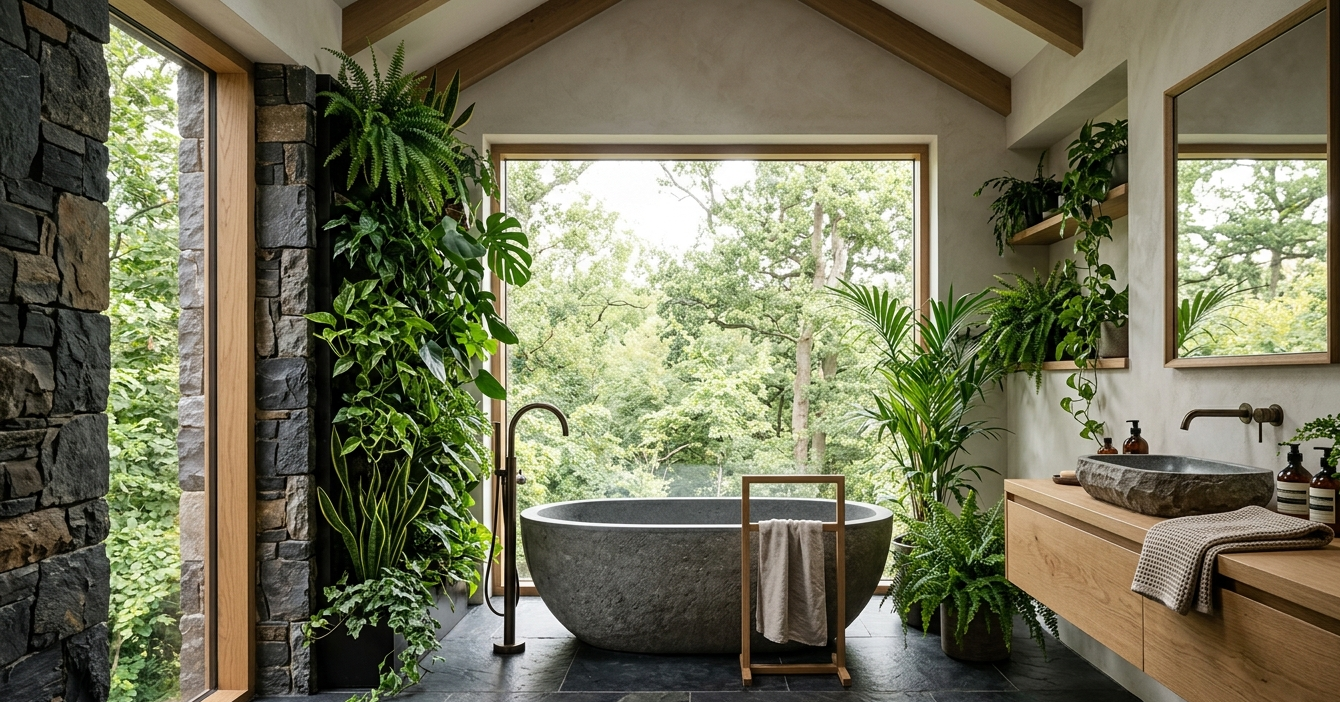
It is more than just buying a few succulents and calling it a day. It is an intentional design philosophy that weaves the patterns, textures, and rhythms of the natural world into our built environments. Whether you live in a sprawling countryside estate or a compact urban flat, bringing the outdoors in is the most effective way to create a home that feels like a sanctuary.
The Roots of Biophilic Design: Why We Crave the Wild
The term “Biophilia” was popularized by psychoanalyst Erich Fromm and later by biologist E.O. Wilson. It literally means “love of living things.” In the world of interior design, we use this concept to bridge the gap between modern urban living and our ancestral ties to the earth.
Historically, humans lived in constant contact with the elements. We tracked the sun, felt the change in humidity, and walked on uneven, organic terrain. Modern interiors, with their sharp 90-degree angles and synthetic surfaces, can feel sterile. Biophilic design seeks to reintroduce spatial flow and organic geometry to soften our living spaces and make them feel more intuitive.
The Five Pillars of the Biophilic Home
Before we get into the “how-to,” we must understand the “what.” I’ve narrowed biophilic success down to five core elements:
- Natural Light & Shadow: It’s not just about brightness; it’s about the “dance” of light throughout the day.
- Organic Shapes: Mimicking the curves of a river or the silhouette of a leaf rather than rigid boxes.
- Tactile Textures: Using materials that feel “real” to the touch—think stone, wood grain, and wool.
- Natural Analogues: Patterns and colors that evoke nature, even if they aren’t “living” (e.g., botanical wallpaper).
- Living Elements: Actual flora and the presence of water features.
Deep Dive: How to Incorporate Biophilic Design in a Windowless Bathroom
I often hear from homeowners who feel defeated by their “internal” bathrooms. If you don’t have a window, you might think biophilic design is off the table. On the contrary, this is where your design skills can truly shine. How to incorporate biophilic design in a windowless bathroom is one of the most frequent questions I receive, and the secret lies in sensory layering.
1. The Illusion of Light
Since you lack a window, you must curate light that mimics the sun’s cycle. I recommend using layered lighting. Instead of one harsh overhead bulb, use warm-toned LED strips behind the mirror to create a “halo” effect, reminiscent of a sunrise. Use a dimmer switch so you can transition from a bright, invigorating morning “forest light” to a dim, “moonlit” evening glow.
2. Humidity-Loving Greenery
While many plants need UV rays, several varieties thrive in the low-light, high-humidity environment of a bathroom. I have found that the Snake Plant (Sansevieria) and Zamioculcas zamiifolia (ZZ Plant) are practically indestructible in windowless spaces. They provide that essential pop of deep chlorophyll green that signals “life” to our brains.
3. Tactile Naturalism
In a windowless room, your sense of touch becomes more acute. Replace a plastic shower curtain with heavy, waffle-weave cotton or linen. Swap a synthetic bath mat for a teak wood slatted floor mat. The feeling of wood underfoot in a wet environment immediately evokes the sensation of an outdoor spa or a hidden spring.
Textures and Fabrics: The Language of the Earth
In my experience, the biggest mistake people make is focusing only on the visual. A biophilic home must be felt. To achieve true textural contrast, you need to mix “hard” and “soft” natural elements.
The Material Palette
- Reclaimed Wood: Whether it’s a coffee table or a floating shelf, wood with visible knots and grain adds a “history” to the room.
- Jute and Sisal: These fibers are excellent for rugs. They provide a grounding, earthy scent and a rugged texture that contrasts beautifully with polished floors.
- Linen: This is my absolute favorite fabric for biophilic styling. It has a natural “slub” and wrinkles gracefully, mimicking the imperfection of the natural world.
The Biophilic Color Story
When choosing a palette, look at a landscape photo and pull colors from the shadows, not just the highlights. Here are my go-to Hex Code suggestions for a sophisticated biophilic look:
| Element | Color Name | Hex Code | Stylist’s Note |
| Base | Soft Oatmeal | #E5D3B3 | Use for walls to create a warm, sandy backdrop. |
| Accent | Deep Moss | #4F5D2F | Perfect for velvet cushions or a focal wall. |
| Highlight | Terra Cotta | #C06C4D | Adds a “clay” warmth to pottery and accessories. |
| Neutral | Slate Grey | #708090 | Mimics mountain stone; great for larger furniture pieces. |
You might also enjoy:
- Timeless Interior Design: 7 Principles That Never Age
- Modern Farmhouse Kitchen Ideas: Rustic vs Modern
- How to Mix Modern and Vintage Decor Like a Pro
The Curator’s Choice: 5 Essentials for Your Biophilic Journey
As a designer, I am very picky about accessories. To avoid the “cluttered garden” look, you need curated pieces that serve as a focal point. Here are my top five picks:
- The Live-Edge Console Table: No two are the same. The raw edge of the wood brings an immediate organic silhouette into a hallway or living room, breaking up the “boxiness” of the architecture.
- Hand-Blown Glass Vases: Look for glass with slight bubbles or irregularities. When placed near a light source, they refract light like water droplets.
- Linen Blackout Curtains: In a bedroom, these provide a heavy, organic drape. They feel substantial and “honest” compared to polyester blends.
- Terracotta Planters: Move away from plastic pots. The breathability of clay is better for your plants, and the patina they develop over time is a beautiful visual representation of the aging process in nature.
- Stone Bookends: Whether made of marble, quartz, or river rock, these add “weight” and a geological element to your shelving units.
Room-by-Room Application: Bringing the Vision to Life
The Living Room: The “Clearing”
Think of your living room as a forest clearing. It should be open and inviting. Use a large jute rug to define the space. Arrange your furniture to facilitate “prospect and refuge”—a biophilic concept where you feel protected (back to a wall) but have a clear view of the “horizon” (the door or window).
The Bedroom: The “Nest”
The bedroom should focus on soft biophilia. Use a muted color palette of sage greens and sky blues. I have found that adding a canopy of light, sheer fabric can mimic the feeling of being under a leafy bower, providing a sense of security and peace.
The Kitchen: The “Hearth”
In the kitchen, biophilia is functional. An indoor herb garden on the windowsill provides both visual greenery and olfactory stimulation. Use stone or quartz countertops with heavy veining to introduce a geological “story” to the heart of the home.
Pros and Cons of the Biophilic Lifestyle
| Pros (Visual & Functional) | Cons (Maintenance & Reality) |
| Enhanced Aesthetics: Creates a timeless, high-end look that never goes out of style. | Upkeep: Living plants require watering, pruning, and consistent care. |
| Atmospheric Calm: The use of organic colors promotes a sense of tranquility. | Cost of Quality: Real wood and natural stone are often more of an investment than MDF or plastic. |
| Sensory Richness: The variety of textures (wood, wool, stone) makes a home feel “expensive.” | Allergies: Some natural fibers or plants may not suit everyone’s sensitivities. |
Expert Tip: The Power of “Micro-Moments”
You don’t need a full renovation to start. My top expert tip is to create “Micro-Moments” of nature. Find one corner—perhaps your reading chair or your bedside table—and style it with three elements: something living (a small plant), something mineral (a stone coaster), and something light-reflective (a glass candle holder). This small vignette acts as a visual anchor for your brain to rest upon.
Conclusion: Your Home, Reimagined
Biophilic design isn’t a trend; it’s a return to our roots. By intentionally selecting textures that evoke the earth, colors that soothe the eyes, and greenery that breathes life into forgotten corners, you transform your house into a living ecosystem. Even when tackling the challenge of how to incorporate biophilic design in a windowless bathroom, remember that nature is a feeling as much as it is a sight