
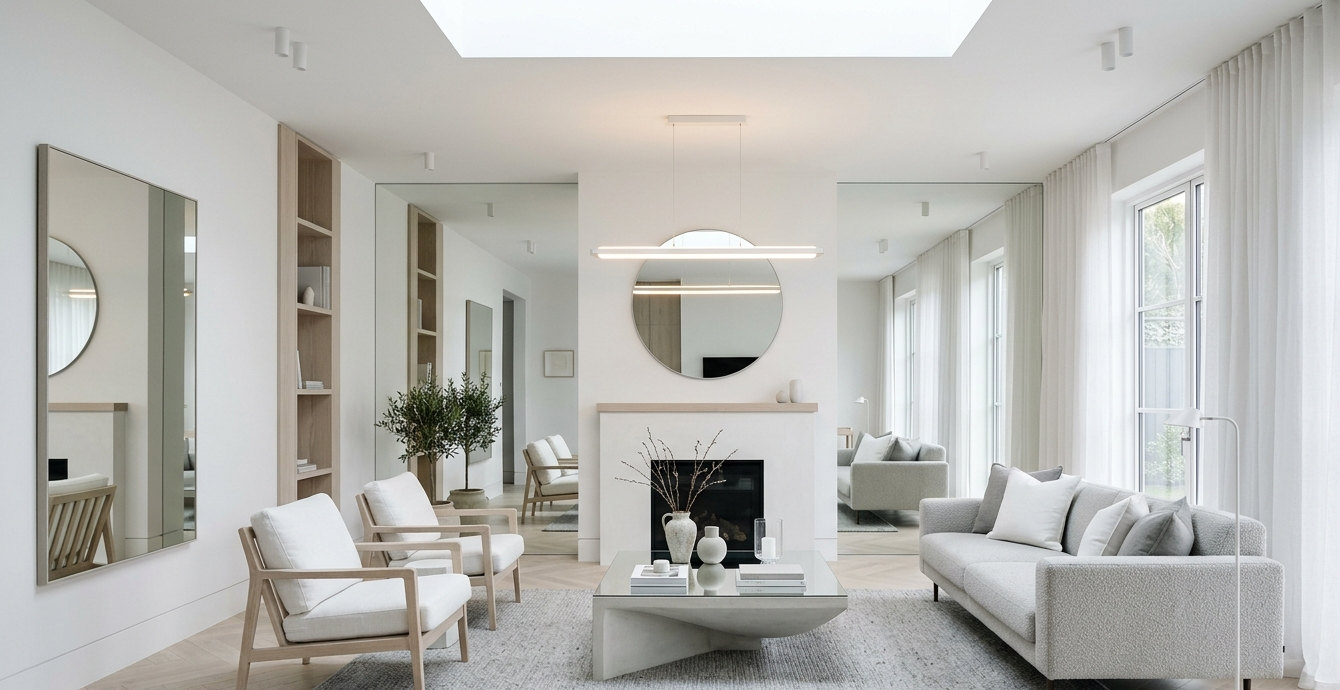
By selecting the best interior design styles for dark rooms with little natural light, we can lean into the architecture to create a space that feels curated, cozy, and unexpectedly luminous.
The Philosophy of Light Reflection and Absorption
Before we dive into specific styles, we must understand the “why” behind the “wow.” In a dim room, every surface is a tool. We are either trying to bounce what little light exists or embrace the shadows to create depth.
- Spatial Flow: How the eye moves through a room. In dark spaces, clutter breaks the flow and creates “visual noise” that makes a room feel smaller and heavier.
- Focal Points: In a sun-drenched room, the window is the hero. In a dim room, we create the hero—be it a stunning piece of art or a sculptural light fixture.
1. Scandinavian Minimalism: The Master of Luminous Simplicity
The History of the Style
Born in the Nordic countries where winters are long and daylight is a precious commodity, Scandinavian design was literally engineered for dark rooms. The goal was simple: maximize every photon of light while maintaining warmth (Hygge).
Key Elements for Dim Spaces
- The “White” Secret: Not all whites are created equal. In a dark room, a “pure” cool white can look gray and dingy. I always recommend whites with a hint of warmth to prevent that “hospital” feel.
- Leggy Furniture: By choosing sofas and chairs with exposed legs, you allow the floor—and the light hitting it—to be visible, creating an illusion of more space.
Material Choices and Textures
To avoid a flat look, we use textural contrast. Think of a smooth white marble coffee table paired with a chunky wool throw.
- Light Woods: Ash, Birch, and Light Oak are your best friends. They reflect light and bring a “sun-kissed” organic feel to the room.
2. Japandi: The Warm, Functional Hybrid
If Scandinavian feels too cold for you, Japandi is the answer. It combines the functional minimalism of the North with the rustic, “wabi-sabi” aesthetic of Japan.
How to Implement
In my experience, Japandi works beautifully in low-light rooms because it focuses on low-profile furniture. By keeping the center of gravity low, you leave the upper half of the walls clear, which makes the ceiling feel higher and the room more open.
The Palette: Hex Code Suggestions
To master this look, we move away from stark white into “Greige” and earthy neutrals:
- Soft Sand:
#E6D5C3(Base wall color) - Muted Clay:
#BFA08E(Accents) - Charcoal Slate:
#36393B(Contrast—use sparingly to ground the room)
Deep Dive: Textures, Colors, and Fabrics for Dim Environments
When you lack natural light, tactile stimulation replaces visual brightness. This is where many DIY decorators fail—they paint everything white and wonder why the room feels “dead.”
The Magic of Sheen
In a dark room, the finish of your paint is just as important as the color. I suggest a Satin or Eggshell finish on walls. It has just enough “glow” to catch artificial light and bounce it back into the room without the harsh glare of High Gloss.
The Fabric Playbook
- Linen: The king of low-light fabrics. Its weave allows light to pass through, making window treatments feel ethereal rather than heavy.
- Velvet (with a caveat): People think velvet is too heavy for dark rooms. However, a high-shine silk velvet catches the light on its pile, creating highlights and shadows that add incredible “mood” to a dim corner.
- Reflective Metallics: Use “living finishes” like unlacquered brass or polished nickel. They act as tiny mirrors throughout the room.
Color Psychology in the Dark
We often feel the need to use bright yellows to “fake” sunshine. In my professional opinion, this often backfires, looking muddy in the shadows. Instead, look toward Light Teal or Soft Lavender. These colors have a high “Luminance Value” (LRV) and maintain their integrity even when the sun goes down.
You might also enjoy:
- Timeless Interior Design: 7 Principles That Never Age
- Industrial Chic: How to Get the Loft Aesthetic
- The Ultimate Minimalist Home Office Design Guide
“The Curator’s Choice”: 5 Essential Accessories for Low-Light Homes
Selection is everything. Here are my top five picks for pieces that transform a dim space into a designer sanctuary:
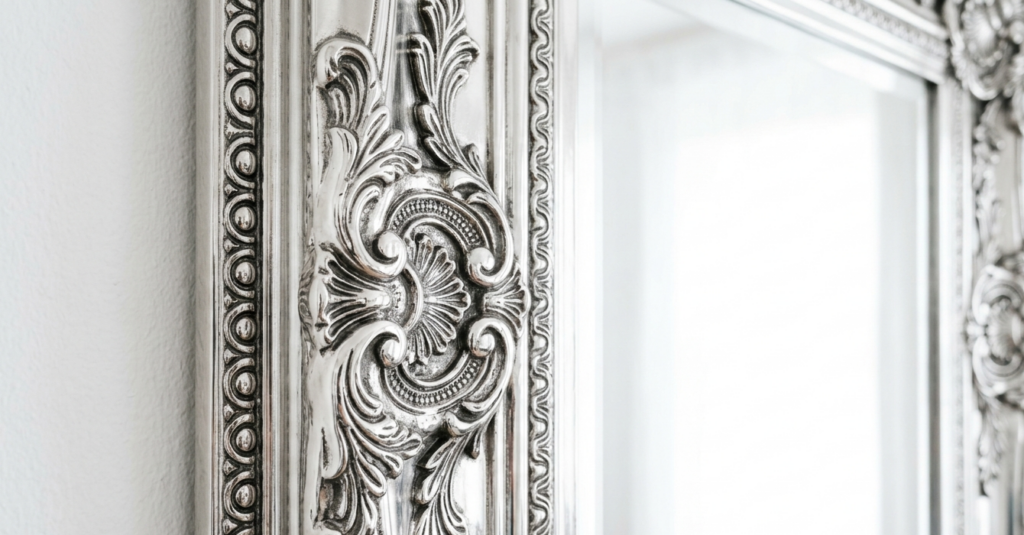
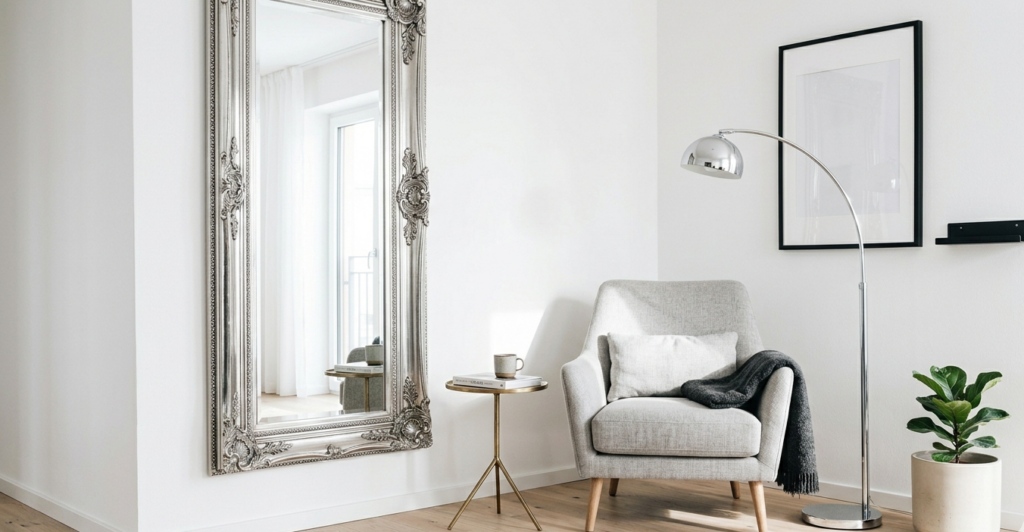
- The Oversized Leaner Mirror: A floor-to-ceiling mirror placed opposite your primary light source (even if it’s just a doorway) effectively doubles the visual square footage.
- Translucent Ghost Chairs: Made of acrylic, these allow the eye to travel straight through the furniture, preventing the room from feeling “stuffed.”
- High-Gloss Ceramic Planters: Even if you use high-quality silk plants (since real ones might struggle), the glossy finish of the pot provides a much-needed reflective surface.
- Mercury Glass Lamps: When turned off, they are beautiful sculptures; when turned on, the dappled glass creates a sparkling light pattern that mimics dappled sunlight.
- Light-Colored Jute Rugs: A bleached jute or sisal rug provides a massive “reflector” on the floor, brightening the base of the room instantly.
Room-by-Room Application
The Living Room: Creating the “Glow”
Focus on layered lighting. Never rely on a single overhead “boob light.” Use a mix of floor lamps, table lamps, and picture lights. In my experience, placing a small uplight behind a large leafy plant (like a Sansevieria) creates beautiful shadows that make the walls feel like they are receding.
The Bedroom: Embracing the Cocoon
The bedroom is the one place where “dark” can mean “cozy.” Use a monochromatic palette. By using different shades of the same light color (e.g., five shades of cream), you soften the corners of the room, making it feel like you’re inside a soft cloud.
The Kitchen: Reflective Utility
In a kitchen with no windows, your backsplash is your best friend. I always recommend zellige tiles or subway tiles with a handmade, undulating surface. These “perfectly imperfect” tiles catch light from under-cabinet LEDs at different angles, creating a shimmering effect that feels like water.
Pros and Cons: Style vs. Maintenance
| Design Choice | Visual Pro | Functional Con |
| All-White Scandi | Maximum light reflection; feels airy. | Hard to keep clean; can feel sterile if not layered. |
| Satin Finish Walls | Bounces light beautifully. | Shows wall imperfections and “flashing” easily. |
| Glass/Acrylic Furniture | Invisible footprint; increases “flow.” | Requires constant dusting and fingerprint wiping. |
| Heavy Mirrors | Doubles the light and the view. | Can be difficult to hang safely; requires a sturdy wall. |
Expert Tip: The “Rule of Three” for Lighting
In every dim room, you need three levels of light: Ambient (general overhead or large lamp), Task (reading or cooking light), and Accent (the “jewelry” light, like a candle or a small shelf light). If you have all three, the lack of a window becomes irrelevant.
Conclusion
Creating a beautiful home in a space with limited natural light isn’t about fighting the darkness—it’s about choosing the right dance partner. Whether you lean into the crisp, functional lines of Scandinavian Minimalism or the warm, grounded textures of Japandi, the goal is to create a space that feels intentional.
When you stop viewing your dark room as a “problem” and start seeing it as a canvas for texture, reflection, and mood, that’s when the magic happens.