
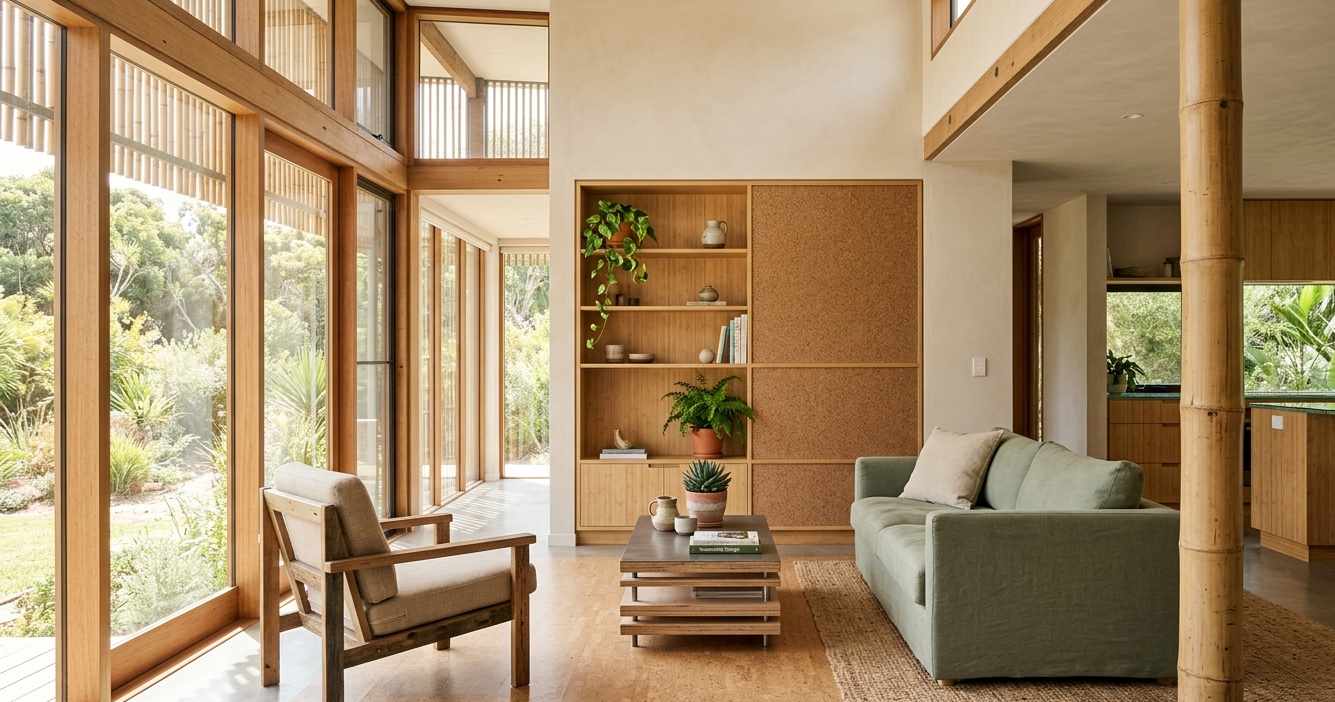
Today, “Eco-Friendly Elegance” isn’t a niche category; it is the gold standard for high-end residential aesthetics. We are moving away from the “disposable decor” era and entering a period where longevity, provenance, and tactile honesty define true luxury.
The Evolution of Sustainable Style: From “Crunchy” to Chic
Modern sustainability is about circularity. It’s the idea that a piece of furniture should have a past and a future. We are seeing a return to “Slow Design”—a movement that mirrors the “Slow Food” revolution. It’s about knowing the artisan who hand-knotted your wool rug or the specific forest where your white oak table originated. This connection to the source creates an emotional resonance that mass-produced items simply cannot replicate.
The Pillars of Sustainable Aesthetic Design
When I consult with clients, I focus on three core pillars: Textural Integrity, Biophilic Harmony, and Timelessness.
1. Textural Integrity
In a sustainable home, texture does the heavy lifting that color used to do. Instead of using high-VOC paints to create drama, we use tactile contrast. Imagine the roughness of a lime-wash wall against the buttery smoothness of vegetable-tanned leather. This creates a focal point without visual clutter.
2. Biophilic Harmony
This goes beyond putting a plant in a corner. It’s about the spatial flow between the indoors and the outdoors. Using natural light as a primary design element and incorporating fractal patterns found in nature (like the veins in a marble slab or the grain in wood) helps reduce stress and increases the “visual comfort” of a room.
3. Longevity as Luxury
The most “green” item is the one you never throw away. I always encourage my readers to invest in “heritage pieces.” A solid wood dresser might cost more upfront, but its ability to be sanded, refinished, and passed down makes it infinitely more valuable than a particle-board alternative.
The Palette of the Earth: Colors and Fabrics
If you want to master sustainable and eco-friendly interior design trends for modern homes, you must start with the palette. In my experience, the most successful eco-friendly rooms use a base of “New Neutrals”—colors that feel organic rather than clinical.
The “Earthen Sanctuary” Color Palette
I’ve curated a specific hex-code palette that I use in almost all my sustainable projects. These colors are designed to reflect natural pigments found in clay, stone, and flora.
- Muted Clay (#B5836D): A warm, grounding terracotta that works beautifully in dining rooms to stimulate conversation.
- Sage Mist (#94A78E): A soft, desaturated green that brings the tranquility of a forest canopy into a home office or bedroom.
- Raw Linen (#E3DAC9): A sophisticated alternative to stark white. It has a yellow undertone that feels like sunlight hitting a stone wall.
- Charred Ember (#3D3635): Used for accents, this deep, brownish-black mimics the “Shou Sugi Ban” (charred wood) look without being too harsh.
Fabric Choices: Beyond Organic Cotton
While organic cotton is great, the “Elegance” side of eco-friendly design currently belongs to Linen, Hemp, and Tencel.
Linen is my absolute favorite material to work with. It is derived from flax, which requires significantly less water than cotton. From a styling perspective, its natural “slub” (the slight irregularities in the weave) provides a textural contrast that looks incredibly expensive.
Hemp has made a huge comeback. It used to be scratchy, but new weaving techniques have made it as soft as brushed suede. It’s incredibly durable, making it perfect for high-traffic upholstery.
Tencel (Lyocell) is the “silk” of the sustainable world. Derived from wood pulp, it has a beautiful drape and a slight sheen. I love using Tencel-blend drapes because they catch the light in a way that feels ethereal and high-end.
Deep Dive: The Art of the “Living Surface”
One trend I am particularly obsessed with is the move toward living surfaces. In traditional design, we try to freeze a home in time—protecting surfaces so they never change. In sustainable design, we embrace the patina.
Materials like unlacquered brass, soapstone, and reclaimed wood are “living.” They change as you touch them. A brass faucet will darken where your hand hits it; a wood table will develop small indentations from years of family dinners. This is what I call “The Story of the Home.”
When selecting textures, I follow the Rule of Three:
- The Base: Something smooth (e.g., polished concrete or smooth plaster).
- The Contrast: Something tactile (e.g., a hand-woven wool rug).
- The Accent: Something raw (e.g., a live-edge wood shelf or a stone bowl).
This layering creates a sense of “spatial depth” that makes a room feel curated rather than “decorated.”
The Curator’s Choice: 5 Sustainable Staples for Your Home
Selecting the right pieces is an exercise in restraint. Here are five items I believe are essential for any modern, eco-conscious home:
| Item | Material Focus | Why I Love It |
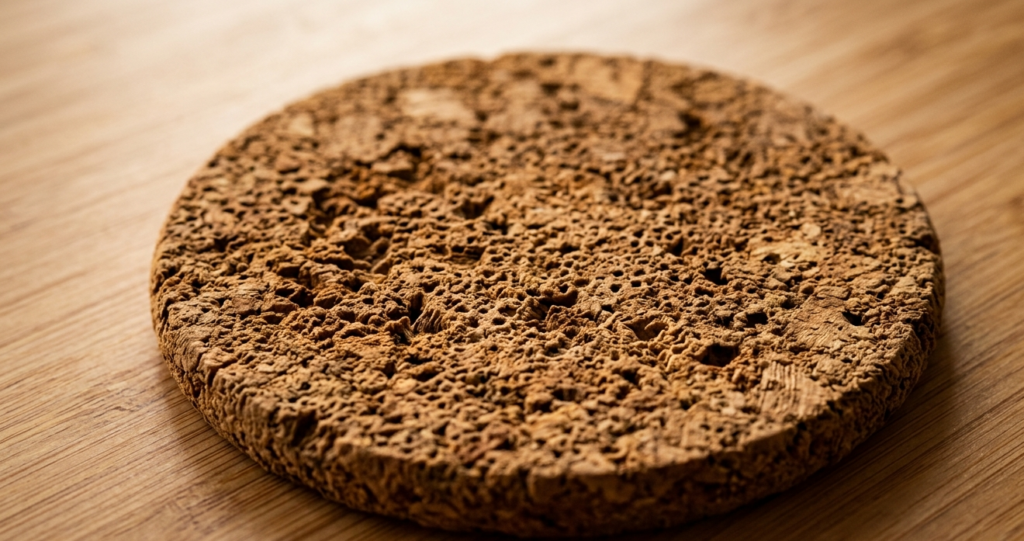
| The Statement Cork Stool | 100% Natural Cork | Cork is harvested without killing the tree. It’s lightweight, moisture-resistant, and adds a soft, warm texture to a modern living room. |
| Recycled Glass Pendants | Hand-blown Post-consumer Glass | These often have tiny air bubbles trapped inside, which diffuse light in a dreamy, dappled way that factory-perfect glass can’t match. |
| FSC-Certified Teak Credenza | Forest Stewardship Council Wood | Teak has a high oil content, meaning it stays beautiful for decades. Choosing FSC-certified ensures it wasn’t sourced through deforestation. |
| Pineapple Leather (Piñatex) Ottoman | Pineapple Leaf Fibers | This is a game-changer for vegan households. It has the weight and durability of leather but is made from agricultural waste. |
| Hand-Tufted Wool Rug | Undyed New Zealand Wool | By using undyed wool, you get the natural variegated colors of the sheep. It’s cozy, fire-resistant, and completely biodegradable. |
You might also enjoy:
- Timeless Interior Design: 7 Principles That Never Age
- Nature Indoors: Guide to Biophilic Interior Design
- Modern Farmhouse Kitchen Ideas: Rustic vs Modern
Room-by-Room Application: Implementing the Trend
The Living Room: Creating a “Breathe” Space
In the living room, the goal is visual harmony. I start with a low-profile sofa upholstered in a neutral hemp or heavy linen. Instead of a traditional gallery wall with plastic frames, try a large-scale piece of textile art—perhaps a hand-woven macramé or a framed vintage indigo cloth.
The Expert Touch: Use “biophilic lighting.” This means layering your light sources to mimic the sun. Use warm-toned LEDs and place lamps at different heights to create soft shadows, mimicking the way light filters through trees.
The Bedroom: The Sanctuary of Natural Fibers
The bedroom should be a “sensory detox” zone. I recommend a Japandi aesthetic here—a mix of Japanese minimalism and Scandinavian functionality.
- Bedding: Layer different weights of linen. A heavy linen duvet with a light Tencel sheet set.
- Furniture: A bed frame made of reclaimed oak with a simple wax finish instead of heavy varnish.
- Flooring: If you have hardwood, leave it bare or use a small jute runner by the side of the bed for that morning tactile “wake-up.”
The Kitchen: The Heart of Reclaimed Luxury
Kitchens can often feel “cold” due to all the hard surfaces. To bring in the eco-friendly trend, I look at the backsplash and the hardware.
- Backsplash: Use handmade Zellige tiles. They are made of natural clay and fired in ancient kilns. Because they are handmade, no two tiles are exactly the same size or color, creating a shimmering, organic ripple effect.
- Storage: Replace plastic containers with amber glass jars and bamboo lids. It turns your pantry staples into a design feature.
- Seating: Reclaimed wood bar stools with slim metal legs offer a perfect balance of “earthy” and “modern.”
Pros and Cons: A Balanced Perspective
While I am a fierce advocate for sustainable design, I always want my clients to have a realistic expectation of the lifestyle.
The Pros
- Healthier Living: Reducing synthetics often reduces “off-gassing” from glues and finishes, creating a fresher indoor environment.
- Unique Character: Because many sustainable materials are handmade or reclaimed, your home will look like no one else’s.
- Emotional Connection: You feel better knowing your beautiful home didn’t come at a massive cost to the planet.
The Cons
- Maintenance: Natural materials are often “unprotected.” A marble countertop will stain; a linen sofa will wrinkle. You have to learn to love the “wabi-sabi” (the beauty of imperfection).
- Lead Times: Sustainable, artisan-made furniture isn’t “fast furniture.” You may have to wait 12 weeks for that hand-carved dining table.
- Sourcing Difficulty: It takes more research to ensure a brand is actually “green” and not just “greenwashing.”
Lighting: The Invisible Eco-Decorator
We cannot talk about sustainable and eco-friendly interior design trends for modern homes without talking about light. Light is the most sustainable “material” we have.
In my projects, I focus on Daylight Harvesting. This involves placing mirrors strategically opposite windows to bounce natural light deep into the center of the home, reducing the need for artificial lighting during the day.
When it comes to fixtures, I am currently loving rattan and wicker. These fast-growing grasses are incredibly sustainable and, when used in lighting, they cast intricate, decorative shadows on the walls, acting as “temporary wallpaper” every time you flip the switch.
The Psychology of Sustainable Design
Why does a sustainable home feel “better”? It’s not just in your head. There is a psychological concept called Topophilia—the “love of place.” When we surround ourselves with natural materials, our heart rate actually tends to lower.
In my experience, clients who choose eco-friendly designs tend to stay in their homes longer. They don’t feel the “itch” to redecorate every two years because their furniture doesn’t go “out of style”—it just gets better with age. We are designing for the soul, not for the “trend cycle.”
Frequently Asked Questions
Can I achieve a sustainable look on a budget?
Absolutely. Sustainability starts with curation. Instead of buying five cheap items, buy one high-quality vintage piece from a local thrift store. Reclaimed is often more affordable than new!
Is “Minimalism” the only way to be eco-friendly?
Not at all. You can be a “Sustainable Maximalist.” The key is that your “maximalism” consists of collected, vintage, and natural items rather than mass-produced plastic decor.
How do I know if a wood is truly sustainable?
Look for the FSC (Forest Stewardship Council) logo. This is the “gold standard” for ensuring wood was harvested responsibly.
Conclusion: The Future is Conscious
Creating a home that reflects both your style and your values is the ultimate design achievement. Sustainable and eco-friendly interior design is no longer a compromise; it is an elevation of the domestic experience. It forces us to slow down, to touch, to smell, and to truly inhabit our spaces.
My Expert Tip: Start small. You don’t need to gut your entire house. Start by replacing your synthetic “big box” rug with a natural jute or wool one. Notice how the room sounds different, how it smells, and how it feels under your feet. That single change often sparks a beautiful, conscious transformation of the entire home.