
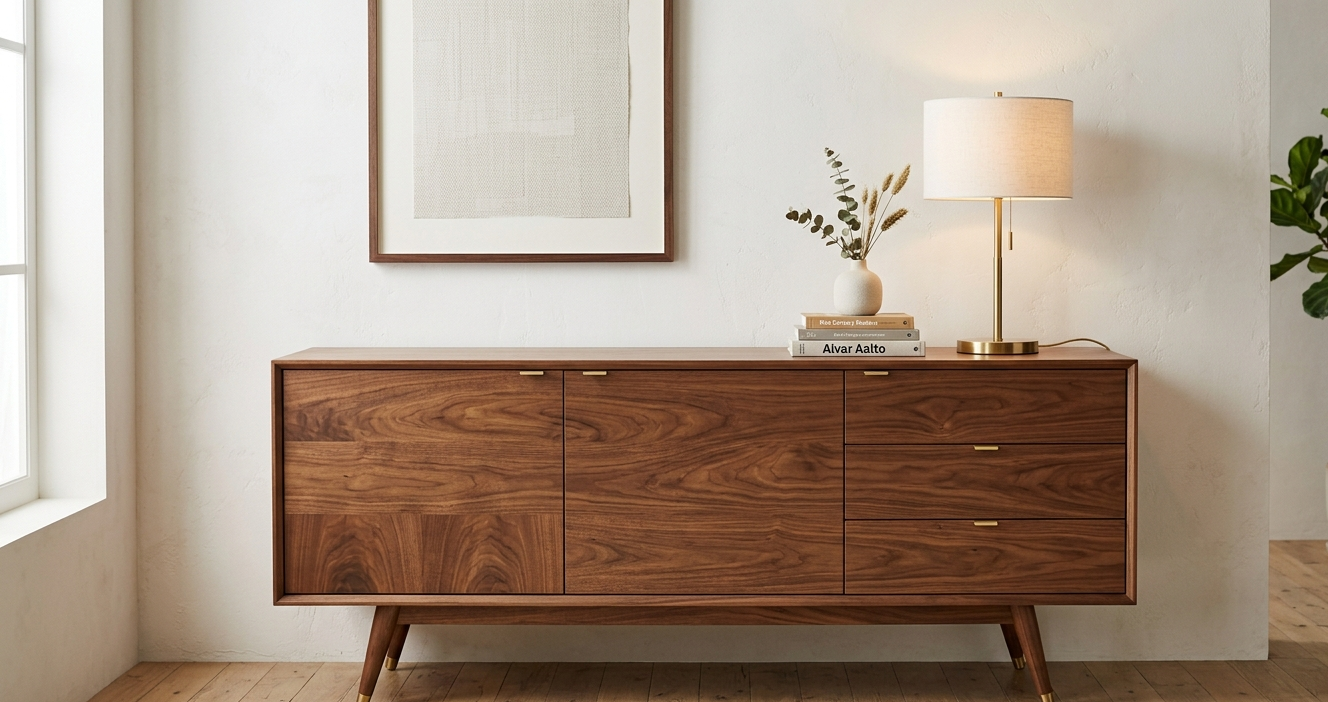
When we talk about mid-century modern sideboard reviews for entryway storage, we aren’t just talking about furniture. We are talking about the intersection of soul and utility.
The Timeless Allure of Mid-Century Modern (MCM) Design
Why does a design movement from the 1950s still dominate our Pinterest boards in 2026? It’s simple: Mid-Century Modern (MCM) design prioritizes the human experience. It stripped away the heavy, ornate carvings of the Victorian era and replaced them with “organic minimalism.”
The Anatomy of the Perfect Entryway Sideboard
When searching for the best mid-century modern sideboard reviews for entryway storage, you need to look for specific hallmarks:
- Tapered Legs: Also known as “compass legs,” these create a sense of weightlessness, making small entryways feel larger because you can see the floor underneath.
- Geometric Silhouettes: Clean lines and subtle curves that guide the eye without overwhelming it.
- Natural Materials: A focus on wood grains—specifically walnut, teak, and oak.
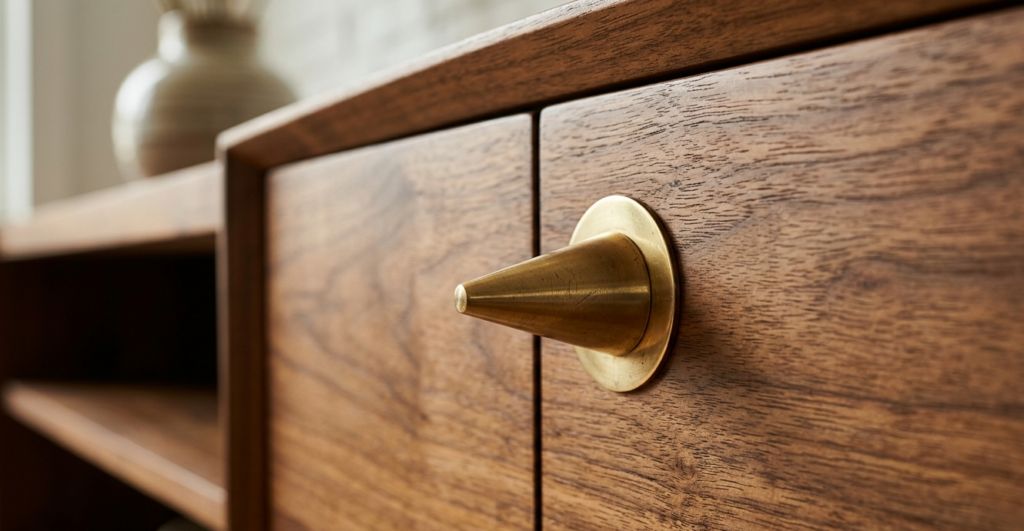
- Integrated Hardware: Think recessed pulls or “j-channel” handles that keep the facade sleek.
Deep Dive: Textures, Palettes, and Materiality
In my experience, a sideboard is only as good as the materials it brings into the room. To achieve a high-end look, you must master textural contrast.
The Wood Grain Spectrum
The soul of MCM furniture is the wood.
- Walnut: This is the gold standard. It offers a rich, chocolatey depth that provides an instant focal point.
- Teak: More golden and honey-toned, teak feels warmer and more “Boho-MCM.”
- Oak: For a “Japandi” twist, light oak offers a breezy, airy feel.
Hex Code Color Palettes for the Modern Entryway
A sideboard doesn’t exist in a vacuum. To make your entryway pop, I recommend these curated palettes to paint the wall behind your new piece:
- The Moody Executive:
- Deep Charcoal (#36454F)
- Burnt Orange (#CC5500) — Used as an accent bowl.
- Brass accents.
- The Desert Oasis:
- Sage Green (#87A96B)
- Warm Ochre (#CC7722)
- Creamy White (#F5F5DC)
The Power of Texture
I often tell my clients that a room without texture is a room without a pulse. When styling your sideboard, mix your finishes:
- Smooth: The polished wood surface of the sideboard.
- Rough: A ceramic stoneware tray for keys.
- Soft: A linen table runner or a wool rug tucked slightly underneath.
- Reflective: A round brass mirror hung 6–8 inches above the unit.
The Curator’s Choice: 5 Top Mid-Century Sideboard Styles
In reviewing hundreds of pieces over the last decade, I’ve categorized the “best of the best” based on their functional beauty.
1. The Classic Credenza (The “Purist”)
This is the long, low-profile piece we all recognize. It usually features three drawers in the center flanked by two cabinets.
- Best for: Large entryways or “great rooms.”
- Why I love it: It offers the most surface area for “vignette styling”—that artful arrangement of books and decor.
2. The Sliding-Door Sideboard (The “Space Saver”)
If your entryway is narrow, swinging doors are your enemy.
- Best for: High-traffic hallways.
- Why I love it: The tambour or sliding doors provide a “disappearing” effect that maintains spatial flow even when you’re digging for your umbrella.
3. The Tallboy Buffet (The “Verticalist”)
Sometimes we have more ceiling height than floor width.
- Best for: Urban apartments.
- Why I love it: It draws the eye upward, making the ceiling feel higher while providing ample hidden storage.
4. The Mixed-Media Unit (The “Modernist”)
These pieces feature wooden frames with cane/rattan door inserts or marble tops.
- Best for: Adding visual lightness.
- Why I love it: The cane webbing adds a “breathable” texture that prevents the furniture from feeling too heavy.
5. The Floating Sideboard (The “Minimalist”)
Wall-mounted units that lack legs entirely.
- Best for: Ultra-modern, clean aesthetics.
- Why I love it: It creates a futuristic “hovering” look and makes cleaning the floor a breeze.
Room-by-Room Application: Beyond the Entryway
While our focus today is mid-century modern sideboard reviews for entryway storage, these versatile pieces can—and should—travel throughout the home.
In the Living Room
In the living room, the sideboard often transitions into a media console. The key here is cable management. Look for pieces with pre-drilled holes in the back. I find that placing a sideboard under a wall-mounted TV helps ground the screen so it doesn’t look like a “black hole” floating on the wall.
In the Bedroom
Forget the traditional bulky dresser. A sleek MCM sideboard can act as a sophisticated clothing storage unit. Its lower profile allows you to lean a large floor mirror against the wall next to it, creating a boutique-hotel vibe.
In the Kitchen/Dining Area
This is the sideboard’s ancestral home. Use it as a coffee station or a dry bar. The interior shelves are perfect for storing linens and “fancy” dishes that don’t fit in the daily-use cabinets.
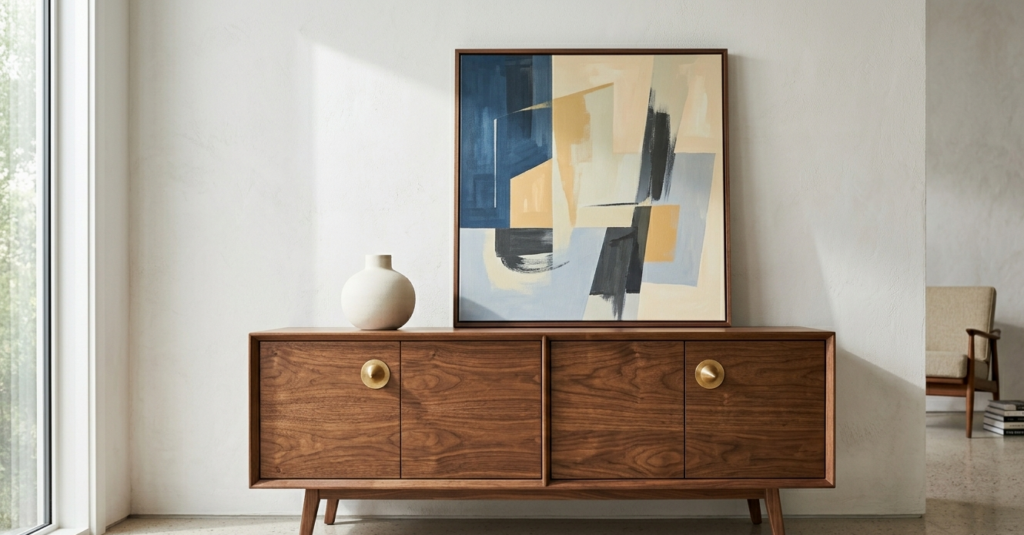
Visual & Functional Pros and Cons
| Feature | Pros | Cons |
| Tapered Legs | Creates a sense of openness; easy to vacuum under. | Can feel “tippy” if not high-quality; needs felt pads for floors. |
| Dark Walnut Finishes | Hides scuffs well; looks incredibly expensive. | Shows dust more easily than lighter woods. |
| Sliding Doors | Excellent for narrow spaces. | Dust can get trapped in the sliding tracks over time. |
| Natural Wood | Ages beautifully; can be refinished. | Requires occasional oiling/conditioning to prevent drying. |
You might also enjoy:
- Solid Wood vs MDF Furniture: Is the Investment Worth It?
- Eco-Friendly Dreams: Best Non-Toxic Bed Frames
- Top 7 Modular Sofas for Small Spaces
Mastering the “Entryway Vignette”
Styling the top of your sideboard is where the magic happens. I follow a “Rule of Three” approach to ensure visual harmony:
- The Anchor: A large vertical element, like a piece of art or a mirror, to provide height.
- The Weight: A stack of coffee table books or a heavy tray to ground the arrangement.
- The Life: A botanical element—think a potted snake plant or a vase of dried pampas grass.
Lighting: The Finishing Touch
Never rely on the “big light” (overhead lighting). To truly showcase the wood grain of a high-end sideboard, you need layered lighting.
- Task Lighting: A slim-profile mid-century table lamp on one end of the sideboard.
- Accent Lighting: If you have art above the sideboard, consider a battery-operated picture light.
- Glow: The warm light reflecting off the wood creates an inviting atmosphere that says, “Welcome home.”
Conclusion: The Expert Tip
In my 15 years of styling, I’ve seen trends come and go, but the Mid-Century Modern sideboard remains the MVP of the interior design world. If you are struggling with clutter, don’t just buy “bins”—buy a piece of furniture that inspires you to keep your space tidy.
My Expert Tip: When shopping for a sideboard, always measure your “clearance.” You don’t just need space for the sideboard; you need 36 inches of “walk-zone” in front of it to maintain a healthy spatial flow.