
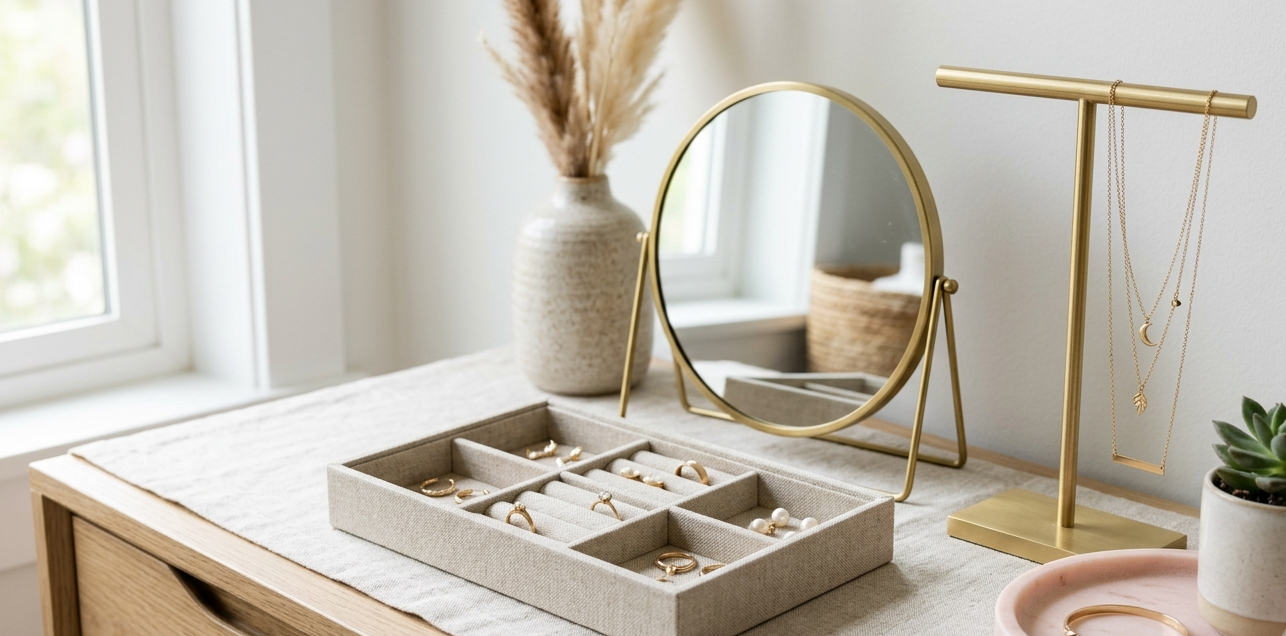
In this guide, we are exploring the sophisticated world of jewelry organization ideas that double as bedroom wall art. We’re moving beyond the plastic bins of the past and embracing a curated, gallery-style approach to our most precious accessories.
The Evolution of the Jewelry Gallery: From Vanity to Vista
Historically, jewelry storage was a private affair. The “jewelry box” was a heavy, wooden chest meant to be tucked away in a safe or a vanity drawer. However, as interior design shifted toward the maximalist movement and the “cluttercore” aesthetic evolved into something more refined, we began to see the rise of the open-concept wardrobe.
The concept is simple: treat your accessories as part of your home’s textural contrast. A shimmering gold necklace against a matte navy wall isn’t just a piece of jewelry; it’s a design element. By mounting these items, we enhance the spatial flow of a room, freeing up surface area on dressers and nightstands while drawing the eye upward to create the illusion of higher ceilings.
Key Elements of a Jewelry Wall Display
To make this work without looking like a retail store, you must consider:
- Balance: Mixing different lengths and weights of pieces.
- Background: The “canvas” behind the jewelry.
- Lighting: Highlighting the sparkle without creating harsh glares.
Deep Dive: Mastering Textures, Palettes, and Fabrics
When I consult on a project, I always tell my clients that the backdrop of a jewelry display is just as important as the gems themselves. If the background is too busy, your jewelry disappears. If it’s too plain, it lacks the “designer touch.”
The Color Palette: Setting the Stage
For a truly high-end look, I recommend choosing a color palette that offers a sophisticated contrast. Here are three curated directions I often use:
- The “Midnight Muse” (Moody & Romantic)
- Background Color: Deep Charcoal or Navy.
- Hex Codes: #2C3E50 (Midnight Blue), #34495E (Slate).
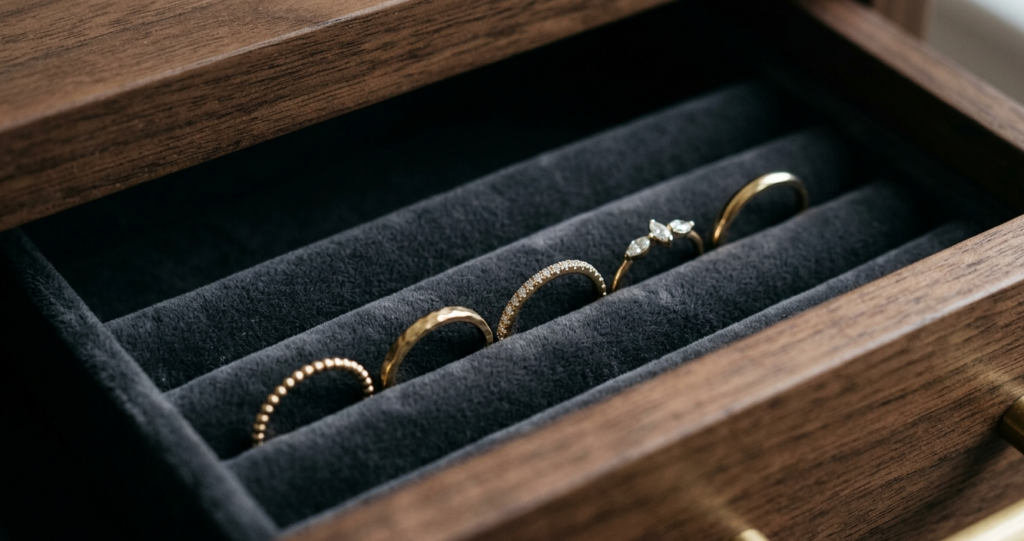
- Fabric Pairing: Heavy velvet or suede in silver-grey.
- Why it works: Gold and diamonds pop brilliantly against dark, matte surfaces. It creates a “jewelry box” feel for the entire room.
- The “Serene Minimalist” (Japandi & Scandinavian)
- Background Color: Warm Oatmeal or Soft Sage.
- Hex Codes: #F5F5DC (Beige), #8FBC8F (Dark Sea Green).
- Fabric Pairing: Raw linen or light oak wood.
- Why it works: This is perfect for organic-shaped jewelry, wooden beads, and minimalist silver. It feels airy and intentional.
- The “Champagne Chic” (Glamour & Luxury)
- Background Color: Soft Blush or Creamy White.
- Hex Codes: #F7E7CE (Champagne), #FFFDD0 (Cream).
- Fabric Pairing: Silk or satin-wrapped panels.
- Why it works: It feels like a high-end boutique. This palette softens the room and makes the jewelry feel delicate and ethereal.
Textural Contrast: The Secret Sauce
In my experience, the most successful jewelry walls use a mix of materials to create depth. Consider a distressed wooden frame lined with plush velvet. The roughness of the wood against the softness of the fabric creates a visual tension that is incredibly pleasing to the eye. For a more modern approach, I love using perforated metal sheets painted in a matte gold finish—it adds an industrial edge while remaining feminine.
“The Curator’s Choice”: 5 Must-Have Display Accessories
Choosing the right hardware is the difference between a DIY project and a professional installation. Here are my top five picks for creating jewelry organization that doubles as bedroom wall art:
1. The Floating Acrylic Ledge
For the ultra-modern home, clear acrylic ledges allow the jewelry to “float.” I prefer these for chunky bracelets and watches. The transparency ensures that the visual weight of the room stays light.
2. Custom Fabric-Wrapped Shadow Boxes
This is my “signature” move. I suggest finding a vintage frame, removing the glass, and wrapping a foam board in high-quality velvet. Use decorative brass T-pins to hang your pieces. It turns your jewelry into a literal framed masterpiece.
3. Ornate Brass Wall Hooks
Don’t settle for hardware store hooks. Look for “jewelry hooks” in the shape of leaves, stars, or abstract geometric forms. When the jewelry is removed, the hooks themselves remain as beautiful wall accents.
4. The Manzanita Branch Installation
For an organic, bohemian vibe, a sandblasted Manzanita branch mounted on the wall acts as a natural sculpture. Draping long necklaces over the branches creates a stunning, three-dimensional art piece.
5. Brass Mesh Wall Grids
Mesh grids offer incredible flexibility. You can clip earrings directly into the mesh and hang “S” hooks for necklaces. I recommend painting the grid the same color as your wall for a subtle, integrated look, or a contrasting metallic for more “pop.”
Room-by-Room Application: Beyond the Bedroom
While the bedroom is the natural home for jewelry, a skilled designer knows that these “sparkle stations” can be integrated throughout the home if done with subtlety.
The Bedroom: The Personal Sanctuary
In the bedroom, your display should be an extension of your morning ritual. I find that placing the jewelry gallery near a full-length mirror creates a “dressing station” that feels intentional. Ensure the display is at eye level to act as a primary piece of wall art.
The Living Room: The “Clandestine” Display
In a living area, I suggest a more “hidden-in-plain-sight” approach. Using a large, ornate mirror with small, discreet hooks tucked behind the frame allows you to access your pieces while maintaining a formal aesthetic. Or, use a beautiful decorative tray on a gallery wall to hold a few statement pieces as “found objects.”
The Kitchen: The “Utility” Hook
While you shouldn’t store your entire collection here, I always recommend a small, beautiful wall hook near the kitchen sink. A single, stylized brass hook for your rings while you cook or clean adds a touch of elegance to a functional space and prevents “sink-related heart attacks.”
Pros and Cons of Open Jewelry Displays
| Feature | Pros (The Style Factor) | Cons (The Maintenance Factor) |
| Visibility | Makes it easy to choose accessories; no more forgotten pieces. | High-value items are visible; may require a hidden safe for “the real stuff.” |
| Aesthetics | Adds color, texture, and a unique focal point to the wall. | Can look cluttered if not organized by color or style. |
| Space | Frees up top-of-dresser space for lamps and books. | Exposed jewelry can accumulate dust over time. |
| Tangling | Necklaces hang straight, preventing knots. | Some metals may tarnish faster if exposed to high humidity. |
You might also enjoy:
- The Art of the Shelfie: How to Style Open Shelves
- The Morning Ritual: Designing a Home Coffee Bar
- Aesthetic Kitchen Pantry Organization
Implementation Guide: How to Style Your Jewelry Wall
To achieve that “Pinterest-perfect” look, follow these steps:
- Declutter First: Only display what you love. If it’s broken or hasn’t been worn in three years, it belongs in a repair bin or a donation box—not on your wall.
- Map it Out: Lay your pieces on the floor in front of the wall. Arrange them by length and color. I find that a “cascading” look—shorter pieces at the top, longer at the bottom—creates the most harmonious spatial flow.
- Think in Odd Numbers: In design, we love the “Rule of Three.” Group your hooks or frames in odd numbers to create a more dynamic visual.
- Incorporate “Non-Jewelry” Art: Interspersed between your necklaces, hang a small framed print, a dried flower, or a decorative mirror. This makes it look like an intentional gallery wall rather than just a storage solution.
Expert Tip: The Tarnish Hack
In my experience, the biggest hesitation clients have with open displays is dust and tarnishing. My expert tip? Stick to “Statement” and “Everyday” pieces for the wall. Keep your high-maintenance sterling silver that tarnishes easily in an anti-tarnish cloth-lined drawer, and use the wall for your gold-filled, beaded, and costume jewelry that can handle the air. For dust, a quick pass with a soft makeup brush once a month keeps everything sparkling.
Final Thoughts
Your home should be a collection of things that make you happy. By turning your jewelry into wall decor, you aren’t just organizing; you’re celebrating your personal history. It’s about finding the beauty in the everyday and making your morning routine feel like a walk through a private boutique.