
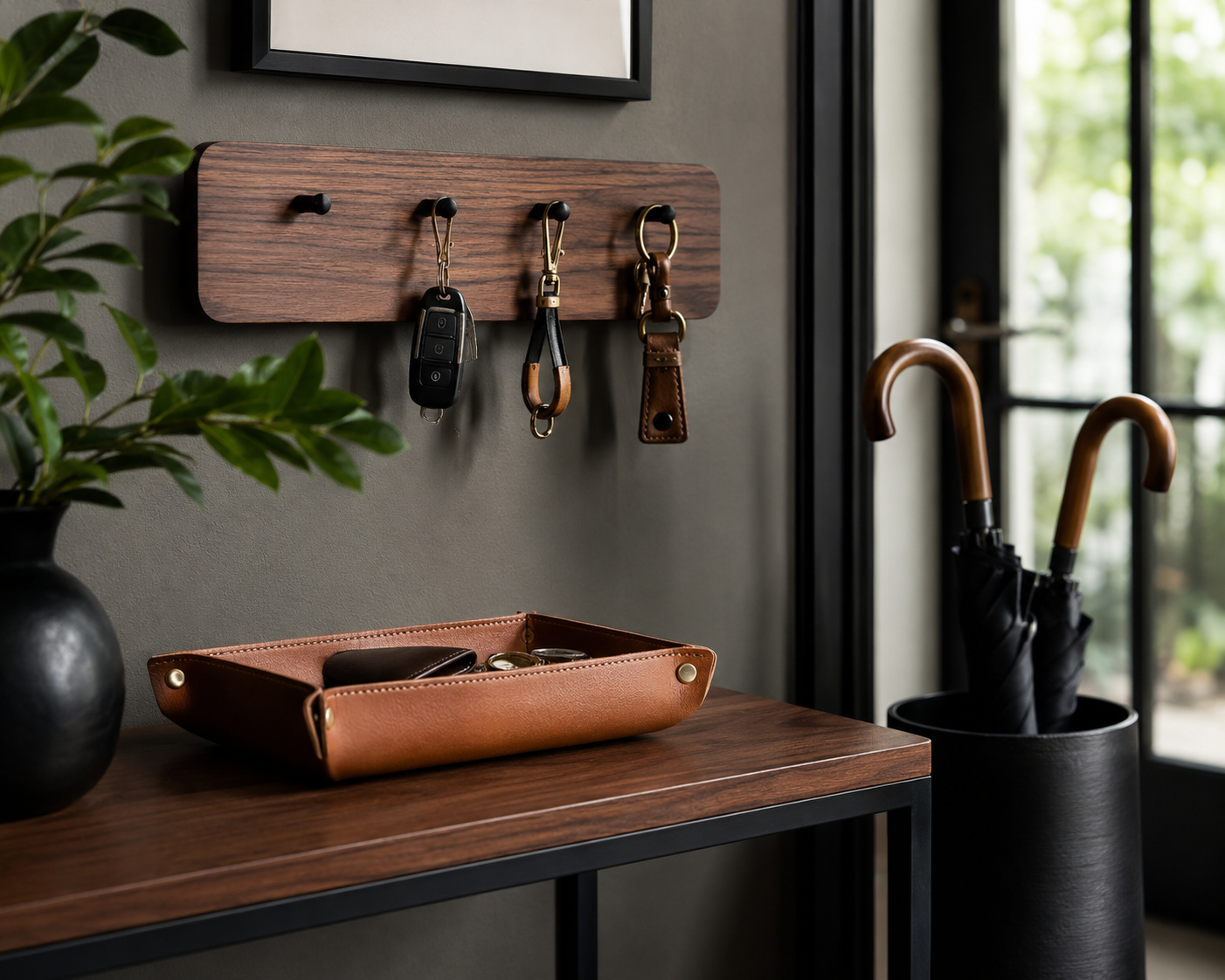
The entryway is the most undervalued square footage in the house. It is the “handshake” of your home—the first impression guests receive and the final moment of transition before you step out into the world.
Today, we are exploring minimalist entryway organization for keys, mail, and shoes, focusing on how to marry high-end design with the gritty reality of daily life.
The Evolution of the Foyer: From Grand Hall to Functional Landing
Historically, the entryway (or “foyer,” from the French foyer or hearth) was a grand statement of wealth. In Victorian homes, it was a buffer zone to keep the soot of the street away from the parlor. Over the decades, as our lives became faster and our floor plans more open, the entryway evolved into a “landing strip.”
The modern trend leans heavily toward Japandi and Scandi-minimalism—styles that prioritize clean lines and organic materials. We no longer want a cluttered “mudroom” look; we want a curated gallery that happens to hold our shoes.
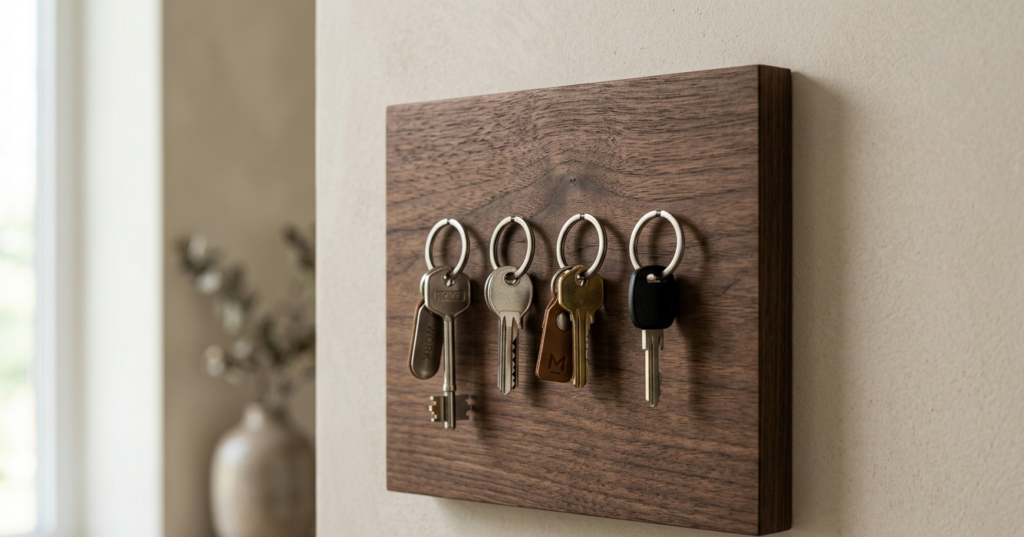
The Core Elements of Minimalist Entryway Design
To achieve a look that feels both intentional and effortless, you must balance three pillars: Visual Weight, Texture, and Utility.
1. Spatial Flow and Proportion
One of the biggest mistakes I see is choosing furniture that is too deep for the hallway. A standard console is 12–15 inches deep, but in a truly minimalist space, a floating ledge or a slim 10-inch profile table maintains the focal point without cramping the walkway.
2. The Power of “Negative Space”
In minimalism, what you don’t see is as important as what you do. By leaving portions of your walls or floors empty, you allow the eye to rest. This makes the items you do display—like a hand-blown glass bowl for keys—feel like art rather than clutter.
3. Lighting as an Anchor
Never rely on a single overhead light. I always recommend a layered approach:
- Ambient: A soft recessed light.
- Accent: A sculptural table lamp on the console.
- Reflective: A large mirror to bounce natural light and create the illusion of depth.
Textures, Tones, and Materiality: The Designer’s Secret Sauce
When we talk about minimalist entryway organization for keys, mail, and shoes, the “minimalist” part refers to the quantity of items, while the “style” part refers to the quality of materials. In my experience, a monochrome palette only works if you play with textural contrast.
The Minimalist Color Palette (Hex Code Guide)
For a timeless, high-end feel, I recommend a base of warm neutrals.
- The Base (Walls): #F5F5F4 (Soft Linen) – A warm white that avoids the “hospital” feel of stark white.
- The Anchor (Furniture): #4A4238 (Smoked Oak) – Provides grounding contrast without being as harsh as black.
- The Accent (Metal/Hardware): #C5A059 (Brushed Brass) – Adds a touch of luxury and warmth.
- The Softness (Textiles): #D7D0C8 (Oatmeal) – Perfect for wool rugs or runners.
Fabric and Material Selection
When selecting materials for the entryway, durability is key, but it must look sophisticated.
Natural Stones:
I am currently obsessed with honed travertine. Unlike polished marble, which can feel cold, honed travertine has a matte, velvety texture that feels incredibly grounded. Using a travertine tray for your daily mail immediately elevates paper waste into a design moment.
Performance Linens and Leathers:
If you have a bench for shoe removal, avoid velvet—it’s a magnet for dust. Instead, opt for a vegan pebble-grain leather or a high-rub-count linen in a “greige” tone. These materials provide a sophisticated tactile experience while being forgiving of the occasional grocery bag or wet coat.
Wood Tones:
To achieve a cohesive look, stick to one wood species. White Oak is the gold standard for minimalism because of its tight grain and neutral undertone. If you want something moodier, Walnut offers a rich, chocolatey depth that looks stunning against brass accents.
You might also enjoy:
- The Art of the Shelfie: How to Style Open Shelves
- Deep Dive: Under-Sink Organization for Vanities
- Tame the Tech: Living Room Cable Management Guide
The Curator’s Choice: 5 Essential Entryway Accessories
I’ve personally vetted hundreds of products over the years. Here are my “Curator’s Choice” picks for balancing minimalist entryway organization for keys, mail, and shoes with high-end aesthetics.
| Item Type | Recommendation | Why It Works |
| The Key Vessel | Hand-Carved Alabaster Bowl | Its translucency glows under lamp-light, turning mundane keys into a centerpiece. |
| The Mail Sorter | Smoked Acrylic Vertical Slot | Acrylic “disappears” visually, making mail look like it’s floating rather than stacking up. |
| The Shoe Storage | Slatted Wood Hidden Cabinet | Slats allow for airflow (essential for shoes) while hiding the visual chaos of sneakers. |
| The Wall Hook | Oversized Wooden “Dots” | When empty, they look like wall art. When used, they are sturdy enough for heavy trench coats. |
| The Rug | Low-Pile Jute and Silk Blend | You get the durability of jute with the “sheen” of silk, perfect for high-traffic zones. |
Beyond the Front Door: Applying Entryway Logic Throughout the Home
The philosophy of “a place for everything and everything in its place” shouldn’t stop at the foyer. I’ve found that the same principles of minimalist entryway organization can solve flow issues in every room.
The Living Room: The “Secondary Landing”
Often, items that don’t belong in the entryway (like tablets, chargers, or magazines) bleed into the living room. Apply the “hidden storage” rule here. Use a textural storage ottoman or a media console with integrated cable management to maintain that serene, minimalist vibe.
The Bedroom: The Nightstand Edit
Think of your nightstand as a “mini-entryway” for your sleep cycle. Use a small version of your entryway’s “key bowl” for jewelry and watches. Keeping the surface clear of everything but a lamp and a book mimics the spatial flow of a well-organized foyer.
The Kitchen: The Command Center
The kitchen often becomes a secondary dumping ground for mail. To combat this, I recommend installing a “drop zone” inside a cabinet or at the end of an island using the same materiality (e.g., matching the wood of your entryway console) to create a cohesive design language across the home.
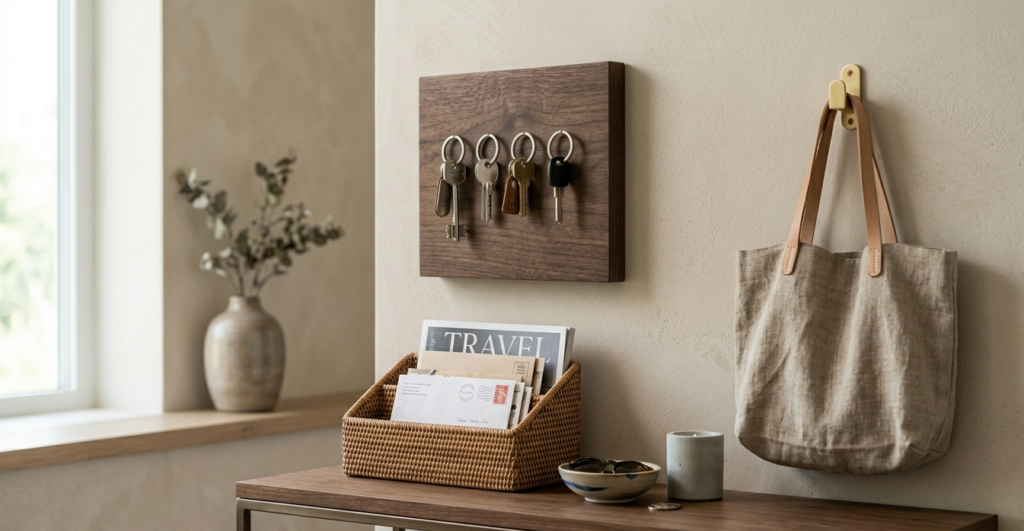
Pros and Cons of Minimalist Entryway Systems
Visual & Functional Benefits
- Reduced Mental Load: Coming home to a clear surface immediately lowers cortisol levels.
- Sustained Property Value: Custom, high-end organizational built-ins are a major selling point.
- Enhanced Lighting: Minimalist setups usually involve mirrors and low-profile furniture, which make small halls feel twice as large.
Maintenance Challenges
- The “Goldilocks” Factor: Because there is so little on display, any item out of place (like a single stray sock) becomes a glaring eyesore.
- Dust Visibility: Minimalist surfaces (especially glass or dark wood) require frequent dusting to maintain that “magazine-ready” look.
- Material Sensitivity: High-end materials like honed stone or untreated wood can be susceptible to water rings from umbrellas if not properly sealed.
Expert Tip: The “Five-Minute Reset”
In my own home, I practice what I call the Five-Minute Reset. Every evening, I clear the entryway console. I file the mail, hang the stray coat, and wipe down the surface. Because the system is minimalist, this task takes seconds, but it ensures that my “first impression” the next morning is one of peace, not panic.
Conclusion
Creating an efficient entryway isn’t about buying the most expensive furniture; it’s about choosing pieces that respect your lifestyle. By focusing on minimalist entryway organization for keys, mail, and shoes, you transform a chaotic transition point into a curated sanctuary.
Remember, your home should serve you, not the other way around. Choose textures that invite touch, colors that soothe the eyes, and a layout that allows you to breathe.