
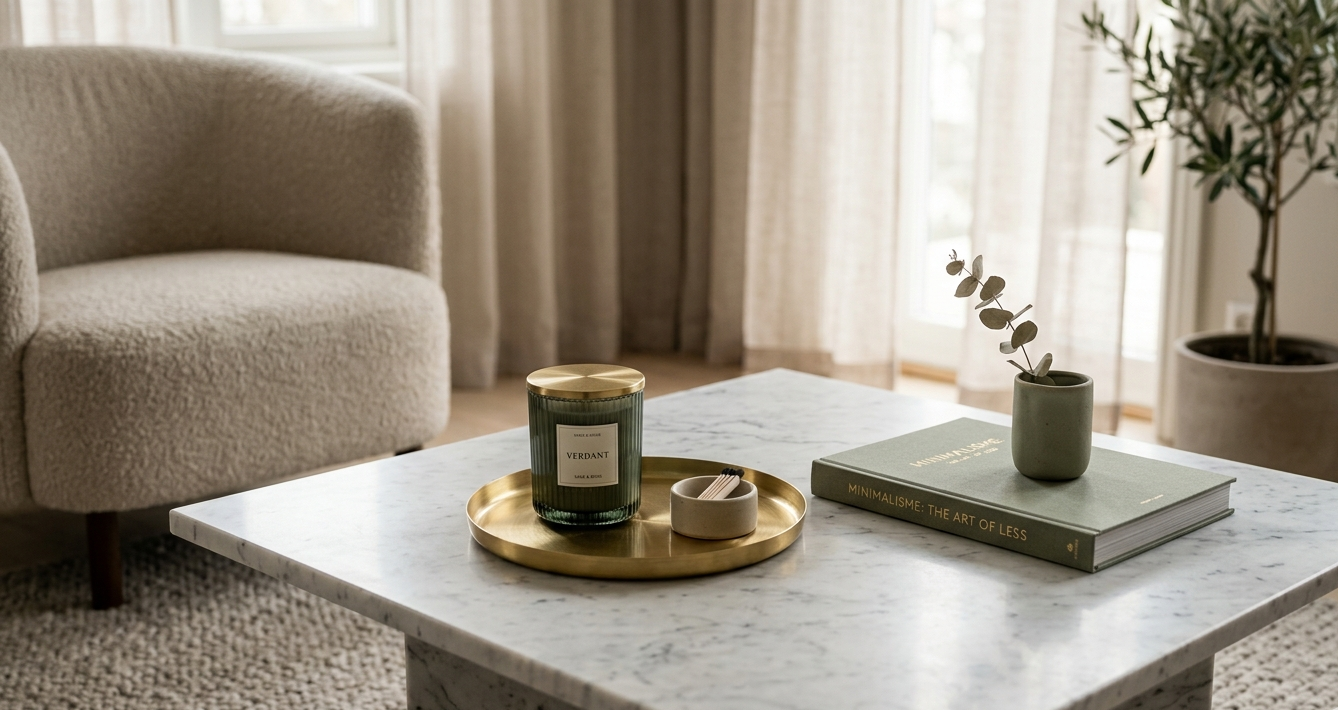
Walking through entryways and styling living rooms, I’ve learned a secret that the high-end showrooms won’t tell you: luxury isn’t a price tag; it’s a feeling.
I remember a specific project for a young couple in a modest city apartment. They had a very tight budget but a deep desire for a space that felt like a boutique hotel. We didn’t tear down walls or buy designer sofas. Instead, we focused entirely on affordable decorative accents that make a home look expensive. By the time we finished swapping out the plastic hardware for brushed brass and adding heavy, floor-to-ceiling linens, the transformation was so profound that even I was stunned. It wasn’t about how much they spent; it was about the intentionality of the details.
Today, I’m pulling back the curtain on how you can achieve that high-end, “curated” look without a five-figure renovation budget. We are going to explore the art of the “micro-upgrade”—those small, impactful choices that create a cohesive, luxurious atmosphere.
The Philosophy of “High-Low” Styling
The most sophisticated homes in the world are rarely “all-designer.” They are a blend of investment pieces and clever, affordable finds. This is what we call spatial flow—the ability of a room to guide the eye through a series of interesting textures and focal points without feeling cluttered or cheap.
The History of the Accent
Historically, luxury was defined by rarity. In the 18th century, it was the silk brought from the East or the hand-carved molding in a parlor. Today, in our era of mass production, luxury is defined by texture, weight, and uniqueness. When everything is plastic and flat, something weighted, textured, or artisanal stands out as “expensive.”
By focusing on these small accents, we are essentially “tricking” the eye into perceiving a higher level of craftsmanship throughout the entire room.
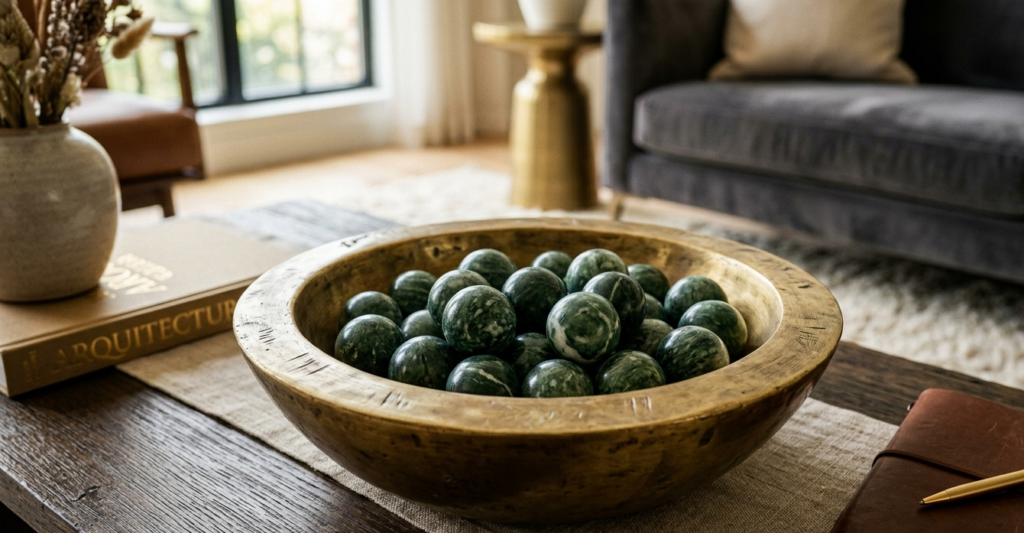
10 Small Accents That Elevate Your Entire Home
1. Oversized, Textured Throw Pillows
If your couch looks a bit tired, don’t replace it. Replace the pillows. The key to an expensive look is textural contrast.
- The Rule: Go up a size. If your pillow cover is 20×20, use a 22×22 down-feather insert. This creates that “plump” look seen in magazines.
- Materials: Look for linen, velvet, or heavy bouclé.
2. Statement Hardware
Think of hardware as the jewelry of your home. Standard builder-grade knobs are the equivalent of a plain t-shirt; solid brass or matte black handles are the diamond earrings.
3. Gallery-Style Lighting
Most homes suffer from “the big light”—the overhead fixture that washes everything out. Luxury is found in layered lighting. Small, cordless rechargeable lamps on bookshelves or a sleek pharmacy lamp next to an armchair create a moody, upscale ambiance.
4. Natural Stone Trays
A plastic tray looks like a utility item. A marble or travertine tray looks like a pedestal. Use these to “corral” your daily items—keys on the entry table, or soaps by the sink.
5. Floor-to-Ceiling Drapery
Nothing screams “budget” like curtains that stop at the windowsill. Hanging your rods high and wide (near the ceiling) makes your windows look massive and your ceilings feel vaulted.
6. Curated Coffee Book Stacks
Books are the ultimate décor. They signal a life well-lived and interests well-traveled. Choose books with neutral spines or bold typography to act as mini-pedestals for other small objects.
7. Large-Scale Greenery
A tiny succulent on a giant table looks lonely. A single, tall branch of Eucalyptus or an Olive tree in a heavy ceramic pot adds organic height and life.
8. Scent as a Design Element
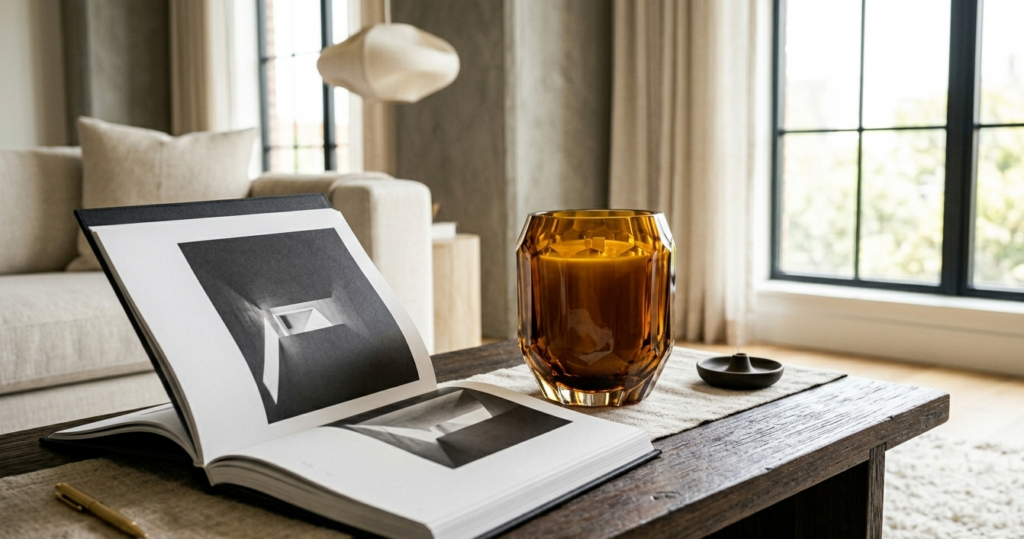
We often forget the olfactory experience. A high-quality candle with notes of sandalwood, leather, or bergamot provides an invisible layer of luxury.
9. Weighted Glassware
Replace your mismatched plastic cups with weighted, fluted glass. The physical weight of an object communicates quality to the brain instantly.
10. The “Leaning” Art Piece
Instead of hanging everything perfectly, lean a large, framed canvas against a wall or on a sideboard. It feels effortless, like a Parisian atelier.
Deep Dive: The Power of Texture and Palette
To truly master the look of affordable decorative accents that make a home look expensive, we have to talk about the “Three Pillars of Luxury”: Texture, Color, and Fabric.
The Alchemy of Textural Contrast
In my experience, the number one mistake homeowners make is choosing materials that are too similar. If you have a leather sofa, don’t buy a leather ottoman. You need a chunky wool rug or a soft velvet chair to create a “conversation” between materials. This is what designers call tactile richness.
When I style a room, I aim for at least four different textures:
- Hard/Reflective: Glass, metal, or polished stone.
- Soft/Matte: Velvet, suede, or wool.
- Organic: Wood grain, rattan, or live plants.
- Rough: Raw linen, ceramic, or jute.
The “Expensive” Color Palette
You don’t need to paint every room white to look modern. In fact, a “Monochromatic Layered” palette is often the hallmark of high-end design. This involves using different shades of the same color to create depth.
Here are my favorite “Luxury on a Budget” Hex Code suggestions:
- The “Quiet Luxury” Cream:
#F5F5DC(Beige/Cream) — Use this for large textiles like rugs and curtains. - The “Executive” Slate:
#2F4F4F(Dark Slate Gray) — Perfect for accent pillows or a painted bookshelf. - The “Champagne” Metallic:
#D4AF37(Muted Gold) — Best for hardware and frames. Avoid “shiny” gold; look for “brushed” or “antique.” - The “Grounded” Terracotta:
#A45A52— Use this in small ceramic accents to add warmth to a neutral room.
Fabric Choices: Why Weight Matters
When shopping for accents, ignore the price tag and feel the fabric. Luxury fabrics have heft.
- Linen: It should feel slightly stiff, not flimsy. Real linen wrinkles, and that’s part of its charm. It suggests a relaxed, “old money” aesthetic.
- Velvet: Look for “high-pile” velvet. If you run your hand across it and it leaves a deep mark, it will look stunning under evening lights.
- Bouclé: This knotted yarn fabric is incredibly trendy, but choose versions with a tight weave. Looser weaves can look like a bathroom towel after a few months.
The Curator’s Choice: Top 5 Accessories to Elevate Your Space
As a designer, I have a “cheat sheet” of items I use to instantly fix a “flat” room. Here are my top five picks:
| Item | Why It Works | Styling Tip |
| Brushed Brass Taper Holders | Adds height and a metallic “pop” without being gaudy. | Group them in sets of three with different heights on a dining table. |
| Ribbed Ceramic Vases | Provides architectural interest and “ribbed” texture. | Leave them empty; they are sculptures in their own right. |
| Turkish Cotton Hand Towels | Elevates a bathroom from “utility” to “spa.” | Fold them in thirds and drape them over the edge of the sink. |
| Agate Coasters | Natural stone adds a sense of organic “rareness.” | Look for pieces with unfinished edges to emphasize the natural origin. |
| Waffle-Weave Throw Blankets | Adds a grid-like pattern that feels organized and cozy. | Don’t fold it; “toss” it over the corner of a chair for a lived-in look. |
You might also enjoy:
- The Magic of Color: Ultimate Accent Wall Guide
- The Truth About Washable Rugs: Worth the Money?
- Cozy Vibes: Best Winter Sofa Styling Textures
Room-by-Room Application
The Living Room: Creating a Focal Point
The living room is where your spatial flow is most tested. I recommend focusing your budget on the “Eye-Level Horizon.” This is the line your eyes follow when sitting down.
- The Accent: Swap your standard TV stand legs for tapered wooden or metal ones.
- The Impact: It lifts the furniture off the ground, creating a sense of “airiness” and custom craftsmanship.
The Kitchen: The “Bistro” Effect
Kitchens can often feel cold and clinical. To make a kitchen look expensive, you need to break up the cabinetry with “soft” accents.
- The Accent: A large wooden breadboard leaning against the backsplash and a high-quality glass olive oil dispenser.
- The Impact: It transforms a workspace into a curated kitchen that feels like it belongs in the French countryside.
The Bedroom: The “Sanctuary” Layer
In the bedroom, luxury is synonymous with comfort.
- The Accent: A long, lumbar pillow in a high-end fabric (like silk or heavy linen) across the front of your bed.
- The Impact: It simplifies the bed styling while looking more intentional than a pile of twenty small pillows.
Pros and Cons: Style vs. Maintenance
Choosing the right accents requires a balance between how they look and how you live.
Pros of Luxury Accents
- Visual Impact: You get a 90% “new room” feel for 10% of the cost.
- Flexibility: It is much easier to swap a vase or a pillow than a sectional sofa if your tastes change.
- Personal Expression: Small objects are where your personality truly shines through.
Cons & Maintenance Challenges
- The “Dust” Factor: Intricate textures (like bouclé or carved wood) require more frequent cleaning than flat surfaces.
- Fragility: Natural stones like marble are porous and can stain if you aren’t careful with red wine or oils.
- Clutter Risk: There is a fine line between “curated” and “cluttered.” You must be willing to edit.
Conclusion
Creating a home that feels expensive isn’t about the size of your bank account; it’s about the quality of your attention. By focusing on affordable decorative accents that make a home look expensive—like weighted glassware, oversized linens, and a thoughtful color palette—you can create a space that feels sophisticated, grounded, and uniquely yours.
In my experience, the most beautiful homes are those where every object has a reason for being there. It’s not about having more; it’s about having better.
The Expert Tip: Use the “Three-Item Rule” for surfaces. Whether it’s a coffee table or a nightstand, group items in threes of varying heights: something tall (a vase), something flat (a book), and something sculptural (a small bowl or candle). This creates immediate visual harmony.