
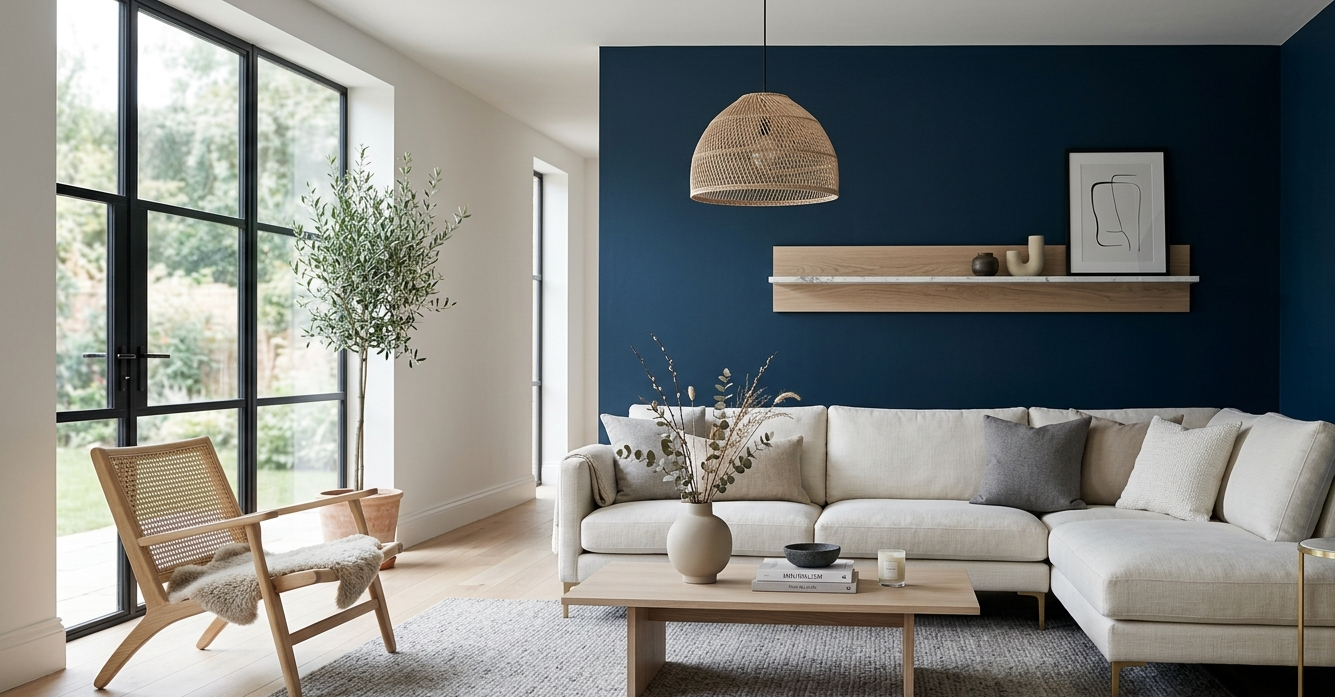
When it comes to the best accent wall colors to make a small room feel bigger, the secret isn’t just about brightness—it’s about how light interacts with pigment to trick the human eye.
In this guide, I’m drawing of residential styling to show you how to use accent walls to break the boundaries of your floor plan. We aren’t just painting a wall; we are sculpting space with light and hue.
The Science of Recession: How Color Manipulates Space
To understand why certain colors expand a room, we have to look at the history of the accent wall. Originally popularized in the mid-century modern era, the accent wall was designed to create a “focal point” in open-plan homes. However, in smaller contemporary footprints, the accent wall serves a more functional purpose: spatial flow.
In my experience, “receding colors”—those with cool undertones like blues, greens, and soft purples—appear further away from the eye than they actually are. Conversely, “advancing colors” like warm reds or oranges pull the wall toward you. If you want to make a cramped living room feel like a grand hall, you need to master the art of the receding hue.
Key Elements of the “Expansive” Accent Wall
- Undertone Management: Always lean toward “cool” rather than “warm.”
- The 60-30-10 Rule: For small spaces, I recommend 60% neutral (walls/floor), 30% accent wall/large furniture, and 10% decor pops.
- Low Contrast: To expand space, the transition between your main wall color and your accent should be harmonious, not jarring.
The Deep Dive: Palettes, Textures, and Fabric Parity
Choosing the right color is only half the battle. To truly elevate a room, you must consider textural contrast and how your fabrics interact with that new hue.
1. The Airy Ethereals (The “Infinite” Palette)
If you are nervous about going too dark, these shades are your best friends. They mimic the sky and the sea, creating a sense of boundlessness.
- Color Suggestions:
- Cloudy Silver (Hex: #E1E1E1): A crisp, cool gray that mimics natural morning light.
- Sea Salt Glass (Hex: #D1E1E0): A whisper of green-blue that feels like a coastal breeze.
- Fabric Choices: Pair these with sheer linen curtains and bouclé upholstery. The “nubby” texture of bouclé provides a grounded contrast to the ethereal wall color, preventing the room from feeling “washed out.”
2. The Moody Depth (The “Shadow” Palette)
Many homeowners fear dark colors in small rooms. I’m here to tell you: do not be afraid of the dark. A dark accent wall creates “visual depth.” It’s like looking into the night sky—you can’t quite tell where the wall ends.
- Color Suggestions:
- Midnight Obsidian (Hex: #2C3E50): A sophisticated navy-charcoal hybrid.
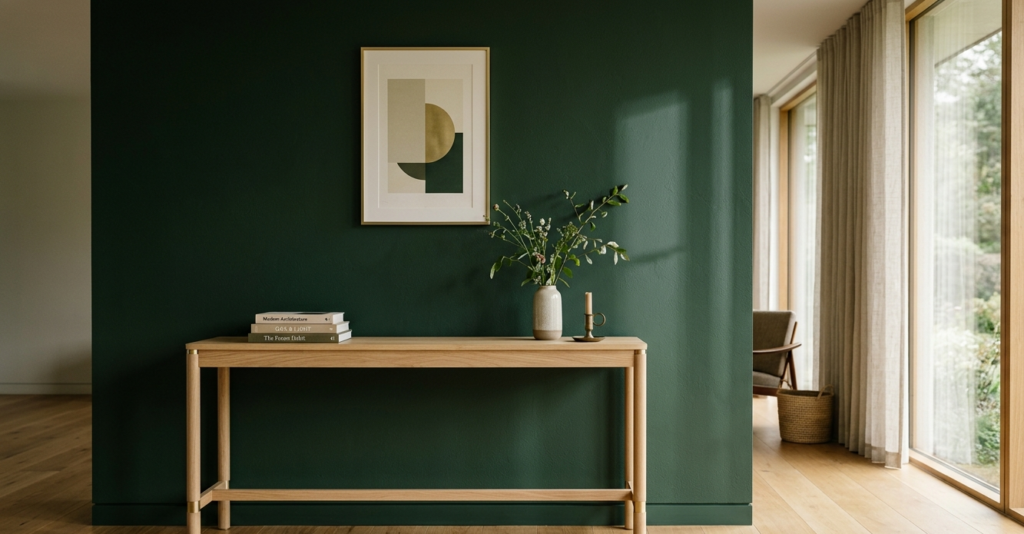
- Evergreen Forest (Hex: #3E4C3F): A deep, muted teal-green that brings the outdoors in.
- Textural Pairings: When using dark colors, light-reflective textures are vital. Think silk throw pillows or a velvet sofa with a slight sheen. The way the light “dances” off these fabrics against a matte dark wall creates a high-end, multidimensional look.
3. The Modern Organic (The “Nurture” Palette)
This is for the lover of the “Japandi” or “Organic Modern” aesthetic. We use earthy tones that feel grounded yet spacious.
- Color Suggestions:
- Muted Sage (Hex: #9CAF88): Soft enough to be neutral, green enough to be a statement.
- Warm Greige (Hex: #B7B1A5): The perfect bridge between tan and gray.
- Material Choices: Use raw oak or rattan furniture. The natural wood grains act as a secondary texture that complements the organic paint, enhancing the “spatial flow” by blurring the lines between furniture and architecture.
The Curator’s Choice: 5 Accessories to Enhance Your Accent Wall
To make an accent wall work, you need the right supporting cast. Here are my top five picks for pieces that amplify the “space-expanding” effect:
| Accessory Type | Why It Works | Styling Tip |
| Oversized Leaner Mirror | Doubling the light. | Place it opposite your accent wall to reflect the color and double the visual depth. |
| Acrylic “Ghost” Chairs | Zero visual weight. | Use these against a dark accent wall so the color shows through the furniture. |
| Floating Oak Shelves | Horizontal lines. | Long, horizontal lines draw the eye across the wall, making it feel wider. |
| Satin Brass Sconces | Warm glow. | Metal finishes pop against cool-toned accent walls, adding a touch of luxury. |
| Frameless Canvas Art | Seamless integration. | Choose art with plenty of “white space” to keep the wall from feeling cluttered. |
You might also enjoy:
Room-by-Room Application
The Living Room: Creating a Focal Point
In the living room, the accent wall should usually be the one behind the sofa or the media console. If your room is narrow (the “bowling alley” effect), paint the shorter end wall a darker color. This visually brings that wall closer, squaring off the room and making it feel wider than it is.
The Bedroom: The “Headboard” Illusion
For bedrooms, I always suggest the wall behind the bed. Use a soft, receding blue or lavender. Not only does this promote better sleep through color psychology, but it also creates a “cocoon” effect. Pair it with an oversized, low-profile headboard to emphasize the width of the room.
The Kitchen: The Backsplash Accent
Small kitchens often lack a “full” wall for an accent. In this case, use the area above your cabinets or a small breakfast nook. A cool mint or a soft teal can make a cramped galley kitchen feel like a bright, gourmet workspace.
Pros and Cons of Small-Space Accent Walls
Pros:
- Instant Personality: It allows you to use bold colors that might be overwhelming on all four walls.
- Budget-Friendly: You only need one or two gallons of high-quality paint.
- Defines Zones: In a studio apartment, an accent wall can visually separate the “bedroom” from the “living room.”
Cons:
- Maintenance: Darker accent walls show scuffs and fingerprints more easily than lighter ones.
- Lighting Sensitivity: If the room lacks natural light, a cool-toned wall can sometimes look “muddy” or “flat” without proper artificial layering.
Lighting: The Final Ingredient
I cannot emphasize this enough: color is a slave to light.
In my years of styling, I’ve seen beautiful palettes ruined by a single “boob light” in the center of the ceiling. To make your accent wall truly expand the space, you need layered lighting:
- Task Lighting: Under-cabinet lights or desk lamps.
- Ambient Lighting: Dimmable overheads.
- Accent Lighting: Picture lights or LED strips behind a TV/headboard.
By washing your accent wall in soft, warm light (2700K to 3000K bulbs), you eliminate shadows in the corners. Shadows are the “walls” of a small room—remove them, and the space feels infinite.
Conclusion: Trust Your Instincts
Transforming a small home isn’t about following rigid rules; it’s about creating a space that resonates with your soul. I have found that the most successful homes are those where the owners weren’t afraid to take a small risk with a pint of paint.
Expert Tip: Before committing, paint a 2×2 foot sample board and move it around the room throughout the day. See how the morning sun and the evening lamplight change the hue. If the color still makes you smile at 9:00 PM, you’ve found your winner.