
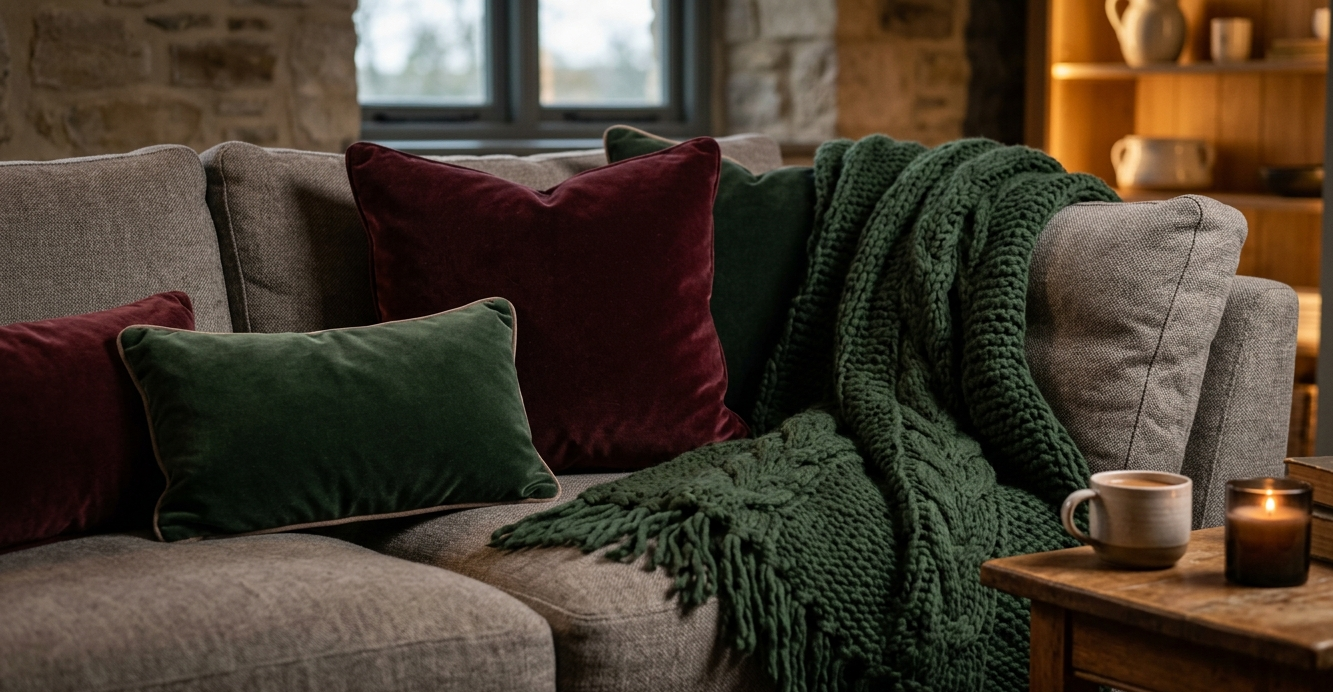
As the golden hues of autumn fade into the crisp, blue-grey light of winter, our homes undergo a psychological shift. We move from the outward-facing energy of summer to an inward-facing “nesting” phase.
The History of “The Layered Look”
Before we dive into the “how-to,” it is helpful to understand why we are naturally drawn to layers. Historically, textiles were a sign of wealth and utility. In European history, heavy tapestries weren’t just art; they were essential for blocking drafts. Today, we use “layering” to achieve spatial flow. When a sofa is bare, it can look like an island in a room. When it is layered with varying weights of fabric, it anchors the space, creating a focal point that draws the eye and invites the body to rest.
Deep Dive: Mastering Textural Contrast and Material Choices
In my experience, the difference between a “messy” sofa and a “styled” sofa lies in the intentionality of the materials. To truly master how to style a sofa for winter, you must move beyond color and focus on the “hand-feel” and “visual weight” of your fabrics.
1. The Foundation: Wool and Heavy Knits
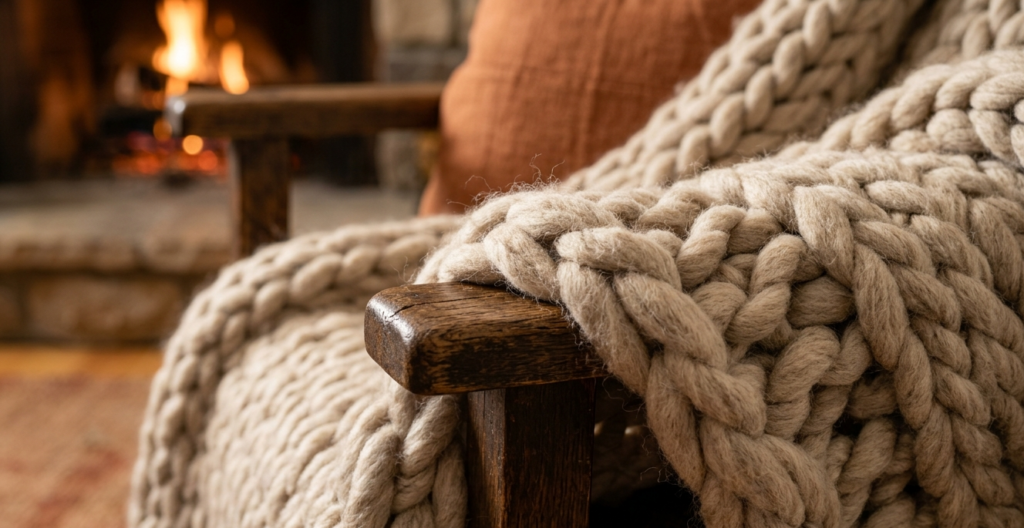
Wool is the quintessential winter fabric. Whether it is a fine Merino or a chunky Highland wool, the natural crimp of the fiber provides a visual “bounce.”
- Design Tip: Use a chunky knit blanket as your “base layer.” The large-scale weave provides a necessary contrast to the tight weave of most sofa upholstery.
2. The Trend: Bouclé
Bouclé has taken the design world by storm, and for good reason. Its looped yarns create a nubby, irregular surface that catches shadows beautifully. It provides a “middle ground” texture—not as smooth as cotton, but not as shaggy as fur.
3. The Luxury: Faux-Fur and Velvet
Every winter sofa needs a touch of “glam” to offset the rustic nature of wool. Velvet offers a subtle sheen that reflects low winter light, while high-pile faux-fur adds a primal, cozy element.
The Winter Palette: A Color Psychology Guide
To keep the room looking sophisticated, I recommend a palette that feels grounded. Here are my go-to Hex Codes for a high-end winter look:
- Deep Charcoal (#36393D): Perfect for base pillows to provide depth.
- Toasted Almond (#D2B48C): A bridge color that warms up grey sofas.
- Forest Moss (#1B3022): An accent color that brings the “evergreen” feel of winter indoors.
- Burnt Sienna (#A0522D): Adds a “firelight” glow to the arrangement.
You might also enjoy:
- The Magic of Color: Ultimate Accent Wall Guide
- Gallery Walls Made Easy: Creative Layout Ideas
- Best Warm Neutrals for Dark, North-Facing Rooms
“The Curator’s Choice”: 5 Winter Essentials for 2024
When selecting accessories, I look for items that tell a story of craftsmanship. Here are my top 5 picks for this season:
- The Weighted Alpaca Throw: Alpaca is warmer than sheep’s wool and has a silkier drape. It looks incredibly expensive when draped over a leather sofa arm.
- Oversized Lumbar Pillows (12″x24″): These are essential for deep-seated sofas. They break up the vertical lines of back cushions and provide much-needed ergonomic support.
- Tasseled Herringbone Blankets: The classic herringbone pattern adds “micro-texture” (texture you see from a distance), while tassels add “macro-texture” (texture you feel).
- Embroidered Velvet Covers: Look for tone-on-tone embroidery. It adds a layer of sophistication without being visually “loud.”
- Sheepskin Pelts: I love placing a small sheepskin pelt under a stack of pillows. It creates a soft, unexpected layer that peeks through, adding a “lodge” feel.
How-To: The 3-Step Styling Method
In my styling workshops, I teach the “Rule of Three” for sofas. This ensures the look is balanced but not symmetrical (which can feel too stiff).
Step 1: The Anchor (The Corners)
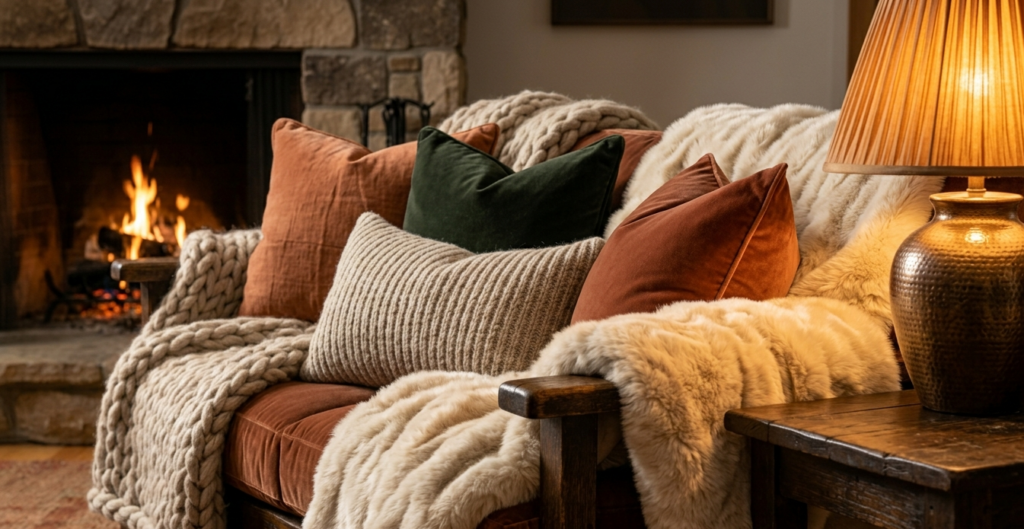
Start with your largest pillows (usually 22×22 inches). Place one in each corner. These should be your “heaviest” colors—think the Deep Charcoal or Forest Moss mentioned earlier. This creates a frame for the rest of the styling.
Step 2: The Drape (The “Waterfall” Effect)
Take your primary blanket. Instead of folding it into a rectangle, find the center point and “toss” it over one side of the sofa. Let it cascade down the seat and touch the floor slightly. This creates spatial flow and makes the room feel less formal.
Step 3: The Accent (The “Jewel” Layer)
Place your smaller, highly textured pillows (18×18 or lumbars) in front of the anchors. This is where you use your faux-fur or bouclé. Mix your patterns here—a subtle stripe next to a solid velvet is a classic designer move.
Room-by-Room Application
While the living room is the obvious choice, winter textiles should flow throughout the home:
- The Living Room: Focus on textural contrast. Pair smooth leathers with rough wools.
- The Bedroom: Focus on “Visual Softness.” Use lighter tones like Toasted Almond to keep the space airy but warm.
- The Kitchen/Nook: Many modern kitchens have bench seating. A single, long sheepskin runner and two small wool pillows can turn a cold breakfast nook into a “morning sanctuary.”
Pros and Cons: Aesthetics vs. Maintenance
Pros:
- Acoustic Softening: Textiles absorb sound, which is vital in homes with hardwood or tile floors.
- Thermal Comfort: Practically speaking, layers keep the heat in.
- Inexpensive Refresh: It is much cheaper to swap pillows than to buy a new sofa.
Cons:
- Allergen Collection: Heavy textures like wool and fur can trap dust and pet hair. I recommend a handheld fabric vacuum once a week.
- Clutter Risk: Too many pillows can make a sofa unusable. Stick to the “odd number” rule (3, 5, or 7 total items).
Expert Tip & Conclusion
The Expert “Secret”: Always use feather or down-alternative inserts that are 2 inches larger than your pillow cover. For a 20×20 cover, use a 22×22 insert. This creates that “plump,” high-end look found in luxury showrooms and allows for the famous “designer karate chop” on the top of the pillow.
Styling your sofa for winter is a ritual. It is an act of care for yourself and your guests. By playing with textured throw pillows and blankets, you aren’t just decorating; you are curated an experience of warmth and safety.