
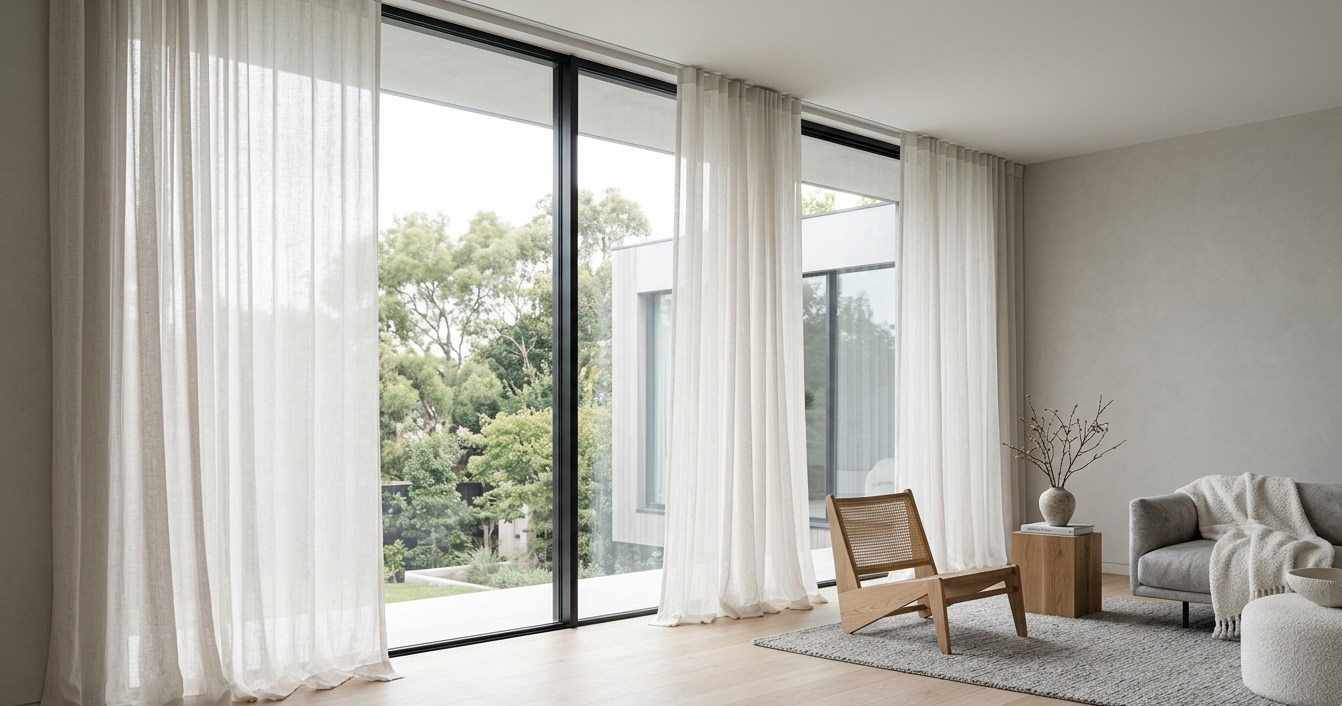
That was the day I realized that curtains are the “eyebrows” of a room. Get the shape and position wrong, and the entire expression of the space feels off. Whether you are dealing with a cozy cottage or wondering how to choose the right curtain length for high ceilings, the math of beauty is surprisingly precise.
The Evolution of Window Dressing: From Utility to Art
Historically, curtains were purely functional. In medieval castles, heavy tapestries were used to block drafts and keep heat in. By the Renaissance, they became symbols of wealth, featuring intricate brocades and excessive pooling to show off the sheer amount of expensive fabric a family could afford.
Today, we use window treatments to manipulate spatial flow. We aren’t just blocking the sun; we are correcting architectural “flaws.” By understanding the history of the “High and Wide” movement, we learn that the goal is to make windows appear larger and ceilings appear higher than they actually are.
Defining the Three Standard Lengths
Before we dive into the “how,” we must define the “what.” In the design world, we generally work with three finishes:
- The Float: Curtains hang about 1/2 inch above the floor. This is clean, modern, and keeps the hem away from dust and pet hair.
- The Kiss: The fabric just barely touches the floor. This is the hardest to achieve but looks incredibly bespoke.
- The Puddle: An extra 2–6 inches of fabric spills onto the floor. This evokes a romantic, European villa aesthetic.
Mastering the Heights: How to Choose the Right Curtain Length for High Ceilings
When you are blessed with soaring heights, your biggest mistake is hanging the rod right above the window frame. This “chops” the room in half visually.
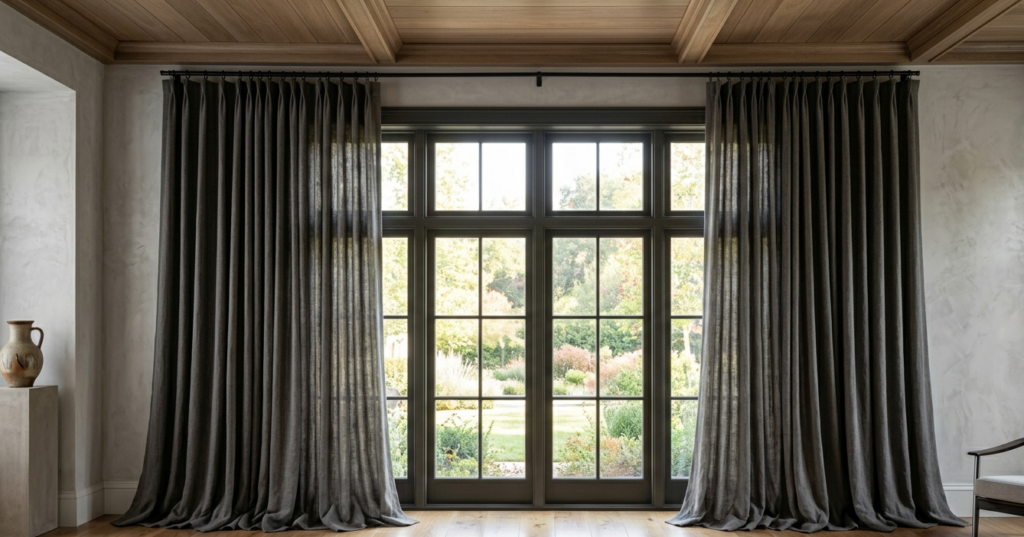
To truly master how to choose the right curtain length for high ceilings, you need to think about the “two-thirds rule.” Ideally, you should mount your curtain rod about 4 to 6 inches below the ceiling or crown molding, rather than right above the window. This draws the eye upward, celebrating the vertical volume of the room.
The Math of High-Ceiling Elegance
If your ceiling is 10 feet tall (120 inches), and your window ends at 8 feet, hanging your curtains at the 9.5-foot mark creates a seamless column of color. This creates textural contrast against the flat paint of the walls and serves as a powerful focal point.
Expert Insight: For high ceilings, always opt for a “puddle” or a “kiss.” A “float” on a very tall window can sometimes look like the fabric has shrunk.
Fabric Science: Texture, Weight, and Light
The soul of a window treatment lies in its drape. I have found that the most beautiful rooms leverage the way light interacts with fiber.
The Luxury of Linen and Silk
- Belgian Linen: My absolute favorite for a “California Cool” or “Japandi” look. Linen has a natural weight that feels grounded. It allows light to filter through organically, highlighting the slubs in the weave.
- Velvet: If you want drama and acoustic dampening, velvet is king. It absorbs light rather than reflecting it, making colors feel deeper and more saturated.
Color Psychology and the “Hex-Code” Palette
When choosing colors, I recommend looking at your wall color and moving two shades lighter or darker. Here are three palettes I’m currently obsessing over:
- The Ethereal Minimalist:
- Wall: Soft White (#F5F5F1)
- Curtain: Warm Sand (#D2B48C)
- Effect: Creates a serene, low-contrast environment that reduces visual clutter.
- The Moody Scholar:
- Wall: Deep Navy (#000080)
- Curtain: Dusty Charcoal (#36454F)
- Effect: Perfect for libraries or bedrooms where you want a cocoon-like feeling.
- The Organic Earth:
- Wall: Sage Green (#8A9A5B)
- Curtain: Terracotta (#E2725B)
- Effect: Invokes a Mediterranean warmth and connects the interior to a garden view.
The Curator’s Choice: 5 Essential Accessories for Your Windows
A curtain is only as good as its support system. Here are my top five picks for elevating your window aesthetic:
| Accessory | Why I Love It | Best Style Match |
| French Return Rods | These curve back to the wall, eliminating light gaps at the sides. | Transitional / Classic |
| Acrylic Finials | They disappear into the space, making the room feel modern and airy. | Glam / Contemporary |
| Woven Wood Shades | Used under curtains to add a secondary layer of organic texture. | Boho / Coastal |
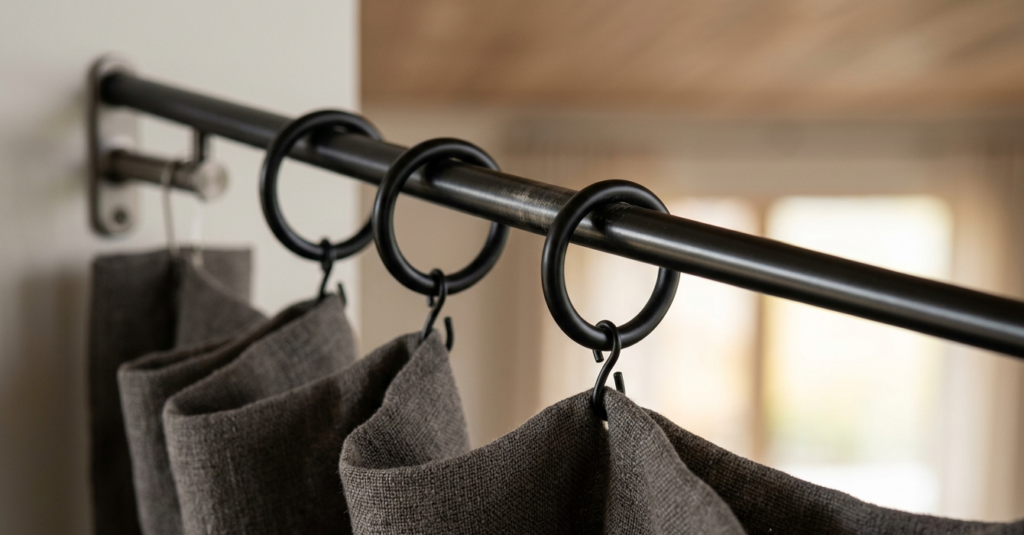
| Oversized Rings | They allow for a beautiful “stack back” and add a rhythmic element. | Industrial / Farmhouse |
| Weighted Hems | Small lead weights sewn into the corners to ensure the fabric hangs straight. | All Styles |
Room-by-Room Application
The Living Room: The Statement Maker
In the living room, curtains should be architectural. This is where you use the “high and wide” technique most aggressively. Extend your rod 8–12 inches past the window frame on both sides. This allows the fabric to rest on the wall when open, exposing the entire glass pane and maximizing natural light.
The Bedroom: The Sanctuary
Here, functionality meets luxury. I always recommend a “double track” system. One track holds a sheer linen for daytime privacy, while the outer track holds a heavy, blackout-lined velvet. Ensure the length is a “kiss” or “puddle” to prevent light leaks at the floor level.
The Kitchen: The Practical Beauty
Stay away from floor-length here! A café curtain—covering only the bottom half of the window—is my go-to. It provides privacy while you’re washing dishes but lets the morning sun hit the ceiling. Use a light, washable cotton or a moisture-resistant faux linen.
You might also enjoy:
- The Magic of Color: Ultimate Accent Wall Guide
- Pattern Play: How to Mix Patterns in Home Decor
- Luxury on a Budget: 10 Small Accents That Elevate
Pros and Cons: Length and Style Decisions
The “High Mount” (Rods near the ceiling)
- Pros: Makes the room feel massive; creates a high-end, custom look; allows more light.
- Cons: Requires significantly more fabric (more expensive); harder to reach for manual opening/closing.
The “Puddle” Finish
- Pros: Hides uneven floors; looks incredibly romantic and expensive.
- Cons: Attracts dust; requires “re-dressing” after vacuuming; not ideal for high-traffic areas with pets.
Material Deep Dive: Why Lining Matters
A lining isn’t just about light—it’s about the “heft.” A lined curtain has a much better spatial flow because it folds with more intention.
- Interlining: This is a layer of flannel between the face fabric and the lining. It’s the secret to those “puffy,” expensive-looking folds you see in high-end magazines.
- Blackout Lining: Essential for sleep, but also protects your expensive face fabric from UV damage and fading.
Final Thoughts from the Designer’s Desk
Choosing the right curtains is about more than just measurements; it’s about how you want to feel when you wake up or come home after a long day. Do you want the crisp, orderly feel of a “float” or the decadent, slow-living vibe of a “puddle”?
My Expert Tip: If you are buying ready-made curtains for high ceilings, always buy the longest size available (usually 108 or 120 inches) and have them hemmed up by a local tailor. It is much cheaper than custom drapes but gives you that exact “kiss” on the floor that screams professional design.