
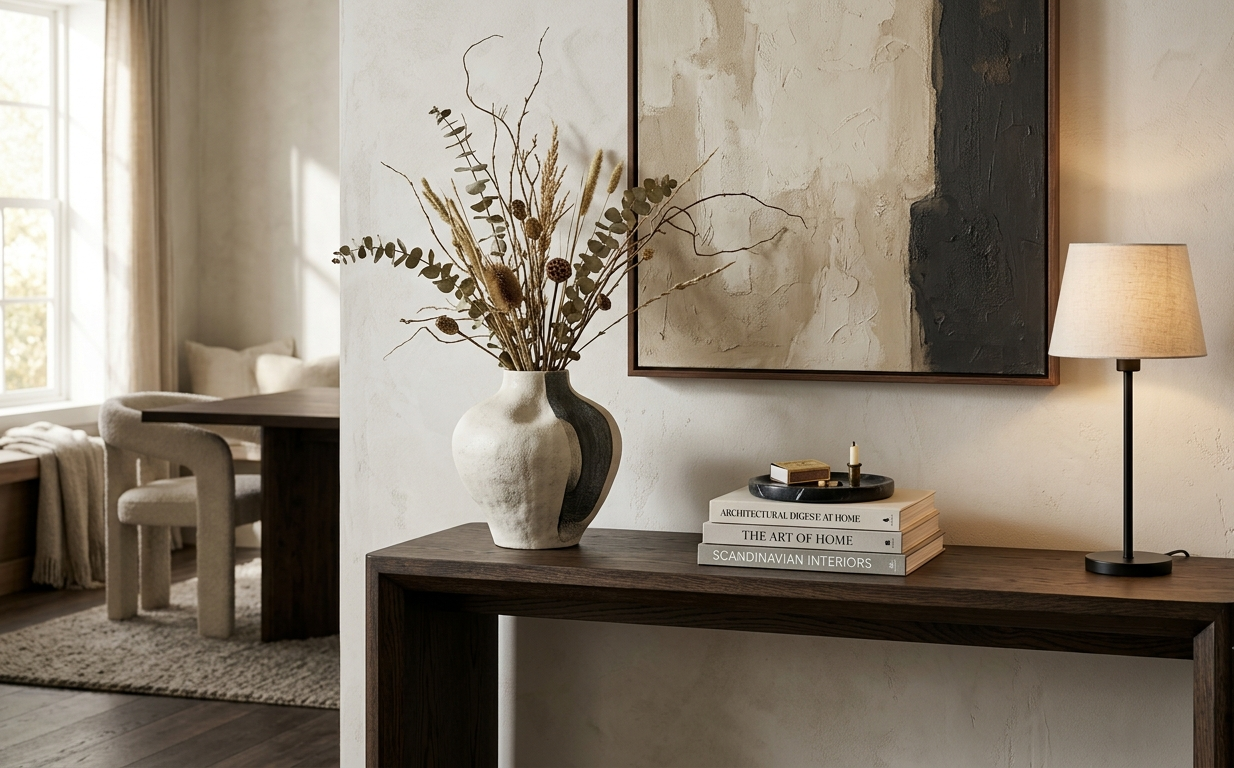
If you are looking to elevate your home, learning how to style a console table in a dining room is one of the most versatile, high-impact design skills you can master. It allows you to move beyond the bulky predictability of traditional dining furniture and introduce a curated, layered, and deeply personal aesthetic into your entertaining space.
The Evolution of the Console Table: From Architectural Bracket to Dining Room Star
To truly appreciate the power of the console table, it helps to understand its origins. The term “console” originally referred to an architectural bracket or corbel used to support a heavy ledge or cornice. In 18th-century France, these brackets evolved into the table console—a highly decorative, crescent-shaped table attached to the wall using brackets, supported by just two front legs. They were designed strictly for show, placed along the walls of grand salons to display precious porcelain, sculptures, and gilded clocks.
Over the centuries, the console table detached itself from the wall, gained four legs, and transitioned from a aristocratic luxury into a functional necessity. While it spent decades primarily occupying front entryways and the backs of living room sofas, the modern open-concept home has brought the console table squarely into the dining space.
Unlike the traditional dining room buffet—which is typically low, deep, and fully enclosed—the modern console table offers a higher profile, a shallower footprint, and an airy structure. This evolution represents a shift in how we live today: we favor fluidity over rigidity, curation over clutter, and visual lightness over heavy, imposing furniture suites.
The Core Design Elements: Creating Visual Balance and a Captivating Focal Point
When tackling the puzzle of how to style a console table in a dining room, you cannot simply throw a collection of random objects together and hope for the best. A truly designer-grade display relies on fundamental principles of interior styling.
To achieve a magazine-worthy look, we must break the arrangement down into three core elements:
1. Establishing the Anchor (The Focal Point)
Every successful console arrangement needs a strong anchor. This is the visual heavyweight that immediately draws the eye and anchors the table to the wall.
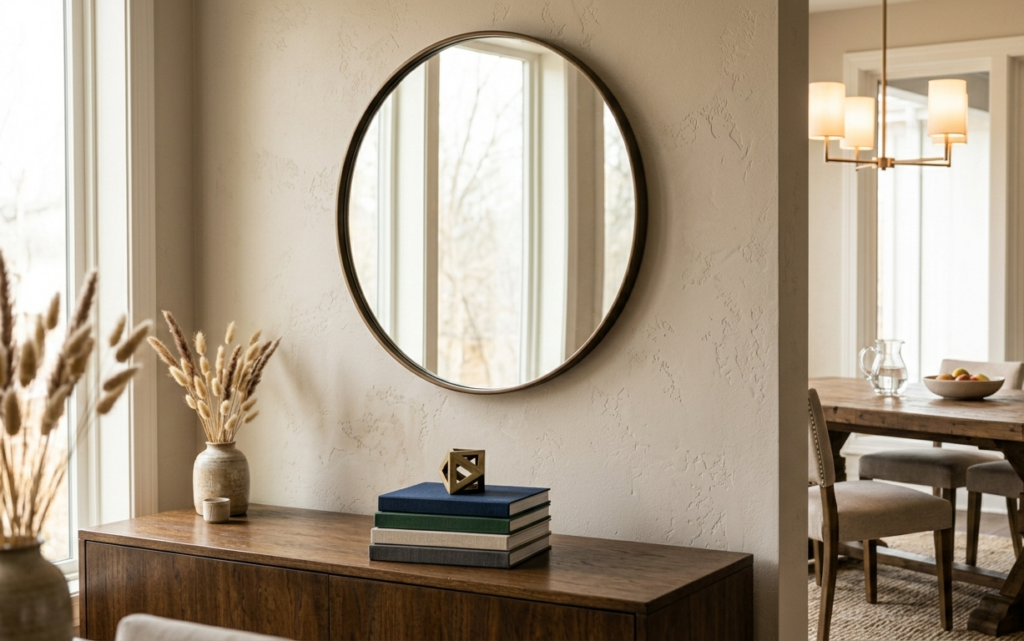
- The Oversized Mirror: A classic choice that bounces ambient light around the dining room, making the space feel twice its actual size.
- A Statement Artwork: A large canvas or framed print that introduces your color story and sets the mood of the room.
- A Gallery Grid: A symmetrical pairing of two or four smaller framed pieces that creates a structured, formal look.
The anchor should generally span roughly two-thirds the width of the console table to maintain perfect proportions.
2. Playing with Height and Scale
The biggest mistake I see DIY decorators make is using objects that are all the same height. This creates a flat, uninspiring horizon line. Instead, aim for a dynamic silhouette.
- Introduce a high point using a tall, sculptural vase with branches, or a pair of elegant taper candlesticks.
- Create a mid-point with stacks of oversized coffee table books or a medium-sized ceramic vessel.
- Ground the display with low points, such as a shallow marble decorative bowl or a small trinket dish.
3. Mastering the Rule of Thirds and Asymmetry
While symmetrical styling (e.g., placing two identical lamps on either end of the table) feels formal and stately, an asymmetrical approach often feels more modern, artistic, and relaxed. Try grouping your accessories in odd numbers—trios work beautifully. Position your tallest item on one side, bridge the gap with a mid-sized object near the center, and balance the opposite side with a lower, wider grouping.

A Deep Dive into Materiality: Texture, Color Palettes, and Fabric Choices
To elevate your dining room console table from a simple surface to a sensory experience, you need to dive deep into textural contrast and intentional color psychology. When textures and colors clash beautifully, a room feels layered, expensive, and full of soul.
The Textural Symphony
I have found that a monochromatic or neutral space can look breathtakingly luxurious if it utilizes a rich variety of textures. When selecting pieces for your console table, try to contrast hard and soft, matte and glossy, rough and smooth.
- The Base Materials: If you have a sleek, polished glass or marble console table, pair it with textured clay pots, matte ceramic vessels, and weathered wood bowls. Conversely, if your console is crafted from rustic, reclaimed oak, dress it up with shiny brass accents, crystal glassware, and polished lacquer trays.
- The Greenery and Botanicals: Never underestimate the organic texture of nature. Dried eucalyptus brings a muted, silvery-blue matte texture; fresh magnolia leaves offer a glossy, rich green top with a velvety brown underside; and dried pampas grass or delicate branches add an airy, architectural softness.
Curated Color Palettes and Fabric Accents
The colors you select for your console table styling should echo the existing palette of your dining room while introducing subtle, sophisticated deviations.
Below are three signature color stories I frequently use, complete with Hex codes, designed to evoke distinct moods during your dinner gatherings:
| Design Aesthetic | Primary Mood | Suggested Color Palette (Hex Codes) | Recommended Fabrics & Elements |
| The Elevated Earth | Warm, grounding, inviting | #4A3B32 (Rich Umber)#D4C5B9 (Warm Travertine)#7A8475 (Muted Sage) | Slubby linen table runners, unglazed stoneware, woven jute storage baskets underneath. |
| The Moody Noir | Dramatic, intimate, sophisticated | #1C1C1C (Charcoal Black)#8C6239 (Burnished Bronze)#EAE6DF (Soft Alabaster) | Silk or velvet runners, tarnished brass candleholders, smoked glass decanters. |
| The Crisp Coastal Modern | Airy, serene, luminous | #F4F1EA (Chalk White)#465B65 (Slate Blue)#D2B48C (Natural Rattan) | Bleached cotton gauze runners, light oak accents, woven seagrass storage bins. |
When incorporating fabrics onto or around your console table, think about how they catch the light. A linen runner draped casually over one side of the table can instantly soften a modern, sharp-edged metal console. If your console has an open bottom shelf, tucking a pair of matching, velvet-upholstered storage ottomans underneath not only hides clutter but adds a plush, welcoming pop of texture at floor level.
Step-by-Step Guide: How to Implement the Perfect Styling Concept
Ready to transform your dining space? Clear off your table completely, wipe it down, and follow my step-by-step styling framework to build a gorgeous, functional vignette.
Step 1: Secure Your Anchor
Hang or lean your primary artwork or mirror directly above the console table. If you are leaning a heavy mirror, ensure it is anchored safely to the wall behind it to prevent slipping. The bottom frame should sit roughly 4 to 8 inches above the tabletop surface to create a unified visual statement rather than looking like it’s floating away.
Step 2: Introduce Lighting and Height
Every dining room needs layers of light—overhead chandeliers can sometimes feel harsh. Place a statement table lamp on one side of your console table. Look for lamps with unique bases, like pleated ceramic or sculpted plaster. The lamp provides necessary height and casts a warm, intimate glow that encourages guests to linger over drinks. On the opposite side, place a tall vase with structural branches to balance the lamp’s vertical mass.
Step 3: Layer the Mid-Level Accessories
Now, begin filling in the middle ground. Place a stack of two or three large art or travel books horizontally next to your lamp. Books act as a pedestal, raising smaller objects to a new height. Top the book stack with something sculptural, like a vintage brass chain link or a beautiful crystal geode.
Step 4: Add Functional Dining Accents
Since this is a dining room, let’s make the console work for its keep! Introduce a beautiful bar setup or a serving vignette. Place a polished marble or lacquer tray in the center or on one side. Arrange a beautiful crystal decanter, a few highball glasses, and a small silver bowl filled with fresh lemons or limes. This turns your styled table into an interactive visual destination during parties.
Step 5: Address the Negative Space Below
If your console table has an open lower half with long, exposed legs, it can end up looking top-heavy or floating. Balance this by grounding the bottom. Place a pair of oversized, matching woven baskets underneath. These look beautifully textured and serve as hidden storage for extra table linens, placemats, or cloth napkins. Alternatively, place a row of large, heavy design books or a single substantial stoneware crock on the bottom shelf.
You might also enjoy:
- How to Arrange a Narrow Living Room Layout Flawlessly
- Unlocking Potential: Designing a Cozy Basement Lounge
- Creating a Master Bedroom Oasis: A Styling Guide
The Curator’s Choice: 5 Essential Accessories for Your Console Table
To help you shop your own home or select new pieces, I have curated five categories of accessories that I consider absolute non-negotiables for high-end console table styling.
1. The Statement Ceramic Vessel
Skip the generic mass-produced glass vases and invest in a handmade, unglazed ceramic or terracotta vessel. Look for pieces with interesting imperfections, handles, or textured crackle glazes. Even when empty, an artisanal vase reads as a standalone piece of sculpture.
2. Luxe Match Strikers and Taper Candlesticks
Nothing sets the mood in a dining room quite like real candlelight. A collection of solid brass, black iron, or sleek glass taper holders clustered together creates instant drama. Pair them with a vintage-inspired ceramic match striker to add a touch of old-world charm and functionality.
3. Oversized Monograph Art Books
Books are an interior designer’s secret weapon. They introduce color, personality, and critical height variation. For a dining room, choose beautifully bound books focusing on architecture, historical gardens, fine wine, or culinary arts. Ensure the spines contrast beautifully with your table color.
4. The Deep-Rimmed Styling Tray
A tray acts as a visual boundary, corralling smaller items so they look organized rather than cluttered. A deep-rimmed tray made of rich burl wood, polished marble, or glossy lacquer helps group your barware or cocktail essentials into a singular, cohesive design statement.
5. Architectural Branches and Greenery
Instead of short, tight flower arrangements, go big and airy. Cut long branches from your backyard—think olive branches, cherry blossoms, or maple leaves—and let them arch wildly out of your vase. The sheer scale adds drama and brings an organic, living component into the home.
Room-by-Room Application: Translating the Look Throughout Your Home
The styling principles you use to master how to style a console table in a dining room are incredibly versatile. You can take this exact design DNA and effortlessly adapt it to other spaces in your house.
The Living Room
In the living room, a console table often lives tucked directly behind a floating sofa. Here, the priority shifts slightly toward low-profile styling. You want to avoid placing incredibly tall, fragile items that could easily be knocked over when someone reaches for a remote control. Focus on long, low wooden dough bowls filled with decorative beads, stacks of cozy books, and shorter, heavy ceramic table lamps that cast light down onto your seating area.
The Bedroom
When placed in a bedroom, a console table can easily pull double-duty as a minimalist vanity or a serene writing desk. Swap out the large artwork for a medium-sized vanity mirror flanked by soft, fabric-shaded lamps that cast a warm, flattering skin-tone glow. Style the surface with a beautiful ceramic jewelry dish, a scented luxury candle, and a small glass cloche protecting a delicate botanical arrangement. Keep the color palette incredibly soft and muted to promote rest.
The Kitchen
Yes, a console table can even thrive in a spacious kitchen or a breakfast nook! Choose a durable console with a stone, concrete, or reclaimed wood top that can handle kitchen activity. Style it with functional beauty: a large wooden cutting board leaning against the wall, a stack of your most-used heirloom cookbooks, a ceramic jar packed with wooden cooking spoons, and a bowl filled to the brim with fresh artichokes, lemons, or green apples.
Pros and Cons: Visual Aesthetics vs. Everyday Functionality
Before committing to a console table instead of a traditional buffet, it’s wise to weigh how the piece will fit into your lifestyle. Let’s look at the balance between pure style and daily maintenance.
The Pros
- Enhanced Spatial Flow: Because console tables are shallower (typically 12 to 15 inches deep compared to a buffet’s 18 to 22 inches), they open up valuable floor space, making tight dining rooms feel airy and easy to navigate.
- Design Versatility: A console table is incredibly easy to re-style for different seasons, holidays, or dinner party themes. It acts as an open canvas for your creativity.
- Visual Lightness: Pieces with open legs allow you to see the baseboards and flooring underneath, which instantly tricks the brain into perceiving a small room as much larger.
The Cons
- Limited Concealed Storage: Unlike a traditional sideboard with deep cabinets and drawers, a console table won’t hide your entire 12-person set of holiday china, heavy silver platters, or bulky serving bowls.
- Dust Accumulation: Because items on an open console table are fully exposed, they require more frequent dusting than items tucked away safely behind cabinet doors.
- Cord Management: If you include a table lamp on an open console, you will need to get creative with hiding the electrical cord along the table legs using clear adhesive clips to keep the visual look completely pristine.
Bringing it All Together
The Expert Tip: When styling your dining room console table, always design with hospitality in mind. A beautiful home isn’t a museum—it’s a living, breathing backdrop for human connection. Leave a little bit of intentional empty space on the tabletop. This ensures that when your guests arrive, there is an inviting spot for them to set down a wine glass, place a plate of appetizers, or rest a handwritten menu card.