
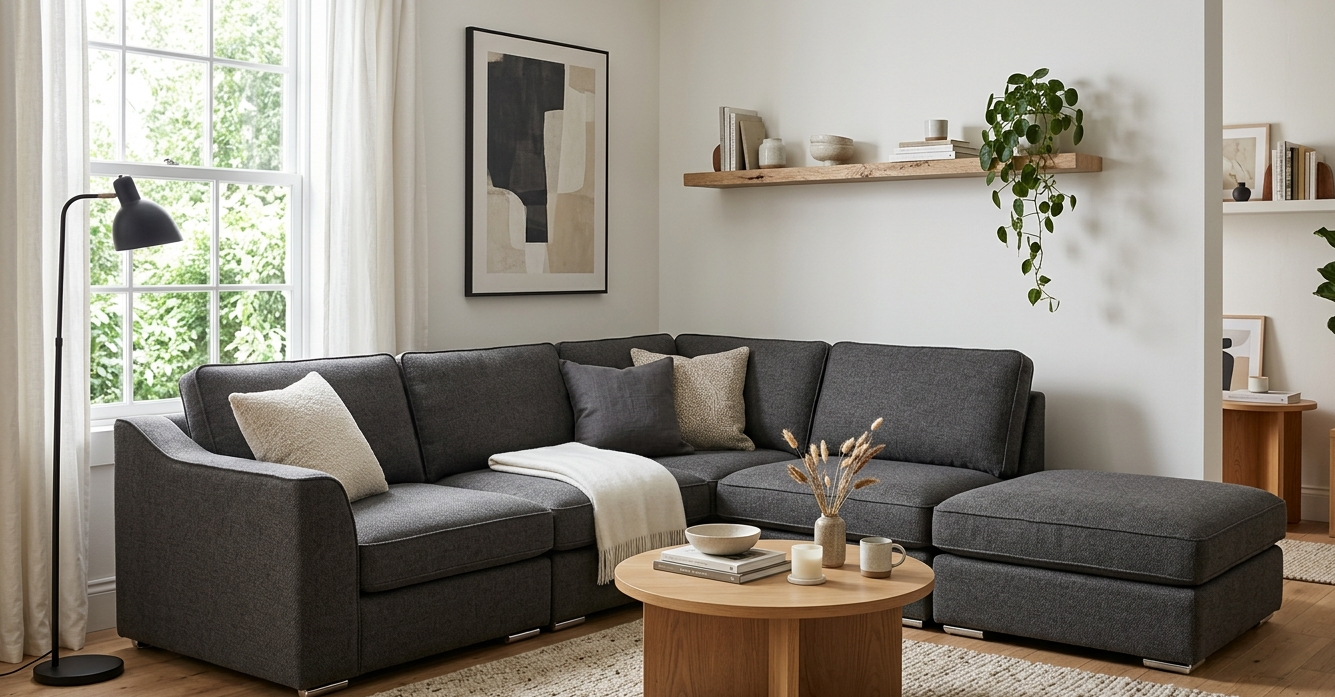
Finding the perfect balance between comfort and floor space is the ultimate “interior design puzzle.” I remember walking into my first studio apartment years ago; it had beautiful light but the footprint of a postage stamp. I brought in a traditional three-seater sofa, and suddenly, the room felt like a storage unit. I couldn’t move, and the “spatial flow” was nonexistent.
That was the day I fell in love with modular furniture.
Modular sofas are the chameleons of the design world. They offer the luxury of a sectional without the rigid, room-swallowing dimensions. The trend has shifted toward “adaptive living”—where our furniture works as hard as we do. Whether you are hosting a movie night or need a quiet corner for reflection, the best modular sofas for small apartments provide the flexibility to evolve with your day.
The Evolution of Modular Design: From Retro to Radical
Modular seating isn’t just a modern fad; it’s a design philosophy that dates back to the mid-century modern era. Designers like Mario Bellini paved the way with iconic pieces that treated furniture like building blocks.
In my experience, the reason modularity has seen such a massive resurgence in 2026 is our collective move toward multifunctional spaces. We are no longer just “sitting” in our living rooms; we are working, exercising, and creating content. A modular sofa allows you to break the “focal point” of a room and redistribute the energy whenever you see fit.
Key Elements of a Small-Space Modular Sofa
When selecting a piece for a compact floor plan, I always look for three “Golden Rules” of aesthetics:
- Low Profiles: Keeping the backrest low creates an unobstructed sightline, making the ceiling feel higher.
- Leg Height: If you can see the floor underneath the sofa, the room feels larger. This is a classic “visual trick” I use in almost every small-scale project.
- Armless Modules: Traditional bulky arms take up 6–10 inches of space. Going armless or choosing “slim-profile” modules saves precious inches for seating.
Textures, Palettes, and the Psychology of Fabric
The tactile experience of a sofa is just as important as its silhouette. In a small space, your sofa is likely the largest object in the room. This means the material you choose will dictate the entire “atmospheric weight” of your home.
The 2026 Material Forecast
This year, I am seeing a massive shift toward High-Contrast Earthiness. We are moving away from the flat, sterile greys of the 2010s and embracing “Living Textures.”
- Performance Bouclé: Still a favorite for its “textural contrast,” but in 2026, we are seeing it in deeper tones like terracotta and moss green. It hides imperfections beautifully while adding a soft, organic “vibe.”
- Recycled Velvets: For those who want a touch of “Quiet Luxury,” recycled velvet offers a subtle sheen that reflects light—a huge plus for dark apartments.
- Weighted Linens: I love the “lived-in” look of a heavy-weight linen. It suggests a relaxed, European sensibility that makes a small space feel curated rather than cluttered.
Color Palettes & Hex Code Suggestions
To create visual harmony, I recommend staying within a tonal range. Here are three palettes I am currently obsessed with for small modular setups:
1. The Warm Minimalist
- Base: Oat Milk (#F5F5DC)
- Accent 1: Toasted Almond (#D2B48C)
- Accent 2: Burnt Umber (#8A3324)
- Why it works: It keeps the room airy but prevents it from feeling cold.
2. The Biophilic Retreat
- Base: Sage Leaf (#B2AC88)
- Accent 1: Deep Forest (#228B22)
- Accent 2: Raw Brass (#E1C16E)
- Why it works: Greenery-inspired tones reduce stress and bring the “outdoors in,” which is vital if you lack a balcony.
3. The Midnight Loft
- Base: Charcoal Ink (#36454F)
- Accent 1: Silver Birch (#C0C0C0)
- Accent 2: Electric Cobalt (#0047AB)
- Why it works: Darker sofas in small rooms create a “jewel box” effect—don’t be afraid of the dark!
The Top 7 Modular Sofas for Small Spaces
- The “Cloud” Petite: A scaled-down version of the classic oversized sectional. It offers deep seating without the massive footprint.
- The “Block” Armless Duo: Two oversized ottomans with weighted back pillows. This is the ultimate in flexibility.
- The Nested L-Shape: A modular unit where the “chaise” can be tucked under the main frame or used as a coffee table.
- The Wall-Hugger Sectional: Specifically designed with a shallow depth (under 36 inches) to keep walkways clear.
- The Velvet Pivot: A three-piece set that can transform from a sofa into two armchairs and a table in seconds.
- The Japandi Low-Rider: Combining Japanese minimalism with Scandi comfort, sitting low to the ground to maximize vertical space.
- The Convertible Pit: Four square modules that can create a “bed-like” lounging experience for movie nights but separate for formal hosting.
“The Curator’s Choice”: 5 Essential Modular Accessories
A sofa alone doesn’t make a room. To truly elevate a modular piece, you need “supporting actors” that enhance its versatility.
- The C-Side Table: These are game-changers. They slide over the seat of your modular sofa, providing a surface for coffee or a laptop without requiring extra floor space.
- Weighted Back Cushions: If you opt for an armless modular sofa, “weighted” bolsters allow you to create support anywhere on the piece.
- Modular Trays: Look for oversized wooden trays that can turn a soft ottoman module into a stable coffee table instantly.
- The Floor-to-Sofa Bridge: A slim, low shelf that sits behind the sofa, acting as a console for lighting and plants.
- Multi-Textural Rugs: A rug helps “anchor” the modular pieces so they don’t look like they are floating aimlessly in the room.
You might also enjoy:
- Solid Wood vs MDF Furniture: Is the Investment Worth It?
- Velvet vs Leather Sofa: The Pet Owner’s Guide
- 5 Ergonomic Office Chairs That Actually Look Good
Room-by-Room Application
In the Living Room:
The goal here is Conversation Flow. Arrange your modules in an “L” or a face-to-face “U” shape to encourage interaction. Use a large area rug to define the “zone” of the sofa, ensuring at least the front legs of every module are resting on the rug.
In the Bedroom:
Wait, a sofa in a small bedroom? Yes! I often use a single modular “corner” unit in the corner of a bedroom to create a Reading Nook. It feels much more luxurious than a standard accent chair and provides a soft spot to lay out clothes for the next day.
In the Kitchen/Dining Combo:
If you have an open-concept “Great Room,” use a backless modular bench against the back of your kitchen island. It provides extra seating for guests and softens the transition between the “utility” of the kitchen and the “comfort” of the living area.

Pros and Cons: Style vs. Function
| Feature | Pro (The “Joy” Factor) | Con (The “Maintenance” Factor) |
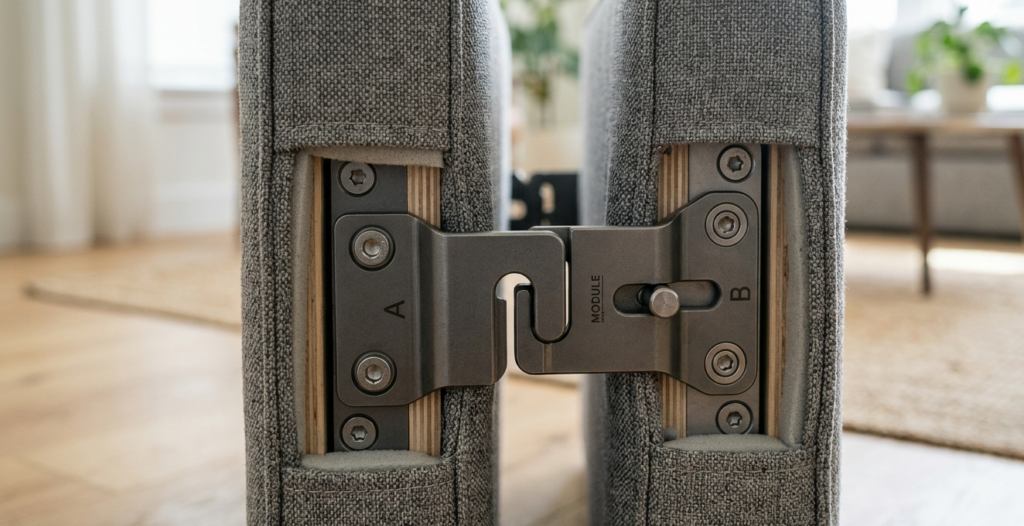
| Versatility | You can change your layout every week if you get bored. | Modules can sometimes “drift” apart if they don’t have strong connectors. |
| Aesthetics | Modern, clean lines that fit almost any 2026 decor trend. | Low-back designs might not provide enough head support for tall individuals. |
| Scale | Fits through narrow apartment doors and elevators with ease. | Multiple pieces can look “busy” if the color palette isn’t cohesive. |
Expert Tips for Longevity
I always tell my clients: “Don’t just buy for the space you have; buy for the life you want.”
When you purchase a modular sofa, ensure the manufacturer sells “individual units” separately. This way, if you move to a larger home in two years, you don’t have to replace your sofa—you just buy two more modules to grow with you.
The “Final Touch” Tip:
Always choose a fabric with a “rub count” (Martindale rating) of 20,000 or higher. In a small apartment, your sofa is your bed, your office, and your dining table. It needs to be as resilient as it is beautiful.