
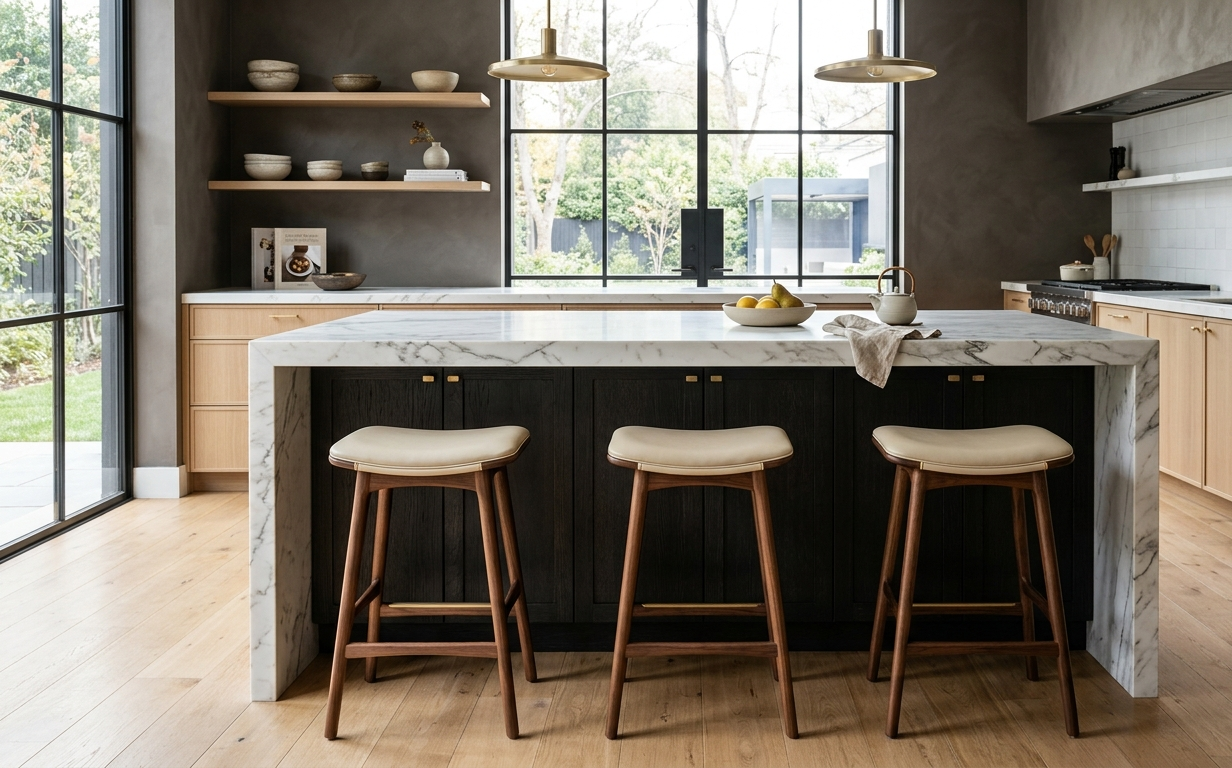
The Evolution of the Counter Seat: A Design History
To truly appreciate the modern counter stool, we have to look at its journey into our homes. Historically, stools were purely utilitarian items found in commercial taverns, pharmacies, and mid-century soda fountains. They were designed for quick turnover—built hard, low-backed, and bolted to the floor.
However, as the mid-20th century ushered in ranch-style homes and the birth of open-concept living, the kitchen wall began to crumble. Designers like Charles and Ray Eames and Harry Bertoia revolutionized residential seating by introducing sculpted plywood and wire mesh, proving that casual seating could be a high-art form.
Today, the line between fine dining comfort and casual counter seating has completely blurred. We now demand that our kitchen island seating offer the same ergonomic support, plush cushioning, and textile luxury as a premium living room armchair, turning what was once a transient perch into a destination of its own.
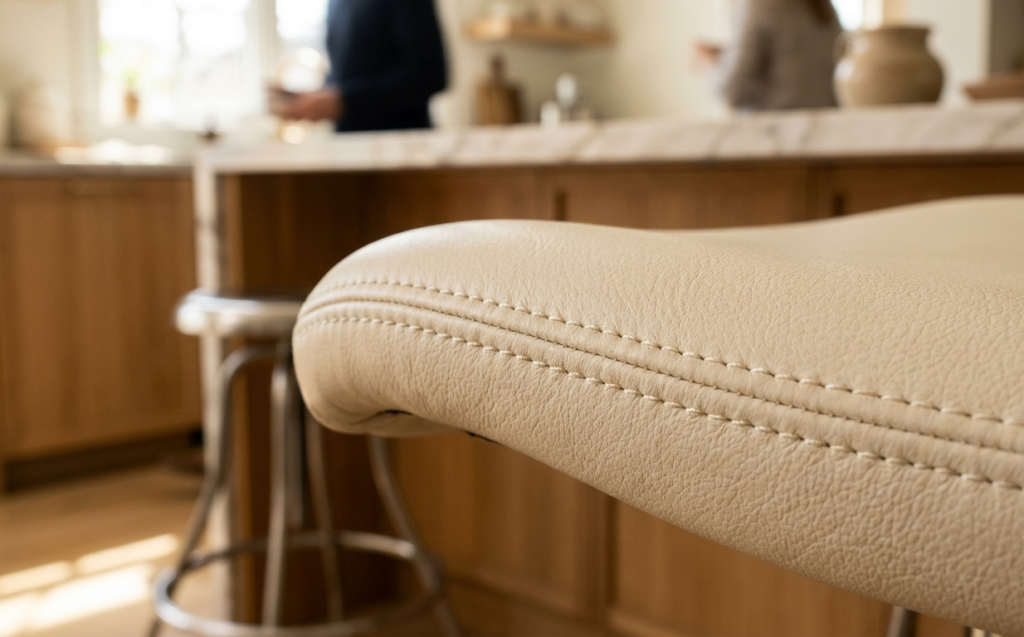
Anatomy of the Perfect Perch: Key Elements of Comfort and Style
When searching for the best bar stools for kitchen island setups, you must evaluate how a stool’s physical silhouette influences your kitchen’s overall design language.
The Silhouette: Backless vs. Low-Profile vs. High-Backed
- Backless Stools: These are the ultimate champions of minimalism. Because they tuck completely underneath the counter overhang, they maintain an uninterrupted sightline across your island. I love using these in smaller spaces to maximize the feeling of openness.
- Low-Profile Backs: Offering just a hint of lumbar support, these stools poke up subtly above the counter level (usually 2 to 4 inches). They provide a beautiful geometric rhythmic element across the island without visually cluttering the room.
- High-Backed Stools: If your family treats the island like a primary dining table, high-backed, upholstered options are non-negotiable. They anchor the space visually and signal that this is a zone meant for long, luxurious lingering.
The Footrest: The Silent Hero of Ergonomics
Never buy a counter stool without looking at its footrest. When sitting at counter height, your legs cannot naturally reach the floor. Without a properly positioned footrest, gravity pulls at your lower limbs, placing pressure on your thighs and lower back. Look for footrests protected by a subtle metal plate or wrap—this prevents scuffing on wood or woven materials while ensuring you can sit comfortably for hours.
Deep Dive: Texture, Fabric Choices, and Color Psychology
To create a space that feels deeply personal and professionally curated, we must look closely at tactile design. The materials you place at your kitchen island act as an immediate sensory introduction to your home.
The Textile Matrix: Elevating with Fabric
The choice of fabric dictates both the mood and longevity of your seating. I have discovered that introducing textural contrast through your stools can completely soften the hard, cold surfaces of marble countertops and stainless steel appliances.
- Performance Bouclé: This looped, textured fabric brings an instant sense of cozy, European warmth to a space. It plays beautifully with natural light, casting soft shadows across the seat.
- Top-Grain Aniline Leather: Leather patinas over time, telling a story of the home. It introduces an organic, grounding element that cuts through the sterile feel of modern kitchens.
- Performance Velvet: For a touch of glamorous sophistication, performance velvet offers a rich depth of color while providing incredible stain resistance against accidental morning juice spills.
The Designer’s Palette: Color Psychology at the Counter
Your color choices shouldn’t merely match your cabinets; they should evoke an emotional response. When picking your stool frame and upholstery colors, consider these curated designer combinations:
| Aesthetic Style | Recommended Colors | Mood and Emotional Impact |
| The Elevated Organic Kitchen | Alabaster (#F2EFE9) & Warm Ochre (#C79257) | Inviting, serene, grounded, and deeply tied to natural elements. |
| The Modern Continental | Midnight Charcoal (#2C302E) & Burnished Brass | Moody, luxurious, sophisticated, and high-contrast. |
| The Coastal Renewal | Soft Eucalyptus (#A3B19B) & Bleached Oak | Calming, breezy, restorative, and airy. |
The Curator’s Choice: 5 Stool Personas for Your Kitchen Island
Every home tells a story, and your furniture should speak the same language. Here is my carefully curated look at 5 distinct bar stool personas, analyzing how their unique designs fit into various residential narratives.
1. The Sculptural Mid-Century Swivel
Characterized by molded walnut wood veneers, tapered legs, and integrated swivel mechanisms, this style brings architectural interest to the kitchen. The warmth of the wood grain breaks up monotone cabinetry, while the gentle curve of the seat hugs the body perfectly.
2. The Minimalist Scandinavian Oak Stool
Embodying the essence of hygge, this persona relies on clean lines, light white-oak or ash woods, and a quiet, unpretentious form. Often featuring a gently scooped saddle seat, it relies on perfect joinery and natural beauty rather than heavy padding to create comfort.
3. The Industrial Iron & Distressed Leather Perch
For homes with exposed brick, concrete elements, or black steel windows, this style offers a gorgeous, rugged sophistication. A blackened iron frame provides an incredibly strong, slim silhouette, while a seat wrapped in distressed amber leather injects instant vintage soul into a new renovation.
4. The Tailored Transitional Track-Arm Stool
This style bridges the gap between classic traditionalism and crisp modern design. Featuring fully upholstered frames, elegant track arms, and sophisticated nailhead trim or piping, these stools function like luxurious dining chairs raised on stilts. They are perfect for expansive kitchen islands where comfort is the absolute priority.
5. The Woven Coastal Rattan Stool
If your aesthetic leans toward casual elegance or organic modernism, woven rattan or seagrass stools provide incredible tactile depth. The intricate weaving introduces a beautiful geometric texture that counters the flat surfaces of large kitchen expanses, making the entire room feel relaxed and sun-drenched.
You might also enjoy:
- Solid Wood vs MDF Furniture: Is the Investment Worth It?
- Eco-Friendly Dreams: Best Non-Toxic Bed Frames
- Top 7 Modular Sofas for Small Spaces
Room-by-Room Application: Creating Cohesion Throughout the Home
The visual themes you establish with the best bar stools for kitchen island styling shouldn’t remain isolated. To create true architectural flow, your seating choices should converse with adjacent rooms.
The Kitchen: The Central Visual Anchor
At the island itself, your stools serve as an energetic partition. They define the transition between the working side of the kitchen (the cooking zone) and the social side. By aligning the stool frames with your cabinetry hardware or choosing an upholstery color that contrasts beautifully with your island island base, you solidify the kitchen’s role as the home’s primary aesthetic heart.
The Living Room: Textural Cohesion
In modern, open-plan floor layouts, the backs of your counter stools are often completely visible from the main living area couch. Ensure the material story coordinates. If your kitchen stools are wrapped in a gorgeous saddle leather, consider pulling that exact tone into the living room via a luxurious leather accent chair, a textured throw blanket, or a beautiful leather-bound tray on your coffee table. This subtle repetition guides the eye effortlessly through the home.
The Bedroom: Material Harmony
You can carry the design DNA of a beautiful Scandinavian or woven coastal stool straight into your private sanctuary. Use the same light oak wood or woven cane texture from your kitchen stools in your bedroom nightstands, a reading corner bench, or the frame of a statement lounge chair. This cross-room harmony creates a deeply soothing, professionally designed atmosphere.
Weighing Form vs. Function: The Pros and Cons of Stool Styles
Selecting the perfect seating is always a delicate dance between striking aesthetics and practical lifestyle maintenance. Let’s look at how different design choices stack up in real-world homes.
High-Backed Upholstered Stools
- Pros (Visual & Functional): They offer unparalleled comfort, luxurious lumbar support, and introduce soft, grand silhouettes that make a bold design statement.
- Cons (Maintenance & Flow): They require more frequent vacuuming or fabric treatment and can visually block natural light paths across a room if the backs are completely solid.
Low-Profile & Backless Stools
- Pros (Visual & Functional): They preserve clean sightlines, tuck away completely for an ultra-tidy look, and are incredibly easy to slip on and off of from any angle.
- Cons (Maintenance & Flow): They offer little to no upper back support, making them less ideal for long three-course dinners or working from home at the counter.
Swivel Bases
- Pros (Visual & Functional): They allow users to effortlessly turn between conversing with the chef in the kitchen and watching a game in the living room without scraping stool legs on the floor.
- Cons (Maintenance & Flow): Poorly weighted swivel models can sometimes drift out of alignment, meaning you may spend extra time straight-lining your stools so they look pristine when guests walk in.
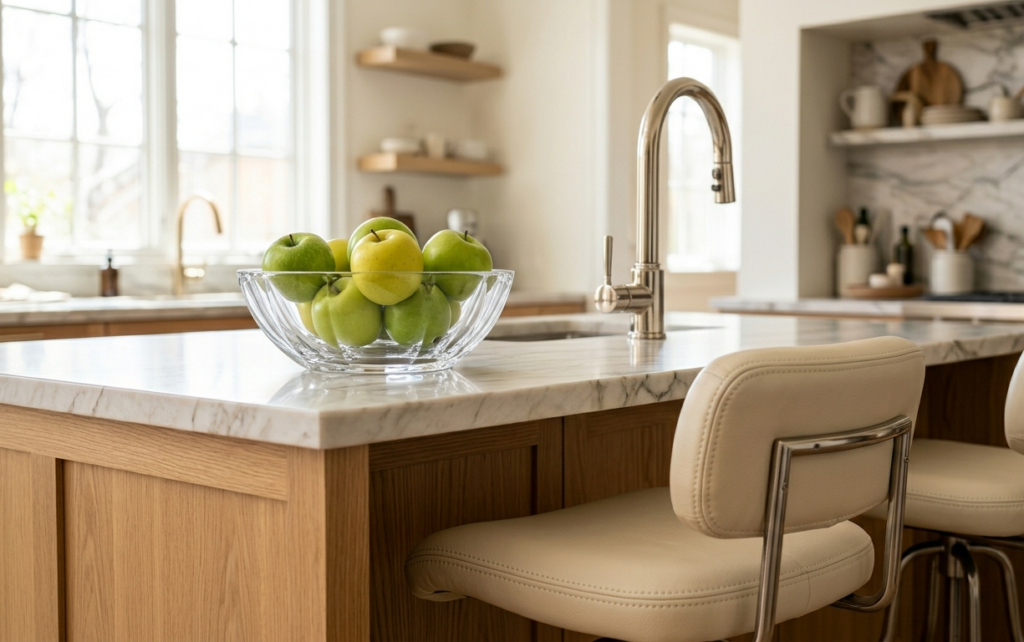
Illuminating the Design: Pairing Lighting with Seating
To make your new stools truly shine, they must be paired thoughtfully with your over-island lighting. The relationship between your island illumination and your counter stools dictates the entire evening ambiance of your home.
The Rule of Proportions and Three
When hanging pendant lights above your island, aim to create a balanced dialogue with the seating below. If you have a large island with four substantial, high-backed upholstered stools, you can beautifully offset that weight by hanging three large, sculptural glass pendants. The transparency of the glass keeps the upper half of the room light and airy, while the stools ground the lower half.
Temperature and Color Rendering
Always choose warm LED bulbs (ideally between 2700K and 3000K). This golden-hour light temperature catches the rich grains of wooden stools, deepens the luxurious tones of leather, and creates a soft, restaurant-like glow over the fabric upholstery, inviting your family to sit down and unwind.
Conclusion & The Curator’s Golden Rule
In my 15 years of helping families curate their dream homes, I have found that the most successful spaces are those that refuse to sacrifice human comfort for the sake of a rigid design catalog. Your kitchen island is the stage where your daily life plays out. The stools you select shouldn’t just be beautiful sculptures to admire from afar—they should feel like an absolute sanctuary the moment you sit down.
💡 Expert Design Tip
When measuring for your new counter stools, always allow for 9 to 12 inches of clear space between the underside of your countertop and the top of your stool’s seat cushion. Furthermore, ensure you map out at least 24 to 28 inches of width per stool. This ensures your guests have plenty of breathing room to move their arms, cross their legs, and relax without ever feeling cramped.