
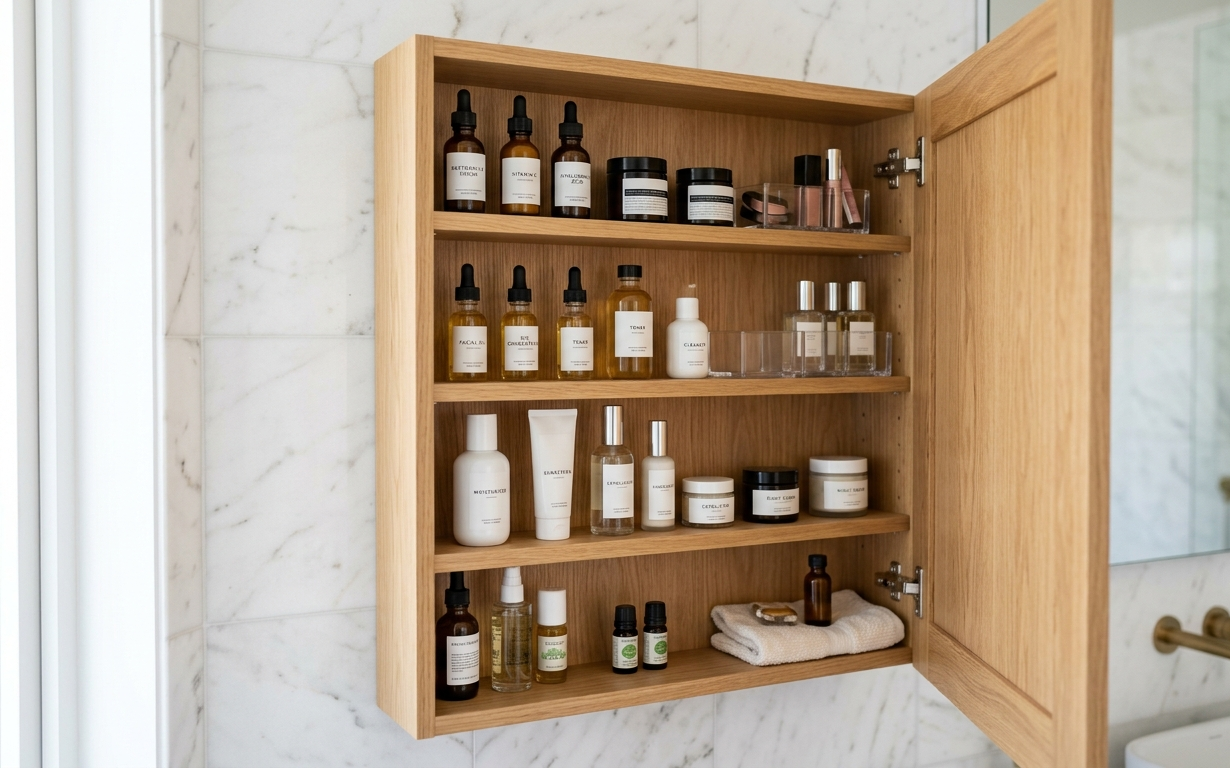
When we think about medicine cabinet organization hacks, we aren’t just talking about throwing things into plastic bins. We are talking about curating a micro-sanctuary. By applying the foundational principles of luxury interior design—spatial flow, textural contrast, and visual harmony—to this hidden-away niche, you can transform a utilitarian box into a beautiful, functional focal point. Let’s dive into how you can elevate your daily routine from chaotic to curated.
The Evolution of the Medicine Cabinet: From Apothecary Box to Minimalist Niche
To truly appreciate the design potential of this small space, it helps to understand its history. The modern medicine cabinet evolved from the wall-mounted wooden apothecary boxes of the 19th century. These were purely functional, dark, and heavy wooden structures designed to keep volatile concoctions away from light and children.
By the mid-20th century, the recess-mounted steel cabinet with a mirrored door became a staple of suburban American construction. It was clinical, sterile, and entirely uninspired.
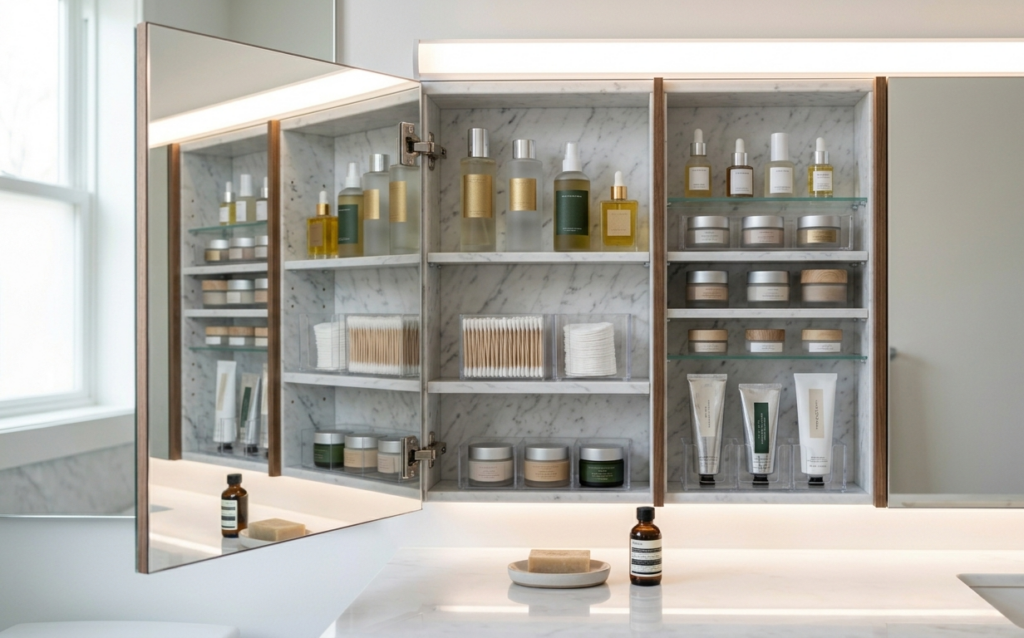
Today, the design pendulum has swung toward mindful minimalism. The contemporary medicine cabinet is no longer a place to hide your clutter; it is an extension of your home’s aesthetic. Modern interior design treats the interior of these cabinets as a curated shadowbox. We use glass shelving, integrated LED lighting, and metallic accents to turn everyday toiletries into a beautifully staged exhibit.
Key Elements of a Curated Cabinet: Spatial Flow and Balance
When you open your cabinet, your eyes should experience a sense of calm, not visual noise. Achieving this requires a deep understanding of three core design principles:
1. Spatial Flow
Spatial flow isn’t reserved exclusively for floor plans; it applies to shelving layout too. Leave approximately 15% to 20% of your shelf space completely empty. This “negative space” gives the eyes a place to rest and prevents the cabinet from looking crammed. Group items by height to create an organic, undulating line rather than a harsh block of products.
2. Textural Contrast
When every item in your cabinet is wrapped in glossy plastic packaging, the space feels cheap and institutional. Introduce textural contrast by decanting products into frosted glass dropper bottles, ceramic jars, or matte-finish containers. Pair the slick reflection of the cabinet’s mirror with tactile, organic materials.
3. The Visual Anchor
Every well-designed space needs a focal point. In a small medicine cabinet, this could be a beautifully packaged luxury perfume bottle, a small piece of water-resistant artwork resting on the top shelf, or a small marble dish holding your daily jewelry. This anchor draws the eye away from the less glamorous items like flossing tape or fingernail clippers.
Deep Dive: Color Psychology, Textures, and Material Selections
To elevate your medicine cabinet to a professional designer standard, you must look beyond mere utility and focus heavily on the sensory experience. The interior surfaces, container materials, and color palettes you choose within this tiny square footage can dramatically alter the mood of your entire bathroom.
The Cabinet Interior Color Palette
If you have the luxury of painting or lining the interior of your medicine cabinet, step away from clinical, stark whites. Instead, choose tones that mimic high-end spa environments or rich boutique hotels. Here are four sophisticated color palette suggestions, complete with hex codes, to transform your cabinet’s interior backdrop:
| Design Aesthetic | Color Name | Hex Code | Visual & Psychological Effect |
| The Elevated Organic | Alabaster Warmth | #F2EFE9 | A soft, creamy off-white that reflects light beautifully without the harsh, sterile blue undertones of standard builder-grade laminate. |
| The Serene Sanctuary | Eucalyptus Mist | #D1DCD6 | A muted, earthy green-gray that evokes nature. It pairs beautifully with wood tones and instantly lowers cortisol levels during your morning routine. |
| The Modern Monochromatic | Charcoal Noir | #2C2E35 | A deep, dramatic slate gray. When used inside a cabinet with integrated lighting, it makes colorful skincare bottles pop like jewels in a luxury display case. |
| The Quiet Luxury | Soft Taupe | #C8B195 | A rich, warm neutral that introduces an organic, textile-like warmth to an otherwise cold, tiled space. |
Tactile Textures and Material Choices
The materials you place inside your cabinet interact with the morning light and the hard surfaces of the mirror and glass shelves. In my styling practice, I always aim for a balance of hard and soft, matte and reflective:
- Frosted and Amber Glass: Glossy plastic bottles reflect overhead lights in a harsh, distracting way. Swapping them for frosted glass or amber apothecary bottles diffuses light softly, creating an air of timeless sophistication.
- Honed Marble and Terrazzo: Small trays crafted from honed (matte) marble provide a heavy, luxurious base for your most-used items. The natural veining introduces organic movement into a highly geometric space.
- Natural Bamboo and Ribbed Acrylic: If your bathroom leans toward a Japandi or minimalist aesthetic, bamboo dividers introduce warmth and a subtle linear texture. For a more glamorous, Art Deco feel, choose ribbed or fluted acrylic containers that play beautifully with shadows.
How to Implement: A Step-by-Step Styling Guide
Ready to transform your space? Follow this step-by-step design methodology to execute your medicine cabinet organization hacks flawlessly.
Step 1: The Purge and Inventory Audit
Remove every single item from your cabinet and lay it out on a towel on your countertop. Group items by category (e.g., oral care, skincare, first aid). Check dates and safely discard expired items. Be ruthless here: if you haven’t used that specific serum in the last six months, it doesn’t deserve prime real estate in your morning routine.
Step 2: Edit Your Visual Noise
Look at your remaining items. Bright neon packaging, loud branding, and warning labels create massive visual noise.
- Decant: Pour mouthwash into a clear glass carafe. Move cotton swabs from plastic branded bags into small ceramic cups.
- De-graft: Peel off labels where possible, or turn bottles around so their minimal, back-label instructions face forward.
Step 3: Map Your Shelving Heights
Adjustable glass shelves are an interior designer’s best friend. Set your shelf heights based on your actual inventory, keeping the most frequently used items at eye level.
- Top Shelf: Reserve this for items you use rarely (extra razor cartridges, seasonal skincare) or purely decorative elements.
- Middle Shelves (Eye Level): Your daily serums, moisturizers, and oral care.
- Bottom Shelf: Heavy items or things that might leak, placed on protective trays.
Step 4: Layer and Style
Do not line items up like soldiers on a shelf. Instead, layer them using the “Rule of Threes.” Group three items of varying heights together—for example, a tall toner bottle, a medium cream jar, and a small lip balm. This triangular composition is naturally pleasing to the human eye.
Lighting the Niche: Illuminating the Interior
No design plan is complete without proper lighting design. Most medicine cabinets suffer from “shadow zoning”—where overhead vanity lights cast a dark shadow inside the cabinet when you stand in front of it.
To solve this, look for cabinets with integrated, front-facing LED strip lights embedded along the perimeter of the interior frame. If you are retrofitting an existing cabinet, you can stick ultra-thin, motion-activated, rechargeable LED light bars underneath your shelves. Opt for a warm-neutral color temperature (around 2700K to 3000K). This temperature mimics natural morning sunlight, ensuring your products look appealing and your face looks natural as you apply your morning skincare.
The Curator’s Choice: 5 Essential Organizing Accessories
When editing a small space, every single accessory must earn its place by being both highly functional and visually stunning. Here is my curated list of the top five accessories to invest in for a perfectly styled medicine cabinet:
1. Magnetic Strip Organizers
The Design Philosophy: Utilizing vertical surfaces to free up shelf real estate.
- How to use it: Mount a slim, self-adhesive stainless steel magnetic strip along the inside back wall or interior door of your cabinet. This is the ultimate home for metal bobby pins, tweezers, cuticle nippers, and small grooming scissors. It keeps these easily lost items off the shelves and displayed with geometric precision.
2. Stackable Fluted Acrylic Drawer Riser Units
The Design Philosophy: Maximizing vertical volume while maintaining visual lightness.
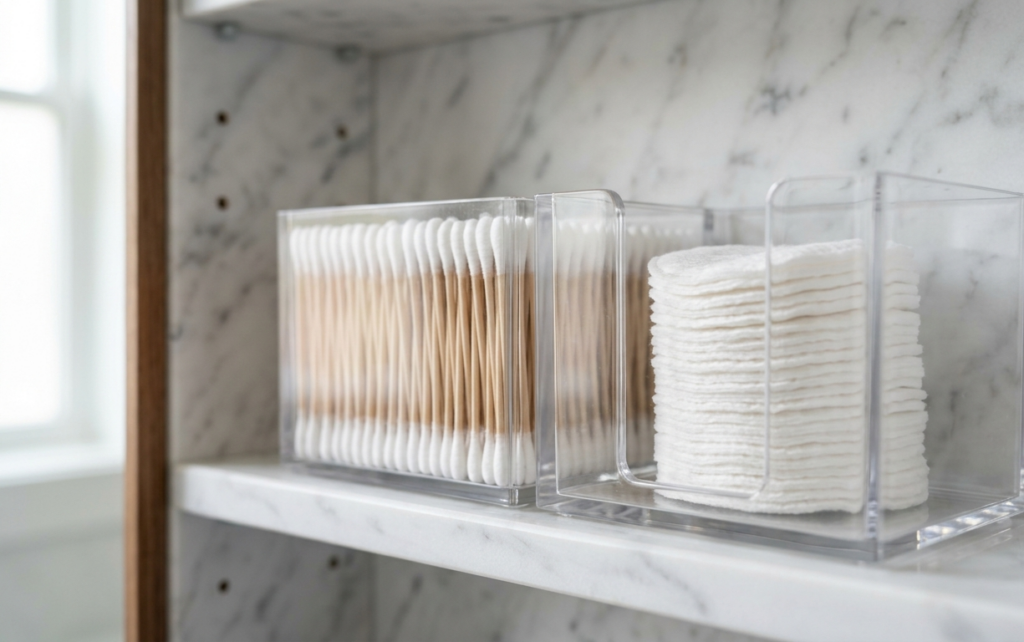
- How to use it: If you have high shelf clearance, use a small set of stackable, fluted acrylic drawers. The fluted texture partially obscures small, less-attractive items like dental floss picks or band-aids while allowing light to filter through, preventing the cabinet from feeling dark or blocked.
3. Petit Honed Marble Trays
The Design Philosophy: Grounding items and creating a zone of intention.
- How to use it: Place a tiny, rectangular marble tray on the bottom shelf. Use it to corral your daily essentials, like your toothbrush holder and facial oil. By placing these items on a dedicated tray, they look like an intentional design vignette rather than accidental clutter.
4. Frosted Glass Dropper Bottles with Bamboo Tops
The Design Philosophy: Eliminating commercial branding to establish visual serenity.
- How to use it: Buy a uniform set of 1-ounce frosted glass dropper bottles. Decant your bulk serums, facial oils, or custom hair treatments into them. Use a minimalist label maker with a clean sans-serif font to mark them, creating a cohesive, high-end apothecary aesthetic.
5. Ceramic Ring Dishes or Footed Cups
The Design Philosophy: Introducing handmade, organic textures to soften hard lines.
- How to use it: A tiny, handmade ceramic dish is perfect for holding your rings while you wash your face. Alternatively, a small, matte ceramic cup is an elegant way to store cotton rounds vertically, adding a soft, tactile element to glass shelving.
Room-by-Room Application: Translating the Look Throughout the Home
The philosophy of “Clean and Curated” organization shouldn’t stop at the bathroom door. You can easily take these micro-organization concepts and apply them to small, closed storage spaces across your entire home to create a cohesive lifestyle aesthetic.
The Living Room: The Styled Media Console or Bookcase
Just like the medicine cabinet, living room storage often becomes a graveyard for old remote controls, tangled cords, and coaster stacks.
- The Hack: Apply the 15% negative space rule to your cabinet interiors or open bookshelves. Instead of stacking DVDs or video games raw on the shelf, corral them into beautiful woven linen storage boxes with leather pull-tabs. Use decorative ceramic bowls to hide stray tech accessories.
The Bedroom: The Nightstand Drawer and Vanity Niche
Your nightstand drawer is the bedroom equivalent of the medicine cabinet—it’s where lip balms, hand creams, reading glasses, and charging cords go to create visual chaos right before you go to sleep.
- The Hack: Use small velvet-lined or leather modular tray dividers inside your nightstand drawer. Decant your nighttime hand lotion into a beautiful pump bottle. Group your nighttime routine items on a small brass dish on top of the nightstand to anchor the space.
The Kitchen: The Spice Niche or Coffee Station Cabinet
Kitchen cabinets are notorious for visual clutter caused by mismatched food packaging, spices, and tea boxes.
- The Hack: Apply the decanting method here. Move your most-used spices into uniform glass jars with minimalist labels. Group your morning coffee pods or tea bags into small, fluted acrylic bins or ceramic crocks hidden behind the cabinet door. Keep the heights varied and maintain that crucial negative space so you can grab what you need effortlessly at breakfast.
You might also enjoy:
- The Art of the Shelfie: How to Style Open Shelves
- Entryway Efficiency: Best Organization Stations
- Deep Dive: Under-Sink Organization for Vanities
Pros and Cons: Style vs. Functionality
While a highly curated, designer-styled cabinet is breathtaking, it does require a shift in lifestyle habits. Let’s look at the balance between aesthetics and everyday maintenance:
The Pros
- Reduced Morning Anxiety: Opening a beautiful, clean, and spacious cabinet starts your day with a sense of calm and control.
- Efficiency: When every item has a dedicated, visible home, your grooming routine becomes faster and more intuitive.
- Product Preservation: Storing items vertically on stable trays prevents leaks, spills, and cross-contamination of your expensive skincare products.
- Visual Luxury: It elevates the overall perceived value of your bathroom, making your daily life feel more luxurious.
The Cons
- Maintenance Required: Decanting products takes time. When you buy a new mouthwash or lotion, you have to commit to transferring it to its designated container.
- Storage Limitations: Adhering to the negative space rule means you cannot hoard products. You must store your back-stock items (bulk toilet paper, extra shampoo bottles) elsewhere, such as a linen closet or under-sink organizer.
- Initial Cost: Investing in high-quality glass, marble, or ceramic containers requires an upfront budget compared to standard plastic organizers.
Conclusion
Maximizing a small bathroom isn’t about finding ways to cram more things into tight corners; it is about editing your life down to what truly brings you joy and utility. By treating your medicine cabinet as a high-end design canvas—playing with spatial flow, introducing sophisticated textures like frosted glass and honed marble, and respecting the power of negative space—you transform a mundane daily necessity into an inspiring ritual.
💡 The Expert Tip
Before you buy a single organizer, take a photo of your medicine cabinet wide open. Look at the photo for two minutes. Our brains naturally filter out daily clutter when we look at it live, but a photograph highlights the visual bottlenecks instantly. Let the camera lens guide your initial purge!