
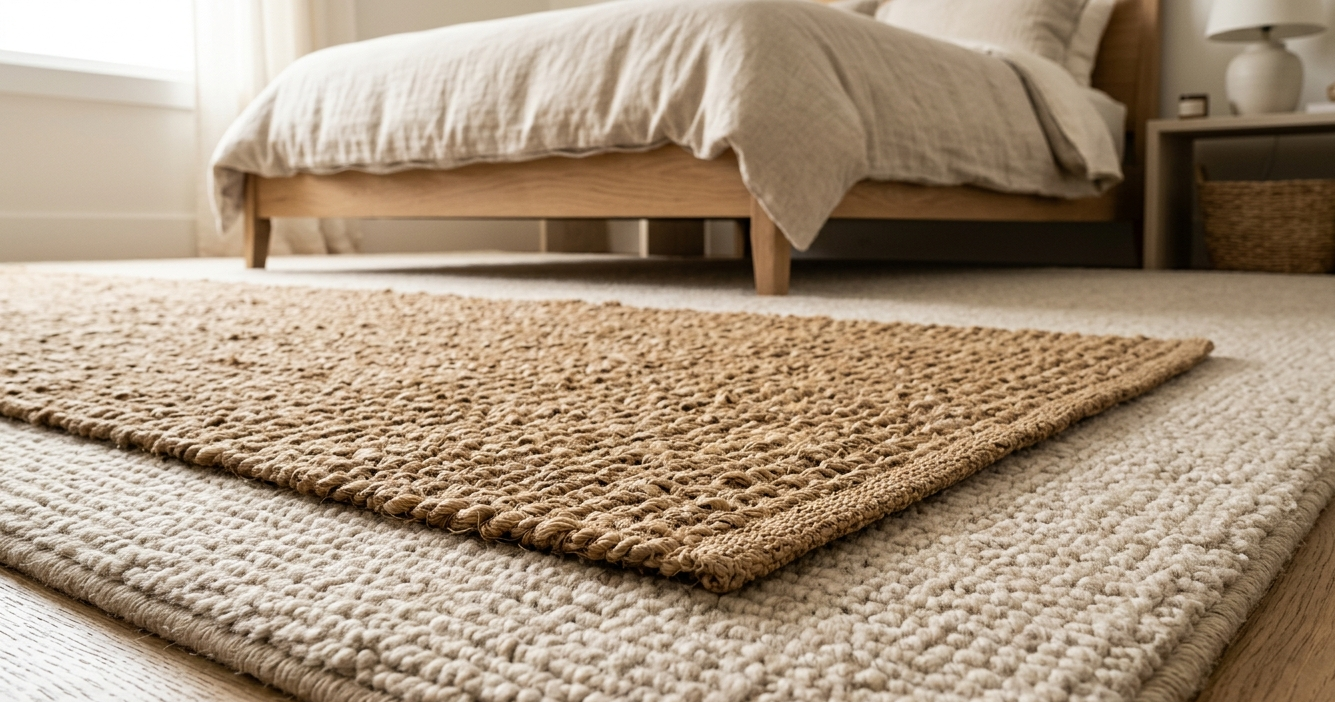
Today, I’m sharing everything I’ve learned about how to layer rugs on carpet for a cozy bedroom look so you can achieve that high-end, editorial feel in your own home.
The History and Evolution of the Layered Look
While rug layering might seem like a modern Instagram trend, its roots are deeply anchored in history. For centuries, nomadic tribes in Central Asia and the Middle East layered hand-woven kilims over thicker felt mats to provide insulation against the cold ground and to showcase wealth and craftsmanship.
In the mid-20th century, we saw a move toward “cleaner” lines, but the bohemian movement of the 1970s brought layering back with a vengeance. Fast forward to today, and layering has evolved into a sophisticated design tool. It’s no longer just about warmth; it’s about spatial flow and creating a focal point. In a world of mass-produced furniture, layering rugs allows you to curate a space that feels collected over time, rather than bought from a single catalog page.
The Foundation: Why Layer Rugs on Carpet?
Many homeowners feel that if they have wall-to-wall carpeting, they are “stuck” with a single texture. This is a design myth I love to debunk. Layering a rug over carpet serves several aesthetic purposes:
- Visual Interest: It breaks up a large expanse of monochromatic flooring.
- Zoning: It defines the bed as the “island” of the room.
- Color Injection: It’s the easiest way to introduce a new palette without painting walls.
- Textural Contrast: Mixing a low-pile carpet with a high-pile or natural fiber rug creates a sensory experience that feels luxurious.
Deep Dive: Mastering Textures, Fabric Choices, and Color Palettes
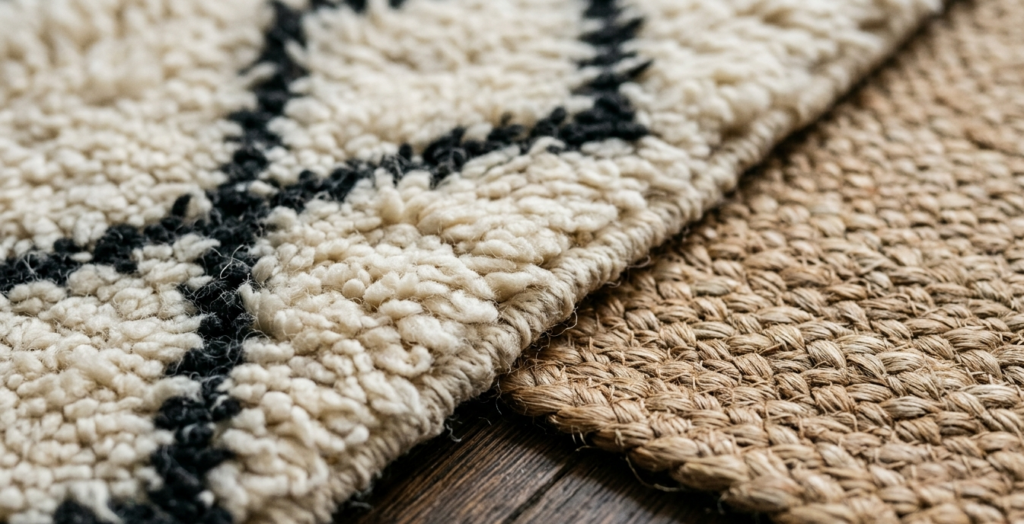
To master the art of how to layer rugs on carpet for a cozy bedroom look, you must understand the chemistry between different materials. If you choose two fabrics that are too similar, the top rug will look like a mistake or a tripping hazard. If they are too different without a unifying element, the room feels chaotic.
The Science of Textural Contrast
In my experience, the most successful pairings involve a “Base” and a “Statement.”
- The Base (The Carpet or Large Rug): This should be low-pile and neutral. If you have a standard “builder-grade” twist or Berber carpet, you already have the perfect canvas. If you are layering on hard floors first, a Sisal or Jute rug serves as an incredible organic base.
- The Statement (The Top Rug): This is where you bring the personality. Think high-pile wool, faux sheepskin, or a flat-weave cotton with a bold pattern.
Fabric Choices: Comfort vs. Durability
- Wool: The gold standard. It’s naturally stain-resistant and incredibly soft underfoot. A wool Moroccan rug over a standard carpet feels like walking on a cloud.
- Jute & Sisal: These add a “grounded” feel. They are excellent for adding a bit of friction so the top rug doesn’t slide as much on the carpet fibers.
- Silk or Viscose: These have a beautiful sheen. I love using these as top layers in “glam” bedrooms because they catch the light from bedside lamps beautifully.
The Designer’s Color Palette
When layering, I suggest a “Tonal + 1” approach. Keep your base rug or carpet in the tonal family of your floor, and let the top rug introduce one or two accent colors.
Recommended Hex Code Palette for a “Modern Organic” Bedroom:
- Base (Sand Drift):
#D2B48C– A warm, earthy tan for the base rug. - Top Layer (Deep Slate):
#2F4F4F– For a grounding, moody pattern. - Accent (Soft Terracotta):
#E2725B– To add warmth in the rug’s border or pattern. - Highlight (Creamy Linen):
#F5F5DC– To tie in with your bedding.
How to Implement the Look: A Step-by-Step Guide
1. Size Matters
The biggest mistake I see is a “postage stamp” rug—a rug that is too small for the bed.
- Rule of Thumb: Your base rug should extend at least 18–24 inches beyond the sides of a Queen or King bed.
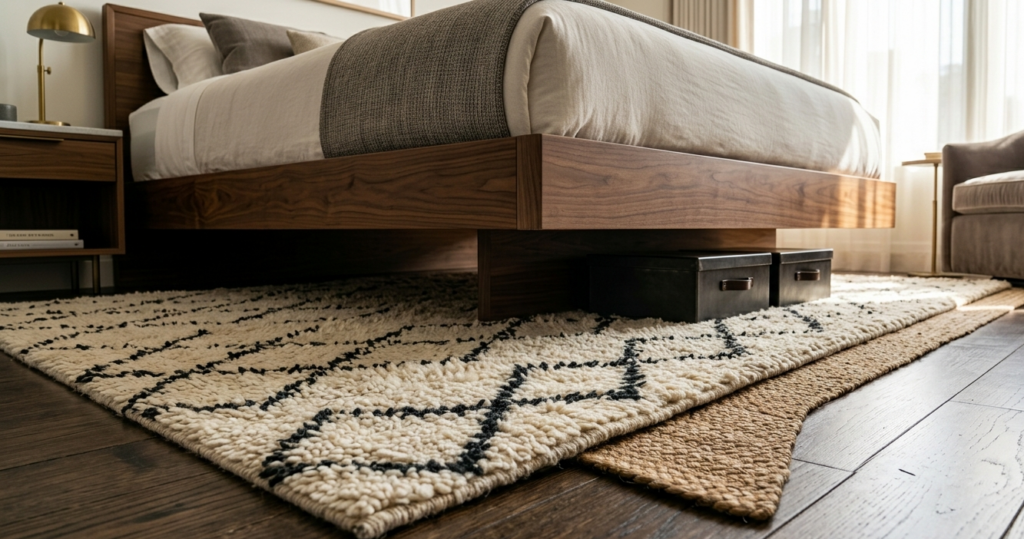
- The Layer: Your top rug should be roughly 2/3 the size of the base rug. Alternatively, you can use a long, thin runner at the foot of the bed or two sheepskins on either side of the bed for a whimsical, asymmetrical look.
2. Secure the Layer
“Creeping” is a real issue when layering rugs on carpet. To prevent the top rug from bunching, I always recommend a high-quality rug-to-carpet gripper pad. This isn’t the standard rubber mesh; it’s a fabric-faced pad specifically designed to lock onto carpet fibers.
3. Consider the “Visual Weight”
If your bedroom has heavy, dark furniture, your rug layers should be lighter to lift the room. Conversely, if you have a light, airy Scandinavian setup, a dark, moody rug layer can provide much-needed “gravity” to the space.
The Curator’s Choice: 5 Accessories to Elevate Your Layered Look
To truly sell the “designer” feel of your layered rugs, you need the right supporting cast. Here are my top five picks for bedroom accessories that complement a textured floor:
| Item | Why It Works | Styling Tip |
| Oversized Floor Mirror | Reflects the rug patterns, doubling the visual impact. | Lean it against the wall where the rug edges meet to soften the transition. |
| Velvet Lumbar Pillow | Provides a soft, matte contrast to the rug textures. | Pick a color from the top rug’s pattern to create a cohesive loop. |
| Ceramic Floor Vase | Adds height and a smooth surface against the fibrous rugs. | Place it on the corner of the base rug to “anchor” the layout. |
| Linen Throw Blanket | Mirrors the organic feel of jute or wool. | Drape it messily over the foot of the bed to enhance the “cozy” vibe. |
| Woven Rattan Bench | Continues the natural material story from the floor upward. | Position it at the foot of the bed, entirely on the top rug layer. |
Room-by-Room Application: Taking Layering Beyond the Bedroom
While we are focusing on the bedroom, the principles of layering rugs can be adapted throughout the home to create a seamless spatial flow.
The Living Room
In the living room, layering is often used to define the “conversation zone.” I like to use a large, neutral Seagrass rug that fits all furniture legs, then layer a plush shag or a cowhide in the center under the coffee table. This creates a “nest” feeling that encourages guests to relax.
The Kitchen
Yes, you can layer in the kitchen! While you have to be careful about trip hazards, a vintage runner layered over a durable, low-profile sisal mat in front of the sink adds immense character. It softens the hard surfaces of cabinetry and stone countertops.
The Entryway
This is the first impression of your home. A heavy-duty coir mat for function, layered over a slightly larger, colorful flatweave, tells guests immediately that this is a home designed with intention and warmth.
Pros and Cons of Layered Rugs
Before you commit, it’s important to weigh the aesthetic rewards against the practicalities.
Pros
- Instant Personality: No other design move changes a room’s “soul” as quickly.
- Acoustic Benefits: Multiple layers of fabric absorb sound, making your bedroom whisper-quiet—perfect for light sleepers.
- Cost-Effective: It is often cheaper to buy a large, inexpensive natural fiber rug and a smaller “investment” rug than it is to buy one massive, high-end designer rug.
Cons
- Maintenance: Vacuuming becomes a bit more strategic. You’ll need to adjust the height of your vacuum brush when moving between layers.
- Tripping Hazard: If not secured properly with a gripper pad, the edges can curl. I don’t recommend heavy layering in homes with family members who have mobility challenges.
- Dust Accumulation: More fibers mean more places for dust to hide. Regular cleaning is a must to keep the air fresh.
You might also enjoy:
- The Magic of Color: Ultimate Accent Wall Guide
- Greenery for Everyone: 7 Low-Light Indoor Plants
- The Golden Rules of Curtain Length and Height
Expert Styling Tips for Specific Aesthetics
I’ve found that layering isn’t one-size-fits-all. You should tailor your materials to your specific “vibe.”
- For the Minimalist: Stick to a monochromatic palette. Layer a cream wool rug over a white-washed jute base. It’s all about the subtle shift in texture rather than color.
- For the Maximalist: Don’t be afraid to mix patterns! A floral rug over a striped base can look incredible if they share at least one common color.
- For the Coastal Lover: Use a chunky, “bleached” jute base and layer a navy and white flat-weave dhurrie on top. It feels like a sophisticated beach house instantly.
Conclusion: Finding Joy in the Details
At the end of the day, interior design is about how a space makes you feel. When you learn how to layer rugs on carpet for a cozy bedroom look, you aren’t just decorating; you are layering comfort, history, and your own personal narrative into the room where you begin and end every day.
In my years of styling, I’ve seen that the homes that feel the most “alive” are the ones where the owners weren’t afraid to experiment with touch and depth. A rug over a carpet isn’t redundant—it’s a statement that says your comfort is a priority.
The Curator’s Expert Tip: If you’re nervous about starting, go asymmetrical. Don’t center the top rug perfectly. Offset it toward one side of the bed or the foot of the bed. This “perfectly imperfect” look is a hallmark of high-end, lived-in design.